If you’re wondering how to keep your space warm without spending a fortune, choosing the right heater size is key. Typically, about 10 watts per square foot is a good rule for well-insulated rooms.
Smart features like programmable thermostats can also trim your energy use significantly.
Keep reading to learn how to maximize efficiency with the best heating choices for your space.
What Makes a Space Heater Truly Energy Efficient?
Energy efficiency in space heaters depends more on smart features and proper sizing than on their electricity-to-heat conversion rate. Since electric heaters are nearly 100% efficient at turning electricity into heat, your focus should be on minimizing wasted energy. Programmable thermostats can cut operating costs by up to 23%, and timers help prevent the heater from running longer than necessary. It is crucial to match the heater to your room size—aim for about 10 watts per square foot in well-insulated spaces. An oversized heater wastes energy by forcing you to vent excess heat, while an undersized unit cycles constantly, increasing energy consumption. However, the actual effectiveness of any heater also relies on airflow and filtration to distribute warmth evenly and maintain indoor air quality. Improving heat retention—such as closing doors and insulating windows—keeps warmth in and reduces heater workload. Enhancing insulation prevents drafts from stealing heat and lowers the heater’s energy needs. Oil-filled radiators maintain consistent warmth with lower cycling costs, whereas infrared heaters are effective for spot heating. Using the lowest comfortable setting on your heater maximizes energy savings without sacrificing comfort. Just as with a queen mattress size, selecting the correct heater dimensions for your room ensures the unit fits the space properly and avoids waste. Similarly, focusing on room dimensions and insulation quality helps you choose a heater that balances comfort and energy savings like selecting the right bed size balances sleeping space and room layout.
6 Heater Types: Which Saves the Most Money?
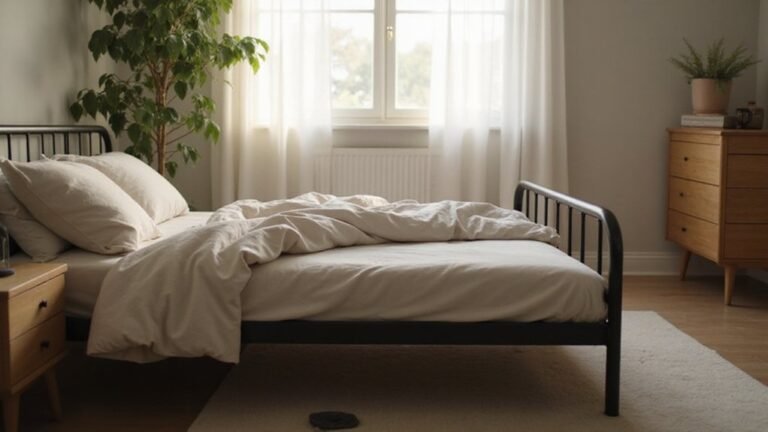
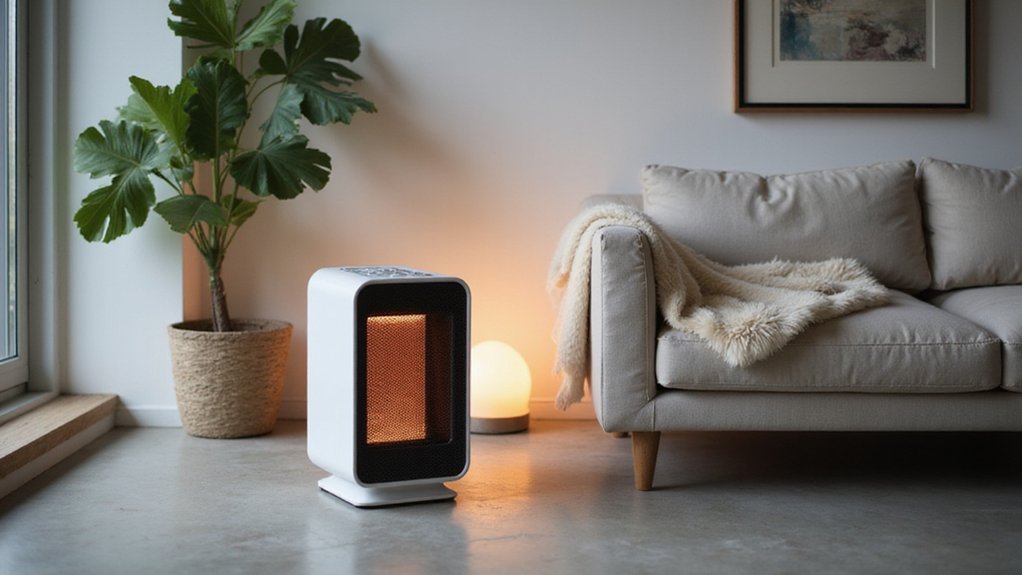
Oil-filled radiators save you the most money for sustained warmth because they operate efficiently, retain heat longer, and lower cycling costs. They work quietly, making them ideal for bedrooms or quiet spaces. Infrared heaters are cost-effective for targeted spots, delivering immediate warmth without heating the entire room, which reduces waste and energy use. PTC ceramic heaters regulate their power as they warm up, providing a good balance of quick heat and efficiency. For choosing between bed frames and platforms, note that platform designs often cost less while offering similar support and airflow benefits for the heater location. To keep the heater area clear, you can use a simple folded bedding set as a draft blocker near the baseboard. Proper window sealing is also important to prevent cold air from entering and reducing heater efficiency.
Fan-forced models tend to be noisier, so consider this if you need a quiet environment. Mica panel and halogen heaters heat up quickly but require more maintenance due to exposed heating elements. Overall, for ongoing comfort in a large space, oil-filled radiators are the most economical. For quick, localized heat, infrared models are cost-saving, while PTC ceramic heaters offer versatility with moderate energy consumption and less maintenance.
Heater Size Guide: Boost Energy Efficiency by Matching Room Size
Matching your heater’s size to your room’s dimensions is key for energy efficiency. Measure your room’s length and width in feet, then multiply these to get the square footage. Next, include your ceiling height—multiply these three measurements to find the cubic volume. For rooms with an 8-foot ceiling, a standard wattage heater, typically around 1500W, works well. If your ceiling exceeds 12 feet, consider a more powerful unit to compensate for the increased volume. If your space has poor insulation or large windows, increase your wattage by 25% to account for heat loss. Conversely, in well-insulated and warmer zones, you can reduce wattage by 25%. For added flexibility, look for portable heaters made with eco-friendly materials, and always choose a power rating that rounds down to common sizes like 1500W to prevent energy waste. For a tall, vertical storage solution, a tall dresser can help organize bedroom clutter without taking up much floor space. Proper sizing ensures you stay warm without overusing energy. Additionally, using a humidifier in winter can help retain warmth and comfort by maintaining healthy humidity levels. Including ambient light can further enhance the cozy atmosphere of your bedroom setup.
Smart Features That Cut Your Heating Bill by 8% or More
Next, using smart plugs can eliminate standby power draw, saving you between $30 and $200 annually from vampire drains. To maximize this, connect 8 to 10 high-standby devices such as TVs, game consoles, or chargers. This approach ensures a significant reduction in unnecessary energy consumption without changing your habits. For those seeking localized warmth, heated throws offer a lower-cost alternative to running a space heater for personal comfort. A similar budget-friendly approach is to sew your own pillowcase cover using simple fabric and basic sewing steps.
Finally, install motion-sensor lighting to reduce indoor light usage by 30 to 45 percent. These LED fixtures adjust their brightness based on movement, decreasing heat loss from lighting surfaces. Pair this with enhanced thermal insulation in your room to further seal in heat and boost overall savings. Together, these two smart features can lower your heating costs effectively without investing in a new heater.
Stop Losing Heat Without Buying a New Heater: Two Free Fixes
Sealing gaps around windows and doors and adding thermal curtains are two effective, no-cost methods to prevent heat loss. Start by sealing drafts: apply weather stripping to door frames, install draft stoppers under exterior doors, and tape bubble wrap on single-pane windows to block cold air. Bubble wrap reduces heat conduction by about half, providing a DIY insulation boost. Next, hang thermal curtains over cold windows. These curtains can reduce heat loss by up to 25% without requiring new equipment. Additionally, keep doors to unused rooms closed so warmth stays concentrated where it is needed most. These simple steps help your existing heater operate more efficiently, cutting back on wasted heat. For further efficiency, remember that dust buildup commonly causes heater malfunctions and should be cleaned regularly.
Energy-Efficient Safety Rules: Protect Your Home and Wallet
To ensure safety while using energy-efficient heaters, follow these key safety rules. First, always choose a certified heater equipped with a tip-over switch and thermostat control. The tip-over switch automatically turns off the heater if it tips over, preventing fire hazards. The thermostat control helps maintain a safe, consistent temperature and prevents overheating.
Calibrate the thermostat correctly to avoid unnecessary energy use and overheating. Improving insulation in your room reduces the heater’s runtime, saving you money and reducing potential safety risks. Keep at least three feet of clearance from combustible materials such as curtains or furniture, and place the heater on a stable, non-flammable surface—never directly on carpets. For context, if you are using the heater in a bedroom, note that a king mattress is 76 inches wide, providing a generous surface area that helps maintain clear space around the unit. Unlike fluorescent bulbs, LED bulbs produce less heat, making them a cooler and safer option for adjacent fixtures and fabrics. For additional cost savings, consider using budget DIY shelving to store clutter away from the heater.
Unplug the heater when you leave the room or go to sleep and never leave it unattended. Use a wall outlet directly; avoid extension cords to prevent circuit overload. Before each use, inspect the power cord and plug for damage. Keep children and pets at a safe distance, and install smoke detectors nearby to alert you in case of smoke or fire. Following these steps ensures both your home and wallet stay protected.