
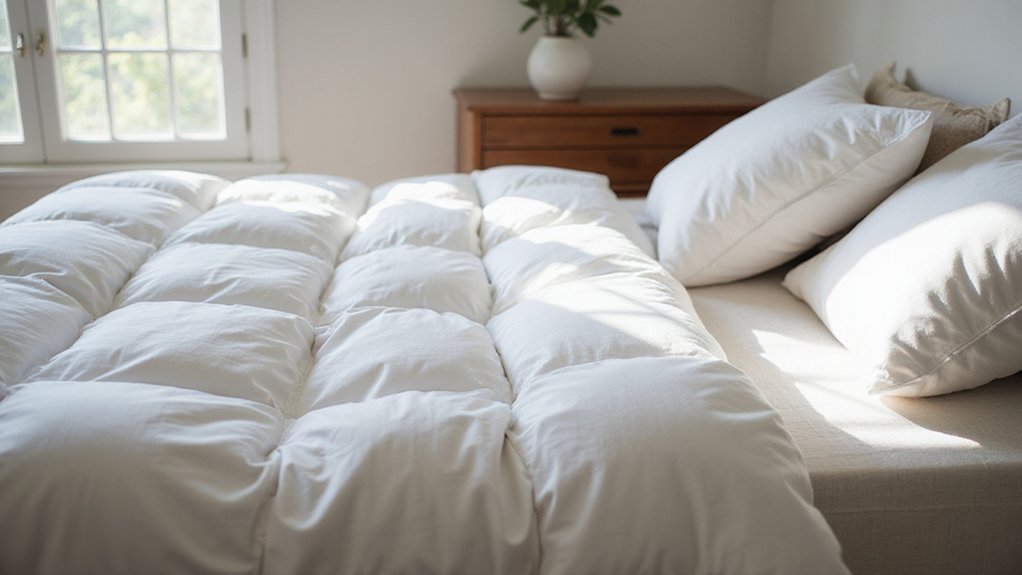
Ever wonder whether a comforter or a duvet is better for your sleep? The main difference is that a duvet is a soft insert with a removable cover, while a comforter is a single, quilted piece you use straight out of the bag.
Your choice depends on whether you want versatility or simplicity. Keep reading to find out which option suits your sleeping style best.
What Is a Duvet: and Why Does It Need a Cover?
A duvet needs a cover because it cannot be easily washed on its own. The duvet insert, filled with materials like down, feathers, wool, cotton, silk, or synthetic fibers, is delicate and prone to damage if washed frequently. The cover acts like a pillowcase, protecting the duvet from dirt, spills, and sweat, so you can remove and launder it regularly to keep your bed fresh. Using a cover also provides flexibility to adapt to seasonal changes. In warmer months, a lightweight cotton cover keeps you cool, while a flannel cover adds extra warmth during winter. Changing covers allows you to refresh your room’s look without replacing the entire duvet. To ensure the cover fits properly, it is important to check the queen mattress dimensions since duvet covers are sized to match standard bed measurements. Overall, the cover helps extend the lifespan of your duvet, maintains hygiene, and offers a customizable layer of comfort all year round. Additionally, a duvet typically consists of two pieces—insert and cover, which distinguishes it from a comforter that is a single piece of quilted material.
How Comforters Are Different From Duvets
A comforter differs from a duvet primarily in its construction, usage, and maintenance. You don’t need a cover for a comforter; it is used directly without an additional duvet cover. Comforters are all-in-one units with fill sewn into a fabric exterior, which allows for many design styles and patterns that can easily coordinate with your decor. Material options are diverse, including cotton, microfiber, and more, but comforters generally contain less fill than a duvet. This results in medium warmth, often requiring layering for colder nights.
Comforters tend to be bulkier and more challenging to clean, often requiring professional laundering due to their size. They are usually designed with extra overhang to create a draped, cozy look and are commonly available as part of matching bedding sets. Unlike duvets, comforters are ready to use immediately out of the packaging, without the need for additional protective covers.
Which Performs Better: Warmth, Weight, and Breathability?
Duvets outperform comforters in warmth, weight, and breathability. They provide superior insulation due to higher fill power and a snug fit inside covers. Down-filled duvets trap heat effectively while still allowing moisture to escape, preventing overheating. Comforters generally offer consistent warmth but lack the loft needed for very cold conditions, making them feel heavier and bulkier without significantly better insulation. Duvets tend to be lighter and less dense, conforming more closely to your body and reducing perceived bulk.
For temperature regulation, duvets are more versatile. You can easily change covers seasonally—using cotton covers during warmer months and flannel covers when it’s colder—enhancing adaptability. Comforters are less adjustable because their construction is fixed. Duvets also manage moisture better, reducing sweat buildup, while comforters with tightly stitched fillings lower breathability. Overall, duvets provide an ideal balance of lighter weight, greater breathability, and efficient warmth-to-weight ratio.
Upkeep Made Simple: Washing a Duvet vs. a Comforter
Washing a duvet requires a gentle, careful approach because of its size and filling. Start by shaking the duvet to dislodge dust and move away from stained areas. Spray or dab stain remover on the spots, then let it sit for about 20 minutes to loosen dirt. Wash on a delicate cycle using a mild detergent—avoid bleach and fabric softeners, which can damage the fabric or filling. After the wash, gently squeeze out excess water without wringing, as this could distort the duvet’s shape. Dry on low heat with wool dryer balls to help maintain fluffiness, and fluff the duvet every 30 minutes during drying to keep it comfortable for sleep.
A comforter is generally easier to clean because it’s a single piece that fits more easily into a typical washing cycle. You can usually toss it directly into the washer on a bulky or delicate cycle. Use cold or warm water, and run an extra rinse to remove dirt and dust mites effectively. After washing, dry the comforter on low heat, making sure to spread it out evenly. The process is simpler than caring for a duvet, especially since it doesn’t involve handling a removable cover. Following these steps helps keep both your bedding fresh and inviting, with less hassle for you.
Duvet or Comforter: Which Should You Buy?
Deciding between a duvet and a comforter depends on your preferences for versatility versus simplicity. A duvet features a removable cover, allowing you to easily change styles and protect the insert, which extends the fabric’s lifespan. Its higher fill power offers better warmth and a neater, tailored bed appearance. In contrast, a comforter is a single piece ready to use right out of the package. It often comes in coordinated sets for convenience but may provide less warmth and typically has less overhang. Comforters tend to use lower-quality fill and require less maintenance, while duvets allow more customization of interior fill for enhanced insulation. Your choice boils down to how much effort you want to invest in aesthetic flexibility versus straightforward comfort. For a similar level of convenience, installing a window air conditioner requires proper sealing to prevent drafts and energy loss.