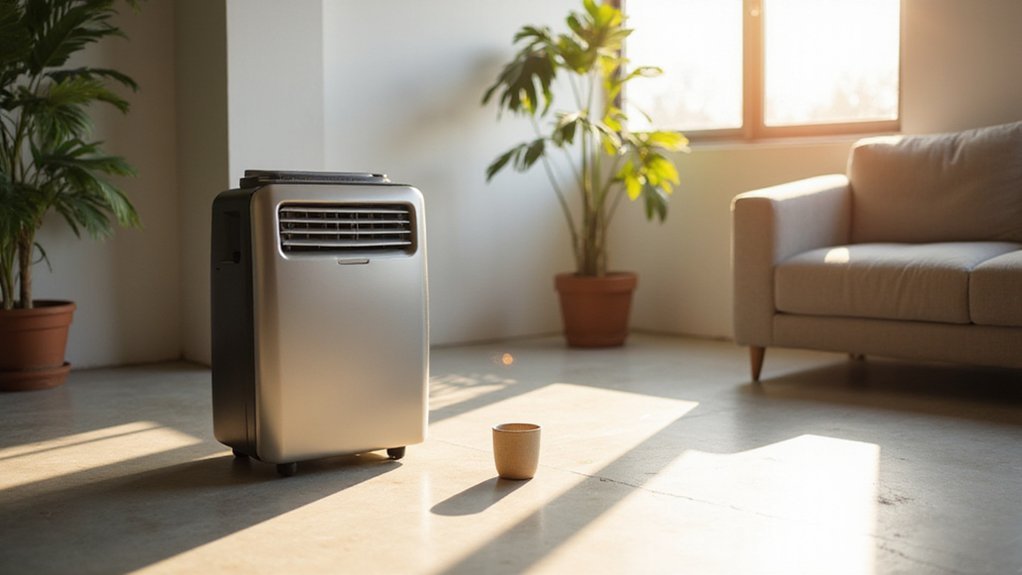
Wondering if a portable air conditioner can really keep your room cool? The short answer is yes, but there are some trade-offs to consider.
While they can bring temperatures down to around 78°F, they might increase your electric bill and be a bit noisier than window units.
Keep reading to see how you can choose the best option for your space.
How Much Will a Portable AC Raise Your Electric Bill?
A portable AC can increase your electric bill by approximately $30 to $50 per month. This is based on the unit drawing between 800 and 1,500 watts and operating around 8 hours daily. To estimate your exact cost, multiply the wattage by the number of hours used, then divide by 1,000 to get kilowatt-hours, and finally multiply by your local electricity rate. For example, a 1,200-watt unit running for 8 hours at an average rate of 12 cents per kWh would cost about $1.15 daily, or roughly $34.50 monthly. Using the unit longer or at higher wattage can push your monthly expense above $50. Regional electricity rates vary widely—from 7 to 42 cents per kWh—making your actual cost potentially much higher or lower. For comparison, the exact dimensions of a queen mattress are 60 inches wide by 80 inches long. Proper installation of the exhaust hose is critical to prevent hot air from recirculating, which would otherwise force the unit to run longer and increase your electric bill.
Can a Portable AC Cool Your Room to 78°F?
Yes, a portable AC can cool your room to 78°F, but achieving this temperature alone doesn’t ensure comfort. Humidity plays a crucial role—78°F at 60% humidity can feel sticky and uncomfortable, while the same temperature at 45% humidity tends to feel much cooler. To maximize comfort, focus on dehumidifying effectively along with cooling. Proper unit sizing is also important; aim for about 20 BTUs per square foot. Undersized units will struggle to reach or maintain your target temperature, whereas oversized units may cycle on and off too quickly, wasting energy and increasing wear and tear. Unlike a heated throw or blanket, which provides direct personal warmth in a small space, a portable AC must manage the climate of an entire room. Mastering proper spelling ensures you can accurately search for or describe an armoire to store your cooling accessories.
For better energy efficiency, don’t just set your portable AC to 78°F and leave it. Position the unit away from direct sunlight, ideally in a shaded spot or with blinds closed, to reduce heat gain. This allows the AC to reach your desired temperature more easily and run less overall. Remember, controlling humidity is often a more effective way to feel comfortable at this temperature—dry, 78°F air feels cooler and more tolerable than humid 78°F.
Single-Hose or Dual-Hose: Which One Wastes Less Cool Air?
Dual-hose portable air conditioners waste less cool air than single-hose units. A single-hose model creates negative air pressure, pulling hot, unconditioned air into the room through gaps, forcing the unit to work harder to maintain the desired temperature. This increases energy use and reduces efficiency. In contrast, a dual-hose system uses one hose to draw outside condenser air and another to exhaust warm indoor air, maintaining neutral pressure. This setup stops warm air from infiltrating the space, resulting in 10%–30% higher efficiency. However, the use of outdoor air for condenser cooling in dual-hose units is less effective than cooled indoor air, which can offset some efficiency gains.
Additionally, dual-hose units improve air filtration. Since they don’t rely on room air for cooling, they minimize unfiltered indoor air entering through gaps, helping your filters work more effectively against allergens. Overall, dual-hose models deliver faster, more efficient cooling with less wasted cool air, making them the better choice for conserving energy and maintaining cleaner indoor air.
How Do Portable Air Conditioners Actually Work?
Portable air conditioners cool your room by moving heat rather than creating cold. They operate on the same refrigeration cycle as central units, pulling warm air in, passing it over cold evaporator coils, and blowing cooled air back into the space. The compressor then raises the refrigerant’s temperature, and the condenser coil releases this heat outside through an exhaust hose that must be vented properly. Without venting outside, hot air recirculates inside, reducing efficiency. In single hose units, the unit pulls room air for cooling and then pushes that same air outside as hot exhaust, which can create negative pressure that draws warm air from other rooms. For a similar hands-on project, you could explore budget-friendly tips for building a wooden DIY headboard at home. Just as avoiding common mistakes when organizing sweater storage ensures better results, understanding your unit’s limitations prevents performance issues.
The efficiency of your unit depends on how effectively it removes heat. Dual-hose models often perform better because they can more efficiently handle airflow and heat exchange. However, keep in mind that noise levels are noticeable since the compressor and fans run continuously until your desired temperature is reached. Additionally, as the unit operates, it separates moisture from the air, providing dehumidification alongside cooling, and most new units are self-evaporating, so no manual draining is needed, which can help eliminate hot spots.
Why Most Portable ACs Cool Worse Than Window Units
Portable air conditioners generally cool worse than window units because of their design flaws. The main issue is the single-hose exhaust which creates negative pressure inside the room. This pulls hot outdoor air back inside through gaps, reducing net cooling by about 25–30 percent. As a result, the unit constantly re-cools already-warm air instead of cooling effectively. This inefficiency is compounded by the fact that portables max out around 14,000 BTU, while window units can reach up to 35,000 BTU for much larger spaces. A similar principle applies to entrance shoe racks, where poor design choices can lead to wasted space and trapped odors. Following a step-by-step approach for proper installation can help mitigate some heat loss from the exhaust hose. For example, using a dehumidifier alongside the portable AC can improve comfort by removing excess moisture from the air.
Because the entire machine is placed indoors, it also adds heat to the room while operating. You will notice slower cooling results—portable ACs take around 20 minutes to drop the temperature by 5°F, whereas window units can do the same in just 15 minutes. Noise levels tend to be higher too, since the compressor runs harder to compensate for the design shortcomings.
Additionally, setup takes longer—about 25–35 minutes—because of the hot hose that must be routed across the floor, which can leak heat back into the room. In contrast, window units provide more efficient cooling and use energy more effectively, making portables a less practical choice overall.
What Size Portable AC Do You Really Need?
To find the right size portable AC, start by measuring your room’s square footage—simply multiply the length by the width in feet. For a 300 square foot room, you’ll need a unit with 7,000 to 8,000 BTUs. However, this baseline should be adjusted for environmental factors. If your room gets direct sunlight, add about 10% to the BTU requirement. Also, consider heat from appliances or multiple people in the space because these factors increase cooling needs. Similarly, evaluating platform bed comfort can help you optimize your bedroom environment for better rest. Proper sizing ensures optimal cooling and moisture control by matching the unit’s capacity to your room conditions. The type of hose on your portable AC matters as well. A double-hose model can efficiently cool up to about 450 square feet with roughly 8,000 BTUs, while a single-hose unit is better suited for spaces up to 350 square feet with the same BTU rating. Choosing a unit that’s too small for your space can lead to installation issues and insufficient cooling, forcing your AC to work harder and potentially wear out faster. For larger areas like a master bedroom up to 450 square feet, a 12,000 BTU unit is recommended. Getting the right size from the start ensures your cooling is effective and energy-efficient. For a complete comparison of cooling solutions, reviewing the best frame for your platform bed can help create a comfortable sleep environment. Similarly, just as mattress firmness directly affects sleep support and pressure relief, choosing the correct AC capacity is vital for consistent comfort and airflow in your living space.
Why Portable ACs Are So Loud (and How to Fix It)
Portable ACs are loud primarily because their compressor, fans, and exhaust system all operate inside your room, generating noise levels between 50 and 60 decibels. These levels increase when you run the fan on high, but this often masks the compressor sounds. To reduce noise, start with mechanical maintenance: regularly clean filters monthly to prevent blockages that make the unit work harder. Tightening loose screws can eliminate rattling noises, and inspecting fan blades and motor bearings can help identify worn bearings that cause grinding sounds—these need replacement. Additionally, debris inside the unit can cause unexpected noises and should be removed. For quieter operation, treat the quilt binding of the exhaust hose with foam insulation to prevent air leaks and vibration. Securing the unit on a level, vibration-absorbing mat minimizes vibrations. Positioning it near a wall can help dampen sound, while avoiding placement in the middle of the room prevents unnecessary noise amplification. Wrapping the exhaust hose with insulation reduces friction noise, further quieting operation.
When a Portable Air Conditioner Is Actually a Good Choice
Portable air conditioners are a good choice when permanent installation isn’t feasible or desirable. They are especially useful for renters because you don’t need to make permanent modifications like drilling into walls or window frames, which can violate lease agreements. This flexibility allows you to cool specific areas such as a home office or small bedroom under 500 square feet, providing direct cooling without wasting energy on larger spaces. For those concerned about solar heat gain, a one-way mirror film can also be applied to windows to reduce cooling loads. When your central air system malfunctions, a portable unit can serve as emergency relief, allowing immediate cooling without waiting for repairs. Proper placement is crucial: position the unit near a window for effective exhaust and use the adjustable kit for tight or vertical/sliding windows. Many models come with additional features like heating, making them versatile year-round. Dual-hose designs improve energy efficiency by reducing the workload, making portable air conditioners a practical temporary or supplementary cooling solution. For a temporary window covering, you can also try a DIY curtain hanging method without a rod to block light and improve insulation. To keep the unit running efficiently, regularly clean the exhaust hoses and filters using a gentle cleaning method similar to how you would wash a weighted blanket to avoid damage.
5 Must-Have Features in a Portable AC (and 2 to Avoid)
The five must-have features in a portable air conditioner are essential for ensuring you get effective and convenient cooling. First, select a unit with the right cooling capacity: 8,000 BTUs for spaces around 200 square feet, 10,000 BTUs for about 300 square feet, and up to 14,000 BTUs for larger rooms. This ensures your AC can efficiently cool the area without wasting energy.
Next, prioritize energy efficiency. A high EER rating and Energy Star certification mean you’ll consume less electricity, saving money on monthly bills and reducing your environmental impact. When considering energy use, remember that a programmable thermostat can further optimize consumption by automatically adjusting temperatures. Third, opt for a dual-hose system instead of a single hose. Dual-hose units cool faster and prevent warm air from being drawn back into the room, boosting cooling performance.
For quieter operation, choose a model that produces below 50 decibels and use sleep mode to lower fan speeds at night. This helps you sleep peacefully without noise interruptions. Fourth, focus on easy draining features such as auto-evaporation. This minimizes manual effort by eliminating the need to constantly drain collected water.
Finally, watch out for units lacking a proper window vent kit or those that require extension cords. These can cause installation headaches and safety risks. When choosing between different cooling solutions, consider the floor space coverage as it directly impacts how well a unit performs in your specific room layout. Smart controls and durable wheels are convenient features, but they are not deal-breakers.