Trying to cool your room with a dehumidifier? It won’t lower the temperature like an air conditioner, but it can make you feel cooler by drying out the air.
While it slightly raises the temperature because of the heat it generates, reducing humidity improves sweat evaporation, giving you a more comfortable experience.
Keep reading to see why this matters for your next purchase.
Does a Dehumidifier Actually Cool the Air?
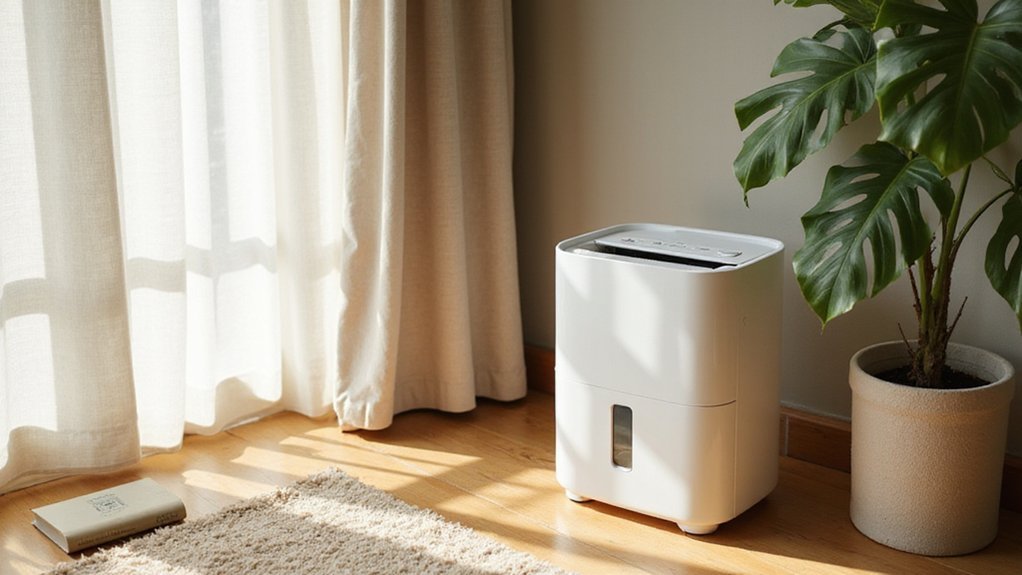
A dehumidifier does not actually cool the air. Its primary function is to reduce moisture, not temperature. During operation, it releases a small amount of heat back into the room, which can make the air feel slightly warmer, especially in small or poorly ventilated spaces. While it won’t lower the actual temperature displayed on a thermometer, reducing humidity can make the environment feel cooler. Dry air accelerates sweat evaporation from your skin, naturally helping you feel more comfortable. Keep in mind that noise levels vary between models, so choosing a quieter unit can improve overall comfort. Remember, a dehumidifier is designed for humidity control, not cooling, so don’t expect a colder room from it. In fact, the system generates heat comparable to a space heater due to the refrigerant compression and air movement, offsetting any cooling effect. When choosing between furniture options like a dresser or chest of drawers, the same principle of prioritizing function over misleading expectations applies. For context, a queen-size mattress measures 60 inches wide by 80 inches long in standard dimensions, which is a common size for master bedrooms where humidity control might be needed. By lowering moisture, a dehumidifier helps fight mold growth rather than reducing temperature.
Why a Humid Room Feels Hotter Than a Dry One
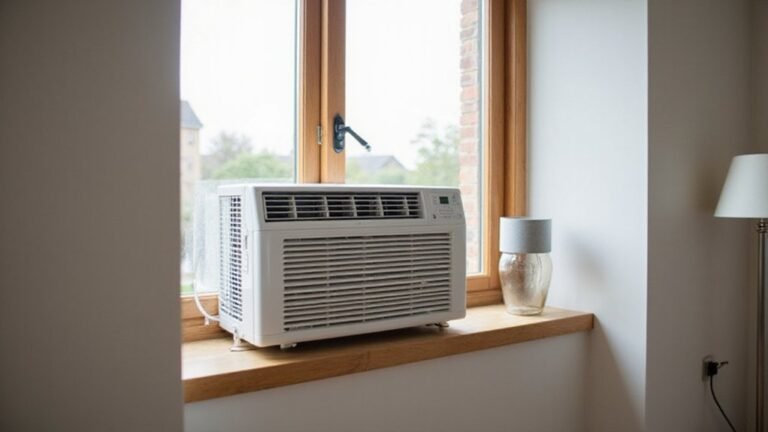
A humid room feels hotter than a dry one because high humidity inhibits sweat evaporation, which is your body’s main cooling mechanism. When the air is saturated with moisture, sweat pools on your skin instead of evaporating. This moisture conducts heat back into your body rather than promoting cooling. As a result, your body produces more sweat in an attempt to cool down, but because the air cannot absorb this extra moisture, it becomes even more saturated. This cycle traps heat and creates a stifling, oppressive feeling. Ultimately, in high humidity, your body’s inability to effectively evaporate sweat makes the environment feel much hotter than it actually is. This aligns with the weather term heat index, which explains why a humid room feels hotter than a dry one. For those considering an air conditioner, proper window installation is essential to ensure the unit effectively removes humidity and cools the room.
How Dehumidifiers Remove Moisture Without Cooling
Dehumidifiers remove moisture from the air without cooling the room by using a reheating process. In refrigerant models, humid air is drawn over cold evaporator coils, causing moisture to condense into water that drains away. The air then passes over warm condenser coils, which reheat it before releasing it back into the space. This cycle effectively strips humidity without lowering the room temperature. In desiccant models, moisture is absorbed onto a rotating wheel coated with desiccant material. The wheel is then heated to release the absorbed moisture, drying the air while keeping it warm.
You can control this process with a humidistat, which automatically switches off the unit once your target humidity level is reached. Regular maintenance, such as cleaning coils and emptying the water pan, is essential to keep the dehumidifier operating efficiently.
The Surprising Way a Dehumidifier Makes You Feel Cooler
A dehumidifier makes you feel cooler without lowering the actual temperature because it reduces the humidity in the air. High humidity traps sweat against your skin, preventing it from evaporating and removing heat from your body. When the humidity drops, sweat can evaporate quickly, which cools you naturally. This creates a noticeable feeling of coolness, even if the thermometer stays the same. However, the unit generates significant heat as a byproduct, which can make the actual room feel hotter despite the lower humidity.
Removing just 20% of the humidity can make a room feel about 5°F cooler. The air feels less heavy and sticky, transforming a humid, clammy space into a fresh, breathable environment. You won’t need to adjust the thermostat; instead, you’re letting your body do what it does best—cool itself through sweating and evaporation.
Do Dehumidifiers Give Off Heat While Running?
Dehumidifiers do emit heat while running. Every watt of energy they consume converts directly into thermal energy, so a 100W unit produces roughly 100W of heat. The refrigeration cycle moves heat from the cooling coils into the exhaust air, raising its temperature by about 3°F to 5°F. Additionally, when water vapor condenses, it releases latent heat, further warming the room. As a result, your dehumidifier does not cool the air; instead, it causes a slight increase in temperature. For optimum efficiency, you should clean the condenser coils on your unit at least once a year to prevent dust buildup that reduces heat transfer, and you should also review the user manual for specific cleaning instructions tailored to your model.
While reducing humidity can make you feel cooler, the physical temperature in the room actually rises. Proper maintenance, such as keeping the air filter clean, is crucial. A clogged filter forces the compressor to work harder, generating more heat and wasting energy. In small or enclosed spaces, this ongoing warmth can gradually raise the room temperature, especially with continuous operation. In contrast, choosing a mattress size is a different consideration entirely, where a full size offers more sleeping space than a twin without requiring a significantly larger room.
Which Dehumidifier Type Adds More Heat to Your Room?
Compressor dehumidifiers add the most heat to your room, raising the temperature by about 2 to 5°F. They consume between 400 and 700 watts, with nearly all of that energy converting into heat. The heat primarily comes from the condenser, which releases sensible heat surplus as it cools the refrigerant. Because they generate significant heat, compressor units are ideal for cooler environments where additional warmth is beneficial. However, in already warm or poorly ventilated spaces, they can make the room uncomfortably hot. If controlling room temperature is a priority, compressor dehumidifiers are the biggest heat contributors among the three main types. For those who incorporate vanity mirrors with lights into their beauty rituals, this added warmth can either enhance comfort or create an unwelcome stuffiness. While synthetic sheets like polyester may retain more heat and moisture, natural cotton fibers offer better breathability and temperature regulation for bedding.
Why a Dehumidifier Fails as a Cooling Device
A dehumidifier fails as a cooling device because it converts all its electrical energy into heat, which warms your room instead of cooling it down. All components operate inside your space, so no heat escapes outside. When moisture is removed from the air, the condenser coil reheats it, releasing the latent heat as sensible heat. This process adds heat to the room rather than removing it, making energy efficiency irrelevant for cooling purposes. Essentially, you are trading one heat load for another without decreasing the actual temperature. Since the system turns airborne water’s latent heat into warmth instead of coolness, the air’s temperature remains unchanged. Each watt used to condense moisture results in a watt of heat added back into the room, negating any cooling effect. The design of dehumidifiers prevents them from lowering air temperature; they only extract moisture, making the environment feel less sticky but not cooler. Adding a dehumidifier to an existing air conditioning system does not help reduce room temperature; it simply shifts the thermal burden without addressing the overheating issue.
Real-World Tests: Does Humidity Drop Without Warming the Room?
Real-world tests show that humidity can drop without noticeably warming the room. In controlled trials, dehumidifiers reduced relative humidity by up to 12% within just 20 minutes. During the same period, the wet bulb temperature—a combined measure of heat and humidity—decreased by as much as 3.0°C. This lower wet bulb temperature makes the air feel cooler without a significant change in actual room temperature. You’ll notice this as a less muggy atmosphere, even when the thermometer doesn’t move much. For context, this cooling effect is comparable to the comfort gained by using a standard pillowcase to improve sleep quality in a humid bedroom. When selecting a mattress pad, choosing a high-density foam can provide better support and durability for long-term use. Just as with dimmer switches, selecting a dehumidifier with higher amp ratings ensures it can handle sustained operation without tripping breakers.
Energy efficiency also varies among units. For example, a 50-pint dehumidifier removes moisture about 40% faster than a 35-pint model, which means it runs for less total time to achieve similar results. Noise levels are another factor to consider: quieter models tend to be used longer because they’re less disruptive. However, in colder conditions around 16°C, dehumidifier performance decreases significantly, so you shouldn’t expect dramatic humidity drops during winter months. Overall, lower humidity levels can create a cooler, more comfortable environment without changing the room’s actual temperature. Most refrigerant models exhibit consistent dehumidification despite design variations across brands.
Why a Dehumidifier Doesn’t Cool Like an Air Conditioner
A dehumidifier does not cool like an air conditioner because it primarily removes moisture from the air rather than heat. Both appliances use a refrigeration cycle, but they handle the heat differently. An air conditioner actively pulls heat from inside your home and releases it outside, directly lowering the room temperature. In contrast, a dehumidifier extracts heat from the air but then releases that heat back into the same room. This process causes the warm air to blow out of the dehumidifier, which can make the room feel slightly warmer. While lowering humidity can make you feel cooler, it does not actually reduce the room’s temperature. Some LED strip lights used in conjunction with dehumidifiers may need to be cut to specific lengths for proper placement, as discussed in the guide on cutting and installing LED strip lights. For genuine temperature reduction, an air conditioner is necessary. Dehumidifiers are more energy-efficient than air conditioners, costing around 3-16 cents per hour to operate.
Dehumidifier or AC: Which One Fits Your Needs?
If you need to reduce moisture levels directly, a dehumidifier is the better choice. It targets excess humidity in the air, helping to prevent mold and improve overall air quality. Unlike air conditioners, which primarily cool the air and only incidentally remove some humidity, dehumidifiers are designed specifically for moisture control. Choosing between a dehumidifier and an AC is similar to selecting between mattress sizes for your room, as both decisions depend on balancing primary function against available space.
Using a dehumidifier is more energy-efficient if your goal is drier air without cooling. It typically costs just a few cents per hour to operate, whereas an air conditioner can use two to three times more electricity. For optimal results, combining both devices works well: the dehumidifier alleviates excess moisture, allowing the AC to cool more effectively without overworking.