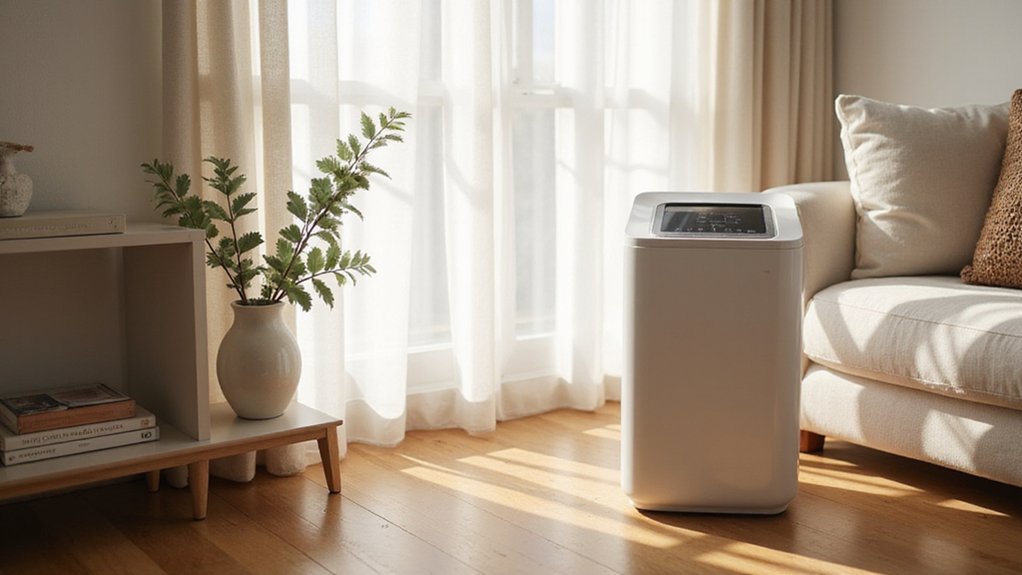
Wondering if a dehumidifier can help with mold? It can reduce indoor humidity to about 40%, which slows down mold growth.
However, it won’t eliminate existing mold on its own. To truly get rid of mold, physical cleaning with vinegar or hydrogen peroxide is needed.
Keep reading to learn how to use these tools effectively.
Dehumidifiers Stop Mold: They Don’t Actually Kill It
A dehumidifier alone does not kill mold spores or colonies. Instead, it reduces the moisture level in the air, depriving mold of the water they need to thrive. By pulling water out of the air, a dehumidifier can prevent mold from multiplying and spreading. After a few hours, visible mold may appear dried out and inactive. However, dry air alone will not eliminate existing mold growth. You need to physically clean affected surfaces or seek professional remediation to remove colonies from walls, furniture, or other surfaces. To enhance mold prevention, combine your dehumidifier with improved air circulation—using a fan to move dry air around—and proper air filtration like a HEPA filter, which captures airborne spores. Remember, while your dehumidifier creates an environment hostile to mold, it does not do the actual removal of mold itself. For a practical reference, the same principle of controlling the surrounding environment applies to ensuring a queen mattress fits properly in your bed frame. To further reduce moisture, you might also consider building a DIY garment rack to organize your drying clothes and improve airflow in the room. Just as choosing between tungsten and LED bulbs depends on managing heat and efficiency, managing moisture requires the right tool for the job.
What Humidity Keeps Mold Away? (And How Your Dehumidifier Helps)
Maintaining indoor relative humidity between 35% and 45% effectively prevents mold growth. Mold spores need moisture to develop, and at 45% RH or higher, they can start to colonize surfaces. Keeping humidity levels below 45% ensures spores remain unable to establish themselves, with the ideal range being around 40%. Setting your dehumidifier within this range creates an environment too dry for mold to thrive.
However, controlling humidity alone isn’t enough. Proper airflow is crucial—use oscillating fans in rooms without exhaust systems, and ensure furniture is moved away from walls to promote air circulation. After showering or in damp areas like basements, wipe down surfaces to remove excess moisture. Combining these practices with the right dehumidifier settings helps stop mold before it begins, especially in high-moisture zones or humid climates.
How a Dehumidifier Removes Moisture to Block Mold Growth
A dehumidifier removes moisture by pulling damp air into the unit, extracting the water, and then releasing drier air back into the room. This directly targets the root cause of mold growth—excess moisture. By consistently reducing indoor relative humidity to between 30% and 50%, it creates an environment that discourages mold development. This humidity level is recommended by the EPA as the optimal range for mold prevention. As the dehumidifier operates, it deprives mold spores of the water they need to thrive, stopping new colonies from forming. While a dehumidifier does not directly kill mold, it reduces the moisture source that enables its growth, effectively removing the moisture source. For effective mold prevention in warm weather, using a dehumidifier alongside a window air conditioner can address both temperature and humidity, as proper AC installation prevents rain from entering and adding moisture to the room. In addition to moisture removal, the appliance improves air circulation by drawing air through its system, helping to distribute the drier air evenly throughout the space. While a dehumidifier doesn’t eliminate existing mold, it actively makes the environment inhospitable for mold growth. Combining this with proper air filtration can further reduce airborne spores and particles. Similarly, the process of controlled moisture extraction is just as critical when removing old window tint, as it prevents adhesive residue from becoming sticky and difficult to manage. Ultimately, moisture extraction remains the dehumidifier’s primary function—making it one of your most effective defenses against mold.
Why Your Dehumidifier Won’t Fix Existing Mold or Odors
A dehumidifier alone cannot fix existing mold or odors. It only reduces moisture levels in the air, which helps prevent mold growth, but it doesn’t eliminate mold colonies that are already established on surfaces. Visible mold patches on walls or ceilings remain untouched by the device. Additionally, musty odors won’t go away just because the air is drier, since the smell and mold spores can linger in your HVAC system or within porous materials. This ongoing presence can pose health risks and reduce indoor air quality.
Dehumidifiers do not address the root causes of mold, such as leaks, water damage, or persistent humidity sources like a leaky pipe or roof. Without fixing these underlying issues, a dehumidifier provides only temporary relief at best. To truly remove existing mold and odors, you need physical cleaning, mold removal treatments, or professional remediation. Relying solely on a dehumidifier will not resolve an active mold problem or the odors associated with it.
What Actually Kills Existing Mold? (And When to Call a Pro)
White vinegar and hydrogen peroxide are effective household solutions for killing mold on hard surfaces. Use undiluted white vinegar and leave it on the surface for an hour to eliminate about 82% of mold species. Hydrogen peroxide at 3% concentration can be applied for 10 minutes to penetrate deeper and kill mold spores and roots. Bleach is effective on visible mold if used properly—apply it directly, but never mix it with ammonia. For tough stains, a 50/50 mixture of ammonia and water can be used, ensuring proper ventilation and safety precautions. Borax can scrub away mold without needing a rinse, making it a convenient option. For instant results, steam at 212°F on contaminated areas can kill all mold on contact, and 70% isopropyl alcohol works well on non-porous surfaces. However, killing mold is not sufficient because dead mold can still release harmful mycotoxins. Proper contact time is essential in all these treatments to ensure mold is effectively eradicated. Using distilled water in your humidifier instead of tap water minimizes the introduction of mineral dust that can nourish mold growth on surfaces nearby.
5 Maintenance Habits to Prevent Mold With Your Dehumidifier
Monitoring your humidity levels is essential to prevent mold backsliding. Keep the humidity between 30% and 50% by using a hygrometer, which provides a precise reading of moisture in the air. Regularly checking this range helps you adjust your dehumidifier settings before mold can re-establish. Following a safe step-by-step approach can help you position your dehumidifier to avoid moisture pooling near the crib. Adding a sweater to your hanger without stretching requires careful draping to maintain its shape.
For dehumidifier maintenance, clean components every few weeks: unplug the unit, wash the tank and filter with mild soap or vinegar, and dry everything thoroughly before reassembling. This practice maintains optimal performance and prevents mold spores from proliferating on dirty surfaces.
To avoid standing water that can promote mold growth, empty the tank daily or install a continuous drain hose. When using a drain hose, check for kinks or obstructions that could impede water flow. Proper placement of your dehumidifier also matters—keep it away from walls and ensure it operates above 60°F for maximum airflow and efficiency. Lastly, replace or clean filters according to the manufacturer’s schedule to ensure good air circulation and prevent performance issues caused by clogs.