
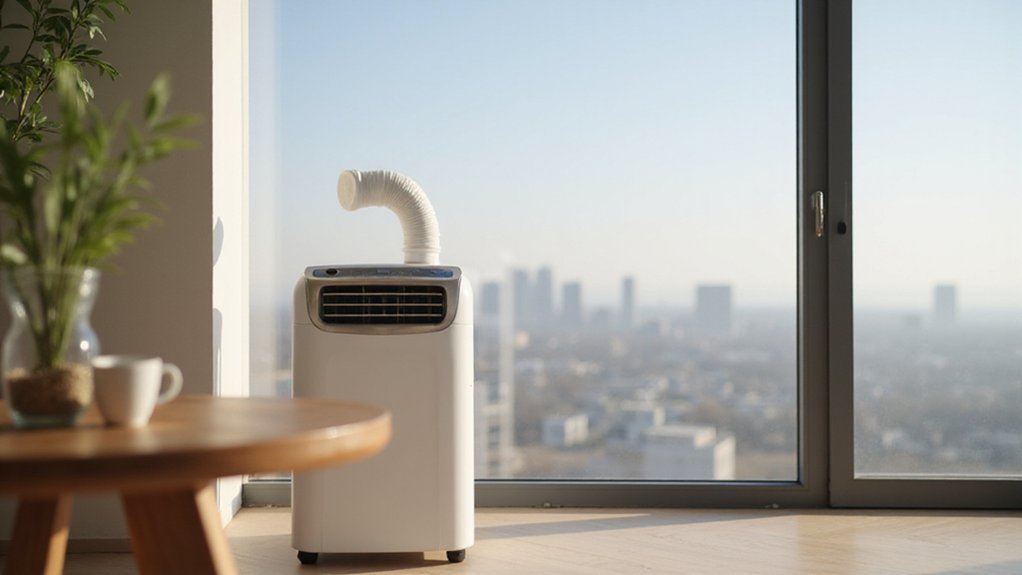
Looking to cool a room fast or save on energy costs? A window air conditioner can drop the temperature by 10°F in about 15 minutes.
It uses roughly half the electricity of a portable unit. It’s also quieter, more durable, and doesn’t take up floor space.
Keep reading to find out which option works best for your home.
Window AC vs Portable AC: Which One Cools Better?
Window AC units cool your space faster than portable models. A window unit can lower a room’s temperature in about 15 minutes, while a portable unit typically takes at least 20 minutes to reduce the temperature by 5°F. Even with the same BTU ratings, window units outperform portables because of their design efficiency. They do not suffer from the same energy loss and are capable of more rapid cooling. Additionally, single hose portables create negative pressure that pulls warm air in through gaps, further reducing their cooling efficiency. This design flaw is similar to how a comforter traps heat less effectively than a duvet with a properly sealed cover. For those who need to cool a room with a queen size mattress, a window unit can also ensure better airflow across the entire sleeping area. When installing a window unit, you should follow proper wiring steps to ensure safe and efficient operation.
Maintenance for window ACs is straightforward: regular seasonal cleaning keeps them running efficiently. Noise levels also differ significantly. Window ACs operate quietly outside the window, with minimal disturbance inside, whereas portable units tend to buzz loudly within your living space. If quick, powerful cooling is your priority and you want a low-maintenance, quieter solution, a window AC is the better choice.
Why Portable ACs Cost $52 More Per Season to Run
Portable ACs cost about $52 more per season to run because they are significantly less efficient than window units. Their energy consumption is nearly double, using around 0.88 kWh compared to 0.43 kWh for an equivalent cooling capacity. This efficiency gap stems from design flaws: single-hose models produce air leakage, and the exhaust hoses waste cooled air, causing the units to work longer and harder to achieve the desired temperature. Window ACs, with their higher EER ratings often exceeding 15, are inherently more energy-efficient due to their design that expels hot air outside automatically. Additionally, choosing bedding that complements your cooling unit, such as cooling bed sheets, can help reduce the overall strain on your air conditioner by keeping you comfortable at slightly higher thermostat settings.
In practical terms, you might spend $15 to $25 per month on a portable AC, whereas a window unit typically costs $10 to $15 monthly. Over a three-month period, which is typical for summer, that difference totals approximately $52 when electricity rates are about 16 cents per kWh. This costs pile up over time; over five years, the extra electricity expense can reach between $200 and $400. Essentially, you’re paying more upfront and enduring higher operating costs each time you turn the portable AC on.
Does Installation Take 10 Minutes or 30 Minutes?
Window AC installation typically takes 10 to 15 minutes if you already have a pre-installed bracket. This quick setup is due to the straightforward process of mounting the unit, screwing in the brackets, and sealing the window. However, without a pre-installed bracket, the installation can extend to 1 to 3 hours. This longer timeframe involves installing L-shaped brackets, applying foam seals, fitting side panels, and possibly making structural modifications, all of which require more time and effort. To ensure a snug fit against the wall, external brackets must be attached outside, as noted in securing the unit. Additionally, selecting a pillowcase-like cover for the unit can help reduce drafts and improve insulation, much like a cozy bedroom setup. Always gather the tools required before starting to avoid delays. A duvet cover functions as a protective layer that simplifies cleaning and updates the room’s style, similar to how a duvet coverlet serves both practical and decorative purposes.
In contrast, portable AC units usually take about 20 to 30 minutes to set up regardless of your experience. The process mainly involves connecting the exhaust hose, adjusting the window kit, and plugging in the unit. No drilling or structural work is necessary, making the installation predictable and less time-consuming. If you value a quick and hassle-free setup, portable ACs are the better choice, especially if your window unit lacks a pre-installed bracket.
Which Is Quieter for Your Bedroom: Window AC or Portable AC?
Window ACs are generally quieter for your bedroom than portable units. Their compressor is located outside, which keeps indoor noise levels lower—typically between 50 and 60 decibels. Inverter models can even operate in the mid-40s, allowing you to sleep through the night without a distracting hum. This quieter operation also stems from window units using roughly half the electricity of portable models, contributing to less mechanical strain and noise indoors. Additionally, a window unit’s fixed installation eliminates the rattling vibrations common with portable hoses, further reducing indoor sound. Unlike portable units, a window AC also avoids raising indoor humidity, because its dehumidifying effect does not add heat back into the room.
Portable ACs, on the other hand, keep the entire unit inside your room, resulting in higher noise levels. They usually produce a constant noise of 52 to 58 decibels or more during operation. This ongoing sound can cause subtle stress and disturb your rest. For a quieter environment, a window AC is the better choice. Selecting a model that produces 52 decibels or less ensures minimal disturbance, whereas portable units simply cannot match this level of bedroom silence. Unlike portable options, window ACs also allow you to compare bed frames and platforms for your bedroom setup without the added distraction of loud machinery.
Window AC vs Portable AC: Which Saves Floor Space?
A window AC takes up zero square feet of indoor floor space, as it sits entirely in the window frame. This makes it ideal if you want to keep your floor clear. In comparison, a portable AC typically blocks two to four square feet of your floor. When not in use, you’ll also need to store its exhaust hose and window kit, which can temporarily take up space elsewhere.
Beyond space considerations, energy savings and cost efficiency are important. Window units use about 0.43 kWh per hour, whereas portable units use roughly 0.88 kWh. This difference can save you approximately $52 over a typical seasonal operating period. Additionally, window ACs often have EER ratings of 10 to 12 or higher, helping you reduce your monthly electricity bill by between $15 and $60.
Cooling speed is another factor. Window ACs can lower room temperatures by 10°F in just 15 minutes, providing rapid relief. In contrast, portable units tend to cool more slowly. If you prioritize saving space and reducing your monthly bills, a window AC generally offers the best combination of performance and efficiency.
Portable Units Start at $199: Are They Worth It?
A $199 portable AC can be sufficient for small, budget-conscious setups, but it has notable limitations. These units generally have a lower Energy Efficiency Rating (EER), meaning they consume more electricity to produce the same amount of cooling compared to higher-end models. Over time, this increased energy use can eat into your savings, especially if you need to run the unit frequently. For small rooms under 200 square feet, such as a tiny bedroom or office, a $199 unit can provide basic cooling. However, it often lacks advanced features like Wi-Fi connectivity or remote control, which can enhance convenience. Matching the unit’s BTU rating—around 6,000 to 8,000 BTU—to your room size ensures effective cooling without wasting power. Investing in a mid-range model costing between $400 and $600 may offer higher EER ratings, leading to better long-term cost efficiency. Although the initial expense is higher, these units typically save you money on electricity bills over time while providing more features and quieter operation. Additionally, unlike air purifiers, these portable ACs do not filter fine particulate matter from the air, so using distilled water in a humidifier is recommended to prevent mineral buildup and white dust in your living space.
Lab Tests Prove Window ACs Cool Better Than Portables
Lab tests clearly show that window ACs outperform portable units in cooling efficiency. A typical window unit can lower the temperature of a 650-square-foot room by 2.6°F per hour, whereas a portable struggles to achieve just 1.25°F. This difference is due to window ACs better heat expulsion, allowing them to cool faster. In terms of energy consumption, window units use only about 0.43 kWh per hour, almost half the 0.88 kWh that portables require. Even higher-BTU portable models can’t match the cooling capacity or energy efficiency of a lower-BTU window AC. The results make it clear that, for speed and savings, window units are the smarter choice. For comparison, choosing the right air conditioner involves considering space and comfort just as you would when selecting a mattress size. Following proper cleaning steps can prevent dust buildup that reduces a unit’s cooling performance over time. Following simple steps to remove dresser drawers successfully can help you access the unit’s rear for easier installation.
Why Portable ACs Use Twice the Energy of Window ACs
Portable ACs use twice the energy of window ACs because of their inefficient design. They typically consume about 0.88 kWh per hour compared to 0.43 kWh for window units. This results in paying roughly $52 more each season to operate a portable. The reason for this significant difference is rooted in how each unit manages heated air and air leakage.
The main flaw in portable ACs is the need for an exhaust hose. While it vents hot air outside, it also allows cool air to escape back inside, forcing the unit to work harder to maintain the desired temperature. This extra effort wastes electricity and reduces efficiency. In contrast, window ACs install directly into the window opening, sealing the gap and preventing air exchange. They do not rely on hoses and are designed to minimize energy loss. As a result, window units can achieve CEER ratings up to 17.6, while portable ACs generally cannot qualify for Energy Star certification. You get less cooling and higher energy costs every hour when choosing a portable over a window unit. However, testing reveals that single duct portable units trade efficiency for portability and convenience, meaning the perceived efficiency differences may be less significant than expected under certain conditions. This inefficiency is why many homeowners still prefer removing window film permanently to improve insulation rather than relying on portable units.
Which AC Type Breaks Down Less?
Window AC units break down less often. They have a sturdier construction and more protective features, which contribute to their durability. Unlike portable units, they typically use a scroll or rotary compressor, both of which experience less wear over time. Additionally, window ACs are less exposed to the elements and accidental bumps, reducing the risk of damage. Proper care, similar to the gentle wash cycle used for weighted blankets, helps maintain the AC’s internal components. A correctly sized unit can also enhance efficiency by matching the room’s dimensions, much like a crib mattress fits a crib frame precisely. While installation might be more involved, their reliable design means fewer repairs and longer-lasting operation. For those prioritizing operational savings, selecting a unit with energy-efficient features further reduces long-term costs.
Which AC Should You Pick for Your Home Setup?
A window air conditioner is typically the best choice for your home setup if you own a house with standard single- or double-hung windows. These units are compact, save floor space, and can cool a room in about 15 minutes. However, the installation process can take between 25 and 35 minutes and may require some effort, especially if the fit is cumbersome. For those looking to maximize space, a DIY approach like building a bunk bed frame can free up room for additional cooling units. Mastering the proper technique for fitting the unit is similar to installing a duvet cover in that both require a clear step-by-step method for a smooth result.
For renters or those with non-standard windows, a portable air conditioner provides more flexibility. These units can be installed in 10 to 15 minutes by venting through windows, walls, or doors. They tend to cool more slowly, taking at least 20 minutes to drop the temperature by 5°F, and they use roughly twice the electricity of window units, costing around $52 more per cooling season. While portable units sacrifice some efficiency and floor space, they offer easy, adaptable installation ideal for temporary or rental situations.