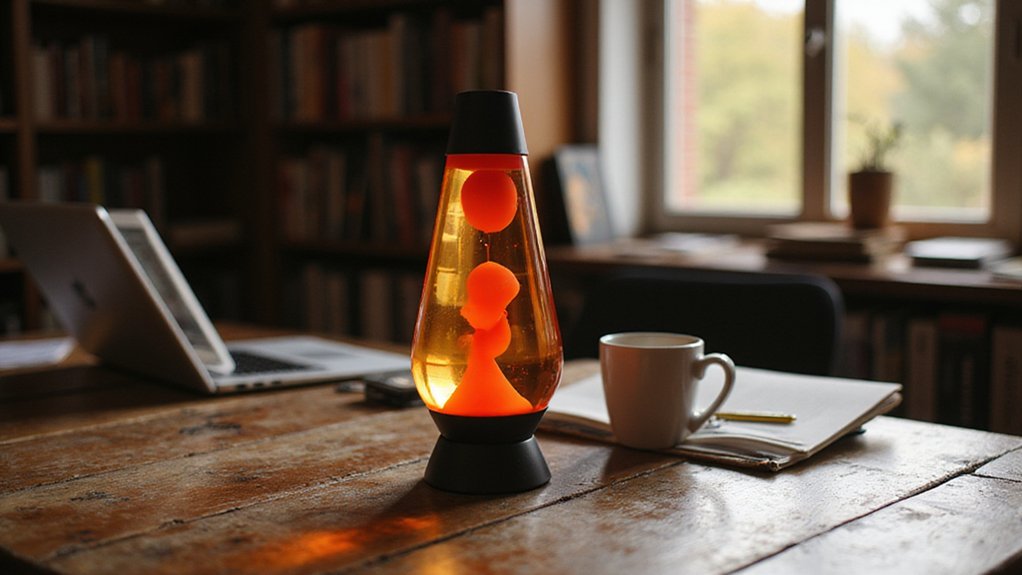
Ever wonder how a lava lamp makes those mesmerizing flows? It all comes down to a simple heating process that makes wax rise and fall in a liquid, creating those hypnotic blobs.
When you understand how heat, density, and design work together, you’ll see what makes a lava lamp tick. Keep reading to uncover the inside secrets of this calming glow.
How Does a Lava Lamp Actually Work?
A lava lamp works through a cycle of heating, expanding, rising, cooling, and sinking, driven by the principles of heat, density, and buoyancy. Inside a glass vessel, a waxy substance is heated by a light bulb at the base, which is powered by a twisted metal wire. As the bulb warms the wax, its molecules gain energy, causing the wax to expand and become less dense than the surrounding clear water-based liquid. This lower density allows the wax to rise through the liquid. This process can be recreated using a mixture of oil, water, and rubbing alcohol in a bottle on a hot plate to simulate similar convection patterns. Once the wax reaches the top, it cools down, contracts, and becomes denser, sinking back toward the bottom. At the bottom, a coil of wire breaks the surface tension of the cooled blobs, enabling them to merge into larger masses. This continuous cycle creates the distinctive flowing motion, enhanced by color variations as the wax moves through the liquid. The entire process relies on the delicate balance of temperature, density differences, and surface tension to produce the calming, mesmerizing effect that makes lava lamps popular. For optimal performance, the lava lamp should be placed on a stable surface, much like a queen mattress requires a properly fitted foundation to support its weight distribution. To avoid common mistakes, ensure the lamp is level and secure to prevent uneven heating and potential damage. Like distilled water from a dehumidifier, the liquid inside must be free of contaminants to maintain proper density and clarity for the lamp’s operation.
Why Density Makes the Wax Rise and Fall
The rising and falling of the wax in a lava lamp is driven entirely by changes in its density caused by temperature. When the wax is heated, it expands thermally, increasing its volume while its mass stays the same. This decrease in density makes the wax less dense than the surrounding liquid, creating a buoyant force that causes it to rise. To maintain this proper density balance, additives are included in the liquid to fine-tune the differences between the wax and water. Conversely, when the wax cools at the top of the lamp, it contracts, decreasing in volume and increasing its density. Once it becomes denser than the liquid, gravity pulls it downward, causing it to sink. This cycle repeats as the heat source continues to warm the wax and then lets it cool, resulting in the characteristic floating and sinking motion observed in a lava lamp. Unlike one-way glass window film, which relies on light imbalance to create a reflective surface, the lava lamp depends entirely on heat energy. Similar principles of thermal expansion apply to choosing the best cooling bed sheets, as materials that dissipate heat well can help regulate body temperature and improve sleep comfort. For a desk setup, the cost and comfort of your workspace can influence whether a lava lamp becomes a relaxing focal point or a distracting heat source.
Inside the Lava Lamp: The Heating and Cooling Cycle
The heating and cooling cycle inside a lava lamp begins with the 40-watt incandescent bulb located in the base. This bulb directly heats the wax, causing its molecules to spread apart. As the wax expands, its density decreases, making it lighter than the surrounding liquid. This causes the wax to rise due to buoyancy. The metal spiral coil at the base helps globules merge or break apart during this movement. This process is similar to how cool memory foam relies on temperature-sensitive materials to change shape and provide comfort. The weighted nature of the wax ensures it sinks effectively once it has cooled, much like deep pressure stimulation from a weighted blanket promotes relaxation. When sewing your own pillowcase at home, you can use a simple hem to finish the open edge neatly and save on costs.
When the wax reaches the cooler upper part of the lamp, it loses heat, contracts, and becomes denser. The increased density pulls the wax back down toward the heat source. This process repeats continuously, creating the flowing blobs that make lava lamps captivating. The cycle relies on a subtle temperature difference—warm near the heat source and cooler at the top—that drives the rising and falling motion of the wax.
Why Insolubility Is Essential for the Blobs to Move
Insolubility is essential for blob movement because it keeps the wax and liquid from dissolving into each other. This lack of mixing ensures they remain two separate phases, which is crucial for creating the density differences that generate buoyancy. If the wax dissolved into the liquid, the distinct density contrast would disappear, and the blobs would no longer be able to rise and fall. Additionally, insolubility helps preserve the vibrant colors by preventing dyes from mixing or diffusing between the layers. As the wax heats and expands, it stays separate from the liquid, allowing it to float upward. When it cools, it contracts and sinks again as a distinct blob. This continuous cycle relies on the wax’s refusal to merge with the surrounding liquid, maintaining the isolated units responsible for the lamp’s characteristic flowing motion. Just as using proper hanger types prevents sweaters from stretching, keeping the wax and liquid as separate phases ensures the lamp’s performance. Density measures how tightly particles are packed, directly affecting the rising and sinking of the blobs.
Why You Can’t Use LED Bulbs in a Lava Lamp
LED bulbs do not generate enough heat to operate a lava lamp properly. Standard LED bulbs produce significantly less thermal energy than the 25 to 40 watts typically needed to heat the wax to around 140°F to 160°F. Without sufficient heat, the wax never melts or expands, preventing the convection cycle that creates the flowing motion. Most LEDs are designed to prioritize light output over heat, making them unsuitable for this purpose. Even specialty LED bulbs created for newer lamps usually do not deliver the thermal energy required. Using the correct incandescent bulb is essential to ensure the wax reaches the necessary temperature and the lamp functions as intended. Just as a duvet cover helps maintain a cozy temperature in a bedroom, the right bulb provides the heat needed for the wax to flow. For comparison, vanity mirrors with lights often rely on bright, cool-running LEDs that are perfect for makeup application but totally ineffective for heating lava lamp wax.
What the Wire Coil Actually Does
The wire coil at the bottom of a lava lamp serves a vital function beyond decoration. It acts as a heat conductor, transferring warmth directly from the light bulb to the wax. This accelerates the melting process, reducing the wait time from approximately 45 minutes to a much shorter period. The coil also disrupts the surface tension of the wax, encouraging cooled blobs to merge at the base rather than forming countless tiny microbubbles. This adhesion prevents the wax from hovering as a single sphere and helps maintain smooth, continuous movement. The coil’s mechanical agitation also helps reform larger wax globules after collisions that would otherwise cause them to bounce apart. Additionally, the coil’s magnetic influence is not from a magnet but from guiding the wax’s natural expansion and contraction. This influence ensures that the chemical reactions involved in melting and cooling occur in a controlled, cyclical manner. As a result, the coil contributes to the consistent bubbling effect you see, making your lava lamp function smoothly and reliably. Without it, the dynamic movement and visual appeal would be compromised. For reference, a standard king mattress measures 76 inches wide. For a comparable level of comfort in your sleep setup, consider top firm mattresses that provide stable support. For optimal organization, similar principles of heat management apply when using top wire shelves to store items near a heat source.
How to Keep Your Lava Lamp Running Smoothly
To keep your lava lamp running smoothly, start by checking the coil at the bottom of the globe. If the flow isn’t consistent, gently twirl the globe to help redisperse the wax. Limiting operation to a maximum of eight hours at a time allows the lamp to cool down properly, preventing overheating and prolonging its lifespan. Always let the lamp cool completely before restarting to avoid damage. Place it on a stable, ventilated surface away from drafts, radiators, or direct sunlight. The ideal room temperature is around 20 to 25 degrees Celsius, which supports optimal flow. If you notice persistent heat issues, consider using a dimmer switch to regulate the power. Verify that the bulb wattage matches the manufacturer’s recommendations, as different lamps require different wattages for proper functioning, and always disconnect the lamp from its base before performing any maintenance. If the liquid appears cloudy, turn the lamp off and let it cool completely, then run it again for eight to ten hours—this often clears up minor cloudiness. Never open the bottle cap, and avoid shaking the globe while it is warm, as this can cause damage or leaks. To further prevent mineral buildup that can affect performance, regularly clean the exterior with a soft, damp cloth using a diluted vinegar solution to keep the glass clear and free of residue. For best results, maintain consistent indoor humidity levels to prevent the lamp’s internal components from being affected by moisture. Unlike heated throws or blankets, a lava lamp’s performance does not depend on cost or comfort features for everyday use.