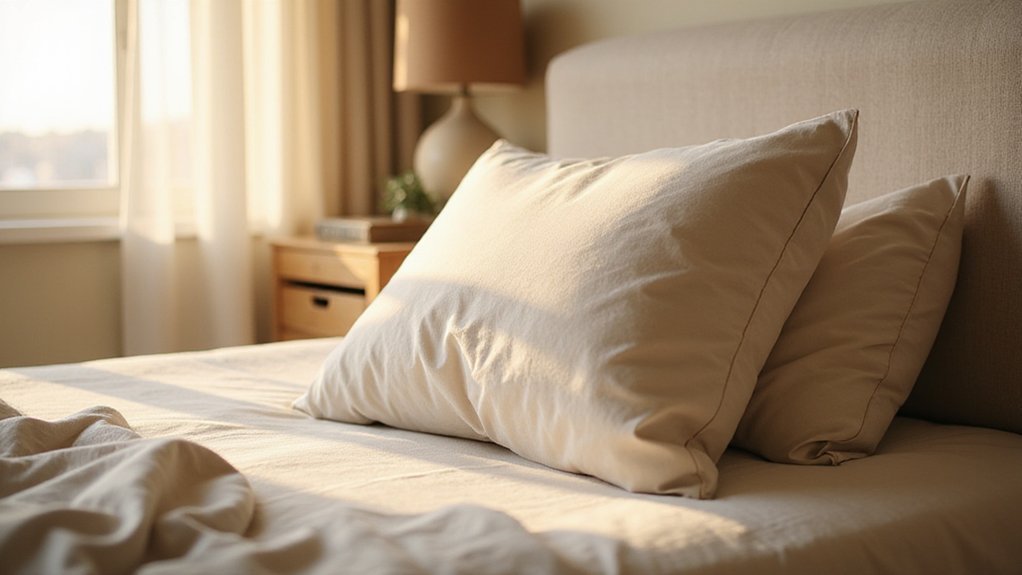
Ever wonder what a sham pillowcase really is or why it’s different from regular pillowcases? It’s a decorative cover used to enhance the look of your bed without serving as a sleeping pillow.
These cases often feature a zipper or envelope closure and may have a border called a flange, creating an elegant, finished appearance. Keep reading to learn everything you need to know about shams and how they can elevate your bedding style.
So, What Exactly Is a Sham Pillowcase?
A sham pillowcase is a decorative cover designed mainly for aesthetics rather than everyday use for sleeping. It’s meant to enhance the look of your bed by transforming a standard pillow into a stylish accent piece. Typically, shams are placed at the front of the bed to showcase intricate designs, textures, or embellishments such as flanges or embroidery. Before sleeping, you remove them or tuck them behind your sleeping pillows to keep your bed comfortable and functional. For example, placing two standard shams on a queen mattress can create a balanced, polished look. Just as a window air conditioner requires careful placement and leveling to avoid leaks and ensure efficient cooling, a sham is positioned to maintain the bed’s visual balance without disrupting its function. Similarly, an air purifier’s effectiveness depends on proper placement and airflow to trap pollutants efficiently.
The fabric used for shams tends to be thicker and less breathable than regular pillowcases to support their decorative features. You can change them seasonally by selecting different materials—for example, velvet for winter warmth or linen for summer lightness. Unlike typical pillowcases, shams have a hidden opening—often with a zipper or envelope closure—positioned on the back, which keeps the front appearance flawless. Since their primary purpose isn’t for sleeping, you won’t sleep directly on these covers, though their sturdy construction makes them suitable for layering and seasonal swapping. Additionally, because shams are not designed for sleeping, they help maintain a pristine bed aesthetic without the wear of nightly use.
Why Do They Call It a “Sham” Pillowcase?
The term “sham” comes from the 17th century, originally a variation of “shamble,” which meant something fake or an illusion. This origin fits perfectly with what a pillow sham truly is—a decorative cover that hides the real pillow underneath. It’s not meant for sleeping; instead, it creates a polished, elegant appearance on your bed. Historically, the use of shams dates back to the 18th century when ornate pillowcases were part of luxurious bedding displays. People used lace, embroidery, and intricate needlework to showcase wealth and style. A sham isn’t intended as a deception but as a statement of sophistication—disguising a functional pillow with a decorative façade to enhance the overall look of your bed. Unlike the functional choice between incandescent and LED lighting, which impacts cost and comfort, a sham prioritizes aesthetic elegance over practical everyday use.
3 Key Differences: Sham vs. Standard Pillowcase
A sham and a standard pillowcase differ primarily in their closure method and design. A sham closes on the back, often using a hidden zipper or an envelope flap, which can make it stiffer and less breathable for sleep. In contrast, a standard pillowcase remains open at one end, allowing for easy pillow insertion and removal, as well as better air circulation. For those decorating a queen-sized bed, coordinating a sham with a top queen headboard can create a cohesive and polished look.
In terms of material durability, shams tend to use heavier, more decorative fabrics that hold their shape longer but may feel rough against the skin. Standard pillowcases usually feature softer, more breathable materials that prioritize comfort but may wear out faster from regular washing and nightly use. Using a humidifier in the bedroom can help maintain optimal humidity levels, preventing the air from becoming too dry and reducing wear on fabrics.
Price wise, shams generally cost more because of additional embellishments like trims, buttons, or embroidery. They are designed to enhance the decorative look of your bedding. On the other hand, standard pillowcases are typically more affordable, focusing on hygiene and everyday comfort rather than decorative appeal. Unlike decorative shams, closet shelves prioritize function over form and are built with durable materials to store folded linens.
Best Fabrics for a Pillow Sham’s Decorative Look
The best fabrics for a pillow sham’s decorative look depend on the style you want to achieve and how much durability you need. Cotton is an excellent beginner choice because it’s easy to work with, affordable, and offers a wide range of colors to match your bedding. For a more structured, tailored appearance, canvas or heavy home decor fabrics provide stability and hold their shape well. Linen or linen blends add a relaxed, sophisticated texture; their natural fibers give a soft, tactile finish that pairs beautifully with duvets and other bedding. If you prefer a smooth, polished finish, sateen provides a subtle sheen, while percale offers a crisp, matte surface. For modern aesthetics and practicality, performance blends resist stains and moisture, making them easy to care for. To maintain the best indoor air quality around your bedding, consider that evaporative humidifiers avoid releasing mineral dust that can settle on fabrics. Overall, your fabric selection influences both the sham’s appearance and longevity, so choose based on the look you want and how much maintenance you’re willing to do. When determining the ideal mounting height, ensure your bracket placement complements the sham’s visual weight. For those seeking a balance of pressure relief and durability, hybrid mattresses combine foam layers with supportive coils to enhance overall sleep comfort.
How a Sham’s Envelope Closure and Flange Work
An envelope closure works by overlapping fabric panels—usually with a 3 to 6 inch overlap—that hold the pillow in place through friction and tension instead of hardware like zippers. To create this, cut the back piece of the sham 8 inches longer than the front. Fold and sew each edge twice to hide raw edges, ensuring durability and a clean appearance. The overlapping flaps form a snug pocket that prevents the pillow from slipping out. This simple fabric structure relies on precise measurements and careful sewing to provide a secure, professional finish without added hardware. Pre-wash fabric if the pillow sham will be washed regularly, as cotton fabrics may shrink and alter final fit.
Can You Sleep on a Pillow Sham Comfortably?
You can sleep on a pillow sham, but it’s not designed for regular use. Shams are ornamental covers meant to enhance decor, not provide comfort for nightly sleep. These covers often feature flanged borders and embellishments that can feel rough against the skin. If you do choose to sleep on one, you should wash it every 7 to 10 days alongside your sheets to keep it hygienic. Their hidden envelope or zipper closures also tend to stay better in place compared to standard pillowcases, which can slip off more easily.
For the best rest, it’s recommended to remove the sham and use a soft, breathable pillowcase instead. In a pinch, a sham can serve for a quick nap, but it won’t offer the same support and comfort as a proper pillowcase designed for sleeping.
How to Style Pillow Shams for a Layered Bed
To style your bed with pillow shams, start by placing two or three Euro shams against the headboard. These larger square pillows create a neutral, layered backdrop that anchors your look. In front of them, stack two King-sized shams for the second tier, ensuring the pillow inserts are 1 to 2 inches larger than the sham covers for a plush, full appearance. For the third layer, add standard or queen-sized shams to add depth and visual interest, maintaining the same size-insertion ratio. Choosing a high-quality comforter that matches your sham arrangement will further enhance the overall cozy and cohesive bed experience.
Next, incorporate accent pillows such as a pair of 20×20 inch patterned squares or a long lumbar pillow to introduce texture and personality. Mix different fabrics like velvet, linen, or silk to create contrast and depth. To avoid overwhelming the look, balance bold statement shams with solid or near-solid pillows, ideally in a color already present in your bedding. Incorporate a matching hue from your bedding into the pattern to unify the ensemble. Finish your arrangement with a lumbar or boudoir pillow at the front. Tuck away zippers on decorative pillows for a cleaner look, and align everything neatly to achieve a crisp, designer-inspired finish. For those with allergies, choosing a HEPA air purifier over an ionizer can improve indoor air quality without producing ozone. Proper spinal alignment during sleep is equally important for waking without pain, as a poor mattress can undermine even the best pillow arrangement.
How Often Should You Wash a Pillow Sham?
You should wash your pillow sham once per week. Regular washing helps maintain pillow hygiene by removing skin oils, dirt, and allergens that can accumulate during sleep. If you tend to sweat heavily at night or use heavy skincare products, increase the frequency to two or three times a week to prevent buildup and odors. Using a top sheet and sleeping in a cool environment can allow you to extend this routine to every two weeks. A box spring can also support proper airflow beneath your mattress, which helps reduce moisture and allergens in your bedding. To care for your shams properly, turn them inside out and wash on a cool or warm cycle with a mild detergent. Air drying or tumble drying on low heat preserves the fabric quality. Decorative shams, which often have delicate embellishments, should be washed only two to four times a year. If you notice a musty smell, yellowing, or skin irritation, wash your shams immediately. Keeping your pillow shams clean is essential for a healthy sleep environment. For a similar budget-friendly approach to home textiles, you can apply upholstery fabric to a headboard for a custom look. Before washing, remove dresser drawers entirely from the frame to access bedding stored inside without obstruction.