Wondering how to keep your weighted blanket clean without damaging it? Proper washing can extend its life and maintain its comforting weight.
You’ll learn simple steps to safely refresh your blanket, from pre-treating stains to drying it properly. Keep reading to find out exactly how to care for your weighted blanket and avoid common mistakes.
Why Weighted Blankets Require Gentle Cleaning Methods
Weighted blankets require gentle cleaning methods because their construction makes them vulnerable to damage from harsh washing techniques. Aggressive cycles can tear seams under the weight of the filling, compromising the blanket’s structure. Hot water can warp the internal beads, changing how the blanket feels and behaves. Rough detergents can erode the shell fabric, reducing its lifespan. Wringing or twisting the blanket can cause the filling to clump on one side, unevenly distributing the weight and affecting comfort. For standard bedding, a queen size mattress typically measures 60 by 80 inches, providing a useful reference for blanket fit. Silk and synthetic fabrics are especially sensitive; exposure to high heat can cause shrinking or melting. Therefore, avoid hot washes and drying. Overloading the washing machine prevents thorough rinsing, leaving residues that weaken fibers over time. Do not hang the blanket when wet because gravity can stretch seams and disrupt the bead distribution. Handling it gently preserves both the shell and the internal weight, ensuring your weighted blanket continues to provide comfort and last longer. To avoid tearing seams, select a gentle cycle that securely contains the blanket without excessive agitation. Beginners can also benefit from reviewing quilt pattern tips for general fabric care guidance.
Always Check the Care Label on Your Weighted Blanket First
Always check the care label on your weighted blanket first. This label provides essential instructions on how to clean and maintain it properly. It will tell you if the blanket is machine washable or if it requires hand washing. The label also specifies the correct water temperature—usually cold or warm, but never hot—and the recommended gentle cycle to prevent damage. Avoid using bleach altogether, as it can harm the fabric and filler. Fabric softeners should also be avoided because they alter the texture and affect bead distribution. Instead, opt for mild, eco-friendly detergents free of enzymes or whiteners. If your washing machine has a weight limit, platforms and frames may help you understand how to avoid overloading similar items in your home. Silk pillowcases, for example, also require gentle care to protect their delicate fibers.
Additionally, the care label indicates weight limits for washing machines, usually under 15 to 20 pounds, to avoid overloading and damage. It also offers drying instructions, such as air drying or tumble drying on low heat, to prevent moisture buildup or fabric warping. Following the care label ensures your blanket stays in good condition while maintaining comfort and safety.
Pre-Treat Stains on Your Weighted Blanket Safely
To tackle stains on your weighted blanket safely, start with proper detergent selection. Use a high-quality liquid detergent like Tide, but avoid bleach or fabric softeners, as they can damage the fabric’s texture or cause fading. Cover the stain with a small amount of detergent and let it sit for five minutes to loosen the residue. For fabric protection, gently work the solution in with a soft brush or cloth, but never scrub aggressively. Scrubbing can strain seams and shift internal beads, potentially damaging the blanket. Instead, press a soft cloth against the stained area to absorb the lifted residue. For stubborn spots, mix water with mild detergent and gently massage the stain. Before spot treating, soak the blanket in cool water for at least 15 minutes. Never wring or twist the fabric, as this can harm the internal weights and the overall structure.
Hand Wash Your Weighted Blanket for the Safest Clean
Hand washing your weighted blanket involves several careful steps to ensure it gets thoroughly clean without damage. Start by filling a large tub or sink with cold to lukewarm water; this temperature protects the fabric’s softness and prevents shrinking. Add a small amount of mild, gentle laundry detergent—avoid bleach and fabric softeners, which can harm the fabric or filling. Swish the water until the detergent dissolves completely. This gentle method contrasts with queen size care, where machinery often handles larger loads, but it aligns with the principle of practical tips for preserving a fixture’s integrity. For best results, always check the care label on your blanket before starting, as it specifies safe washing temperatures.
Submerge the blanket fully in the water and gently massage and knead it, focusing on sections for a few minutes at a time to loosen dirt. Let the blanket soak for 10 to 60 minutes, depending on how dirty it is. After soaking, drain the soapy water and refill the tub with fresh cold water to rinse. Repeat the rinsing process until no soap remains. Gently wring out excess water without twisting, then press the blanket between dry towels to absorb remaining moisture.
Finally, lay the blanket flat to air dry, flipping it every few hours to prevent clumping or uneven drying. This method ensures a thorough clean while preserving the integrity of your weighted blanket’s internal filling.
Machine Wash Your Weighted Blanket When the Label Allows
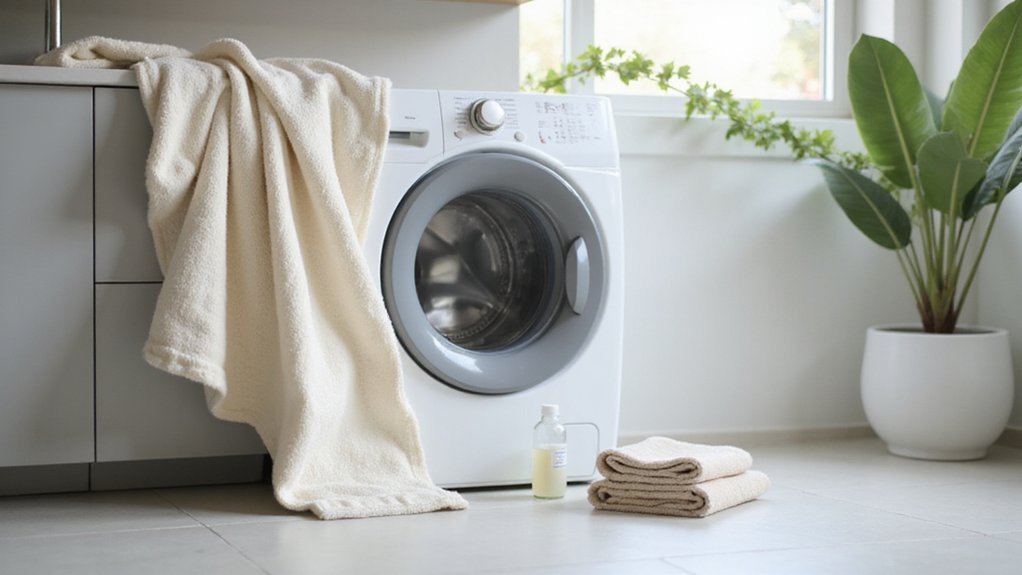
Check the care label first—if it states the blanket is safe for machine washing, and your machine can handle the weight (preferably under 15 pounds), you can proceed. Pre-treat any stains with a small amount of gentle, dye-free detergent and let it sit for about five minutes. For stubborn spots, scrub with a toothbrush and soak the area for an hour if necessary. To ensure long-lasting, fresh results, always use a mild detergent and avoid bleach. Just as with air purifiers, regular maintenance ensures better air quality and longevity of the product.
Load the blanket alone into the washing machine, making sure to distribute it evenly to prevent unbalanced loads. Select a gentle cycle with cold water, and avoid using fabric softener, which can weaken the fabric over time. During the last rinse, add ¼ cup of white vinegar to help eliminate odors. If you’re concerned about detergent residue, run an extra rinse cycle. Use a low spin speed to reduce wear and tear. Wash your weighted blanket every one to three months, depending on how frequently it’s used, since over-washing can damage the fibers. Full and twin mattresses offer different sizes that may influence blanket care if the blanket is used on one of these bed sizes.
How to Dry a Weighted Blanket Without Ruining It
To dry your weighted blanket without ruining it, lay it flat on a clean surface or use a dryer on the lowest heat setting. Never hang it, as the filler may shift and the fabric can stretch out of shape. If air-drying, turn the blanket every few hours and flip it to prevent damp spots and ensure even drying. For machine drying, add dryer balls or clean tennis balls to help fluff the filler and prevent clumping. Avoid using fabric softeners because they coat the fibers and can damage the blanket’s texture. Check the blanket every 20 to 30 minutes during the cycle, fluff it manually if needed, and remove it promptly once dry to prevent wrinkles and overheating.
How Often Should You Actually Wash Your Weighted Blanket?
If you use your weighted blanket daily, wash it every two to three weeks to remove sweat and body oils that accumulate. Using a sheet underneath can extend this to once a month. For blankets used only occasionally, such as a lap blanket, cleaning them three to four times per year suffices. Always wash immediately if you notice stains or odors. Avoid fabric softeners because they coat the fibers and can damage the fill. Proper drying techniques are essential to preserve the blanket’s weight distribution and shape. Adjust your washing schedule based on how often you use the blanket; a regular nightly user may need to wash it more frequently than one used less often. To further reduce allergy triggers in your home, consider using air purifiers to capture airborne allergens like dust and pollen.
Common Mistakes That Ruin Weighted Blankets (and How to Avoid Them)
Avoid washing your weighted blanket in hot water. The high temperatures can melt the plastic beads inside, damaging the fill. Refrain from vigorous scrubbing and high-speed spin cycles, as these can tear the fabric and cause uneven weight distribution, making the blanket less effective and potentially uncomfortable. When drying, never hang the blanket, because the weight of the filling will pull downward permanently, disrupting its evenness.
Instead, opt for low heat when drying, and place clean tennis balls in the dryer to help prevent the beads from clumping together. Washing the blanket only when necessary extends its lifespan and keeps the fabric in good condition. Always use a protective cover during washes to minimize wear and tear, and avoid over-washing, which can weaken the fibers and potentially damage the motor of your washing machine.