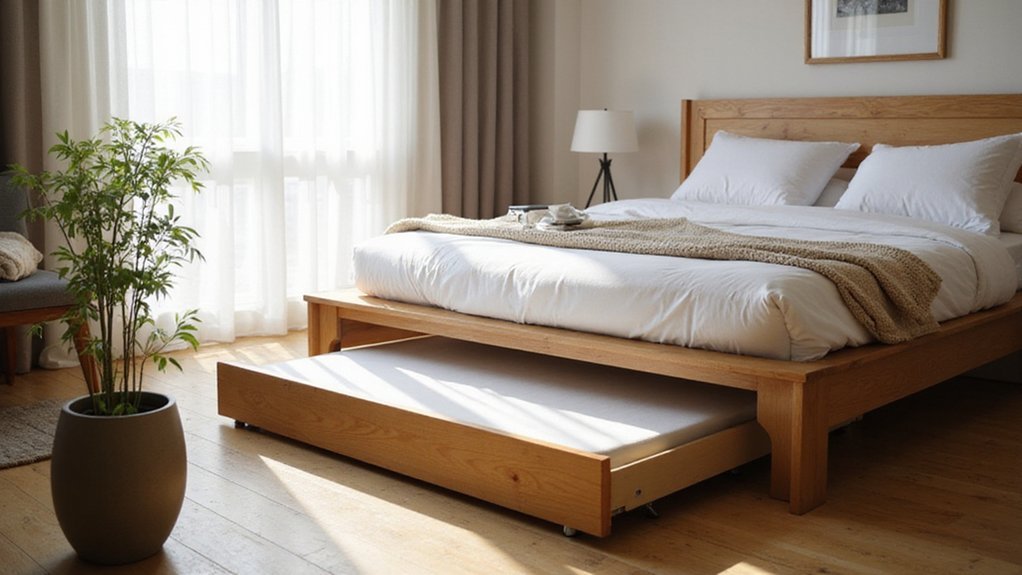
Ever wondered how to add an extra sleeping surface without crowding your room? A bed trundle is a low, wheeled platform that tucks neatly under your main bed and pulls out when needed.
It’s perfect for saving space while providing an extra mattress. Keep reading to learn how to choose the right one for your needs.
What Is a Trundle Bed and Where Did the Name Come From?
A trundle bed is a low, wheeled sleeping platform that slides under a standard bed and can be pulled out when needed. Its name originates from 16th-century English, where “trundle” referred to the small wheels that support its movement. Shakespeare even mentioned a “truckle bed” in his plays, highlighting its historical presence. Traditionally, these beds were used by servants staying close to their employers. The lower mattress is typically around 8 inches thick to fit comfortably within the frame. For comparison, a standard queen mattress measures 60 inches wide by 80 inches long, which provides enough space for a trundle bed underneath. Disassembly and storage are usually straightforward—often just removing the lower mattress and detaching the casters. Make sure the wheels lock securely to prevent accidental rolling during sleep, as safety is key. Using a silk pillowcase on the trundle bed mattress can reduce friction on hair and skin, offering a more comfortable guest experience. Overall, trundle beds offer a practical space-saving solution that’s easy to set up and store, making them ideal for guest rooms or small bedrooms.
What Are the Main Types and Which Size Should You Choose?
The main trundle bed types include roll-out models, pop-up beds, daybeds, captain’s beds, and bunk bed trundles. Roll-out trundles slide out from underneath the main bed on casters, making access easy without disturbing the top sleeper. Pop-up models lift to align with the main bed, creating one large sleeping surface ideal for versatile use. Daybed versions add back and armrests, transforming the bed into a sofa during the day. Captain’s beds feature built-in drawers beneath the mattress, providing extra storage for linens or clothes. Bunk bed trundles stack beneath the lower bunk, offering a third sleeping surface in the same footprint. For those interested in a more rustic or space-saving solution, building a simple shoe rack DIY can also help organize the area around the trundle bed. You should also consider how much clearance you need for the trundle to fit properly, much like consulting a ceiling fan sizing chart for bedroom dimensions. A full mattress measures 54 inches wide by 75 inches long, making it a suitable option for a trundle bed in a medium-sized guest room. Choosing the right size depends on your room dimensions. Twin trundles are best for small children’s rooms under 100 square feet, offering a compact footprint. Full or queen-sized trundles suit medium to large rooms, with at least 120 square feet recommended for a queen. Keep in mind that the thickness of the lower mattress should not exceed 8 inches to ensure it slides smoothly under the main frame. Material quality impacts both durability and style. Solid wood frames are sturdier and more long-lasting than MDF or particleboard. For longevity, prioritize beds with durable metal or wood components. Always double-check the specific dimensions and weight capacities to match your needs, and confirm that the chosen size allows enough clearance for easy bed access and movement.
Why Trundle Beds Maximize Space in Small Rooms
A trundle bed maximizes space in small rooms because it features a low profile with a second mattress stored directly under the main frame. This compact design allows two sleeping surfaces to fit within the footprint of a single bed. Since the second mattress is stowed away when not in use, it eliminates the need for permanent space, making it ideal for tight spaces like children’s bedrooms and studio apartments. You can easily roll out the hidden bed on casters for quick guest accommodation without rearranging your furniture. Learning the proper duvet cover installation technique can help keep the trundle mattress neat and protected when pulled out. Despite its space-saving design, a trundle bed can still complement your room’s decor. Various decorative accents and color options let you customize its appearance to match any style. During the day, it can serve as a single bed or sofa, freeing up floor space for activities or storage. When needed at night, it transforms into two separate beds, perfect for sleepovers or siblings sharing a room. Its low-to-ground construction reduces fall risks compared to bulky bunk beds, adding an extra layer of safety. This combination of versatility, safety, and efficient use of space makes a trundle bed a smart choice for many small rooms. Using a homemade pillowcase for the extra mattress is an easy DIY way to save money and add a personal touch. For a durable look, the trundle frame’s vanity mirror finish can be matched with stylish room accents to elevate the overall aesthetic.
What Buying Features and Price Ranges Matter Most?
Choose sturdy frames that can handle heavy loads. Look for options made from solid wood or durable metal, which support at least 300–350 pounds per section. This range is ideal if you’ll be using the bed frequently or want added reassurance. Avoid particle board, as it tends to weaken and degrade under stress over time. When comparing furniture with a similar footprint, a vanity vs. desk setup may offer a clearer trade-off between cost and everyday comfort than a trundle bed. For seating and storage needs, however, a storage bench often provides greater everyday comfort than a standard ottoman due to its structured support and easier access. Likewise, if you are also considering storage solutions for a closet, easy DIY closet shelves can be built using simple materials and budget-friendly tips.
Next, consider the mechanism that suits your space and needs. Roll-out designs offer quick access and can easily slide out for use. Pop-up mechanisms create larger surface areas when needed, perfect for accommodating extra guests. Daybed configurations provide versatility, functioning as both a seating area and a bed.
Finally, verify the mattress size and thickness compatibility. Most trundle beds support twin mattresses up to 8 inches thick. Measure your bed’s clearance carefully to avoid jamming or difficulty pulling the tray in and out. Matching these features with your preferred price range will ensure you select a durable, functional trundle bed tailored to your space and usage.
How to Upgrade, Maintain, and Improve Comfort
To upgrade stability, use locking mechanisms such as locking casters or attaching a strap around the trundle to prevent sliding. If casters aren’t an option, zip ties can secure the pop-up legs in place. Ensure the frame remains properly supported by checking the window sill for any level inconsistencies that might affect balance. For those who prefer a softer feel, consider a sateen weave for its smooth, silky texture that resists wrinkling.
Enhance comfort by adding a thin feather topper, which provides a plush feel without bulk. Store quilts and blankets inside the trundle drawer for easy access and to keep the space tidy. Replace standard slats with an adjustable support system to improve stability and ensure even weight distribution. When extending the trundle, leave at least 2 to 3 feet of clearance to prevent obstruction. Always verify that the lower bed remains square and level during deployment to maintain safety and comfort. Trap the bed skirt under the mattress to prevent frame catches and ensure smooth operation when opening or closing the bed. For a cohesive look, choose a duvet insert that matches your bedding set’s weight and fill power for consistent warmth.