Wondering whether a storage bench or an ottoman fits your space best? Each serves a different purpose: a storage bench offers sturdy support for seating and holds your belongings, while an ottoman provides a comfortable footrest that’s easy to move around.
Knowing their key differences will help you choose the right piece for your needs. Keep reading to find out which one suits your home best.
What Is a Storage Bench vs an Ottoman? (Definitions and Core Features)
An ottoman is a fully upholstered, cushioned piece lacking a back or arms. Its design versatility makes it a popular choice because it can serve as a footrest, a low seat, or an impromptu coffee table. Typically lighter and softer than storage benches, ottomans are easy to move around the living space to suit your needs. Many feature a lift-top lid that provides storage space, but the interior is usually best for casual items like magazines rather than heavy or daily-use objects. This makes ottomans ideal for relaxed living rooms or areas where quick, informal seating or surface space is desired. Unlike these light pieces, window air conditioners require a dedicated installation process and proper tools to function safely. For those prioritizing consistent comfort and durability, choosing between a hybrid mattress and memory foam depends on your preference for support versus softness in seating surfaces. When selecting an ottoman for a darker corner, consider light bulb types to ensure the room’s ambient brightness matches the upholstery color.
Storage Bench vs Ottoman: Which Works Best for Your Room Layout?
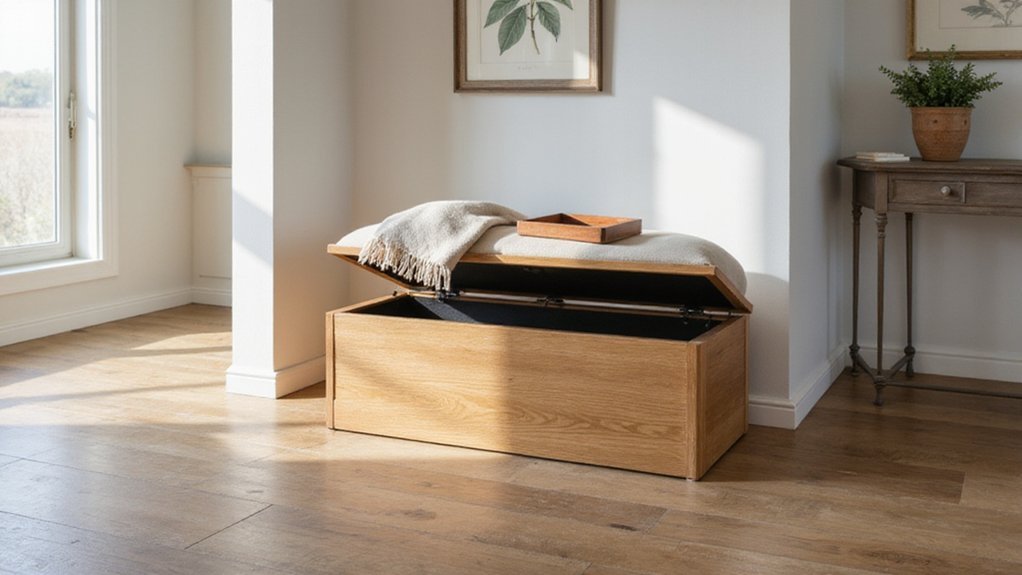
A storage bench generally works best for room layouts that are tight or narrow. It can be placed against a wall to maximize space and provide both seating and substantial storage without obstructing walkways. Its structured depth, usually between 14 and 18 inches, allows it to fit neatly in entryways or mudrooms without crowding the area. This makes it ideal for spaces where conserving floor space is essential. For reference, a queen mattress is 60 inches wide, helping to gauge how much floor area a bench can free up by comparison.
In contrast, an ottoman offers greater flexibility for open-concept or central zones. You can position it in the middle of a living room as an alternative to a coffee table or as overflow seating, adapting easily to shifting needs. Ottomans are more versatile in placement because they do not require a wall and can be moved around as necessary.
The choice between a storage bench and an ottoman also depends on style compatibility. A bench often suits linear, wall-anchored aesthetics, creating a cohesive look along a room’s edge. An ottoman, however, complements relaxed, multi-functional layouts where casual seating and surface options are desired. Ultimately, opt for a storage bench if you need efficient wall-hugging storage, or select an ottoman if you prefer flexible placement that does not rely on wall proximity.
Which Provides Better Seating Comfort and Footrest Use?
An ottoman provides better seating comfort and footrest support than a storage bench. You can sink into its fully upholstered, plush cushioning, making it ideal for lounging and extended relaxation. Its padded top cradles your feet at a height of around 15 to 18 inches, which is perfect for comfort and ergonomic use as a footrest. In contrast, storage benches have firmer, less cushioned surfaces that are suited for quick tasks like putting on shoes. They prioritize practicality over long-term comfort and are less suitable for prolonged sitting or relaxing. For those who prioritize proper spine alignment during rest, memory foam cervical pillows offer targeted neck support that a storage bench cannot provide. Regarding material durability, ottomans typically feature robust upholstery that withstands daily foot traffic, though wear over time is possible. In terms of style versatility, ottomans commonly come in shapes like square or round, offering flexible placement options either as extra seating or a side table. Storage benches, while functional, generally do not match the comfort and support qualities of an ottoman when it comes to extended use for resting or lounging. Understanding this difference helps you decide based on everyday use and long-term relaxation needs. Many top-rated models, such as those with hidden storage, offer a seamless blend of comfort and practical space-saving design.
Which One Handles More Weight and Wear Over Time?
Benches handle significantly more weight and wear over time compared to ottomans. With solid hardwood frames, dovetail joints, and seating capacities of 250 to 350 pounds, they are built to withstand heavy use and daily pressure. Their sturdy construction means they can endure real wear without degrading quickly. Ottomans, on the other hand, are limited by their smaller dimensions and less robust build, which results in lower weight limits and reduced structural resilience. As a result, ottomans typically require replacement sooner when subjected to heavy use. For example, the Better Homes and Gardens Storage Organizer Bench supports up to 300 pounds total, highlighting its superior weight handling capability.
For long-term durability, choose a bench equipped with gas-lift pistons rated for at least 50,000 cycles and stainless-steel hinges. These features ensure the bench remains functional and stable even with frequent lid openings. Because of their stronger construction and higher weight capacity, benches offer better value over time, especially for frequent or heavy use scenarios.
Which Is Easier to Maintain and Clean for Daily Life?
Ottomans are easier to maintain and clean for daily life. Vacuuming weekly with an upholstery attachment is the most effective way to remove dust and debris before they settle into the fibers. For spills, blot immediately with a clean cloth to prevent stains from spreading. Fabric-upholstered ottomans can be spot-cleaned with mild detergents or a DIY vinegar solution, making cleanup straightforward. Leather options simply require a damp cloth and occasional conditioner, with no need for deep scrubbing. Unlike benches, which often have crevices and heavy lifting, ottomans are generally simpler to care for daily. Always test cleaning solutions on a hidden area first to avoid damage. With these simple steps, your ottoman can stay fresh with minimal effort, making regular maintenance quick and hassle-free.
Storage Bench vs Ottoman: Which Should You Choose?
An ottoman is the better choice if you prioritize comfort and versatility. It is fully padded, making it more comfortable for sitting or lounging. Its lightweight construction allows you to easily move it around, adapting to different spaces and needs. You can use it as a footrest, an extra seat, or even as a makeshift coffee table. Many ottomans feature lift-top compartments for storing blankets, toys, or other small items, helping keep your space tidy. Their upholstered, plush appearance adds a cozy and inviting look to your room. However, keep in mind that ottomans lack arms and backrests, so they are ideal for casual lounging rather than structured seating. Your choice depends on whether you need a functional, supportive seat or a flexible, comfortable accent piece. Unlike a changing table, which requires a specific optimal height for safe and comfortable use, an ottoman prioritizes adaptable seating and storage. For those who also enjoy makeup application at their vanity, adding a top vanity mirrors with lights can elevate the entire beauty ritual by providing optimal illumination. For users seeking a compact sleeping solution, a well-designed loft bed for twin offers similar space-saving benefits by raising the mattress to free up floor area for storage or seating.