Deciding between a quilt and a comforter can feel confusing. You might wonder which will keep you warm enough without feeling bulky or stylish enough to match your room’s look.
The main difference is how they’re made: quilts are flat and sewn with tight stitches, offering lightweight warmth and a decorative touch. Comforters are puffier with loose fill, providing cozy insulation for colder nights.
Keep reading to see how their features compare so you can find the best fit for your sleep needs.
What’s a Quilt vs. Comforter? (And How Are They Built?)
A quilt is a three-layer blanket stitched together, while a comforter is made from two fabric shells filled with fluffy batting. The top layer of a quilt often features intricate patterns, typically patchwork, because this decorative fabric is sewn directly into the design. The multiple layers of a quilt are secured with stitching techniques that create simple squares or elaborate motifs, adding both structure and visual interest. Quilts are thinner or heavier depending on their patchwork and batting materials. For expert precision, quilters often use stitching techniques like walking-foot quilting to ensure all layers feed evenly during assembly. Unlike comforters, quilts are often used as a decorative top layer without needing an additional duvet cover to protect them. When paired with a queen mattress, a quilt’s dimensions should allow for a consistent overhang on both sides.
In contrast, comforters usually have a plain, solid fabric top without patchwork. Their construction focuses on containing the fill, often using sewn-through or baffle box methods to keep the stuffing evenly distributed and prevent clumping. While neither requires an extra cover, the decorative effect of a quilt comes from its stitched top fabric patterns, whereas a comforter’s look depends on its outer shell.
Why a Quilt Is Flat but a Comforter Is Fluffy
A quilt is flat because its three stitched layers—decorative top, batting, and backing—are sewn tightly together with simple or intricate stitching patterns. This stitching secures the layers and prevents shifting, which keeps the quilt lying smoothly against the bed. The batting used in quilts tends to be denser and made from natural fibers like cotton, contributing to its thin, flat profile and durability. Decorative stitching not only adds visual interest but also reinforces the structure, enhancing how the quilt maintains its flatness over time. Compared to a platform bed, a quilt’s flat profile offers a firm sleeping surface that may lack the cushioning some sleepers prefer.
In contrast, a comforter feels fluffy due to its baffle box construction. This design creates vertical walls or chambers inside the comforter, which hold a thick fill of down, polyfill, or synthetic fibers. These fills trap air, creating a loft that gives the comforter its plush, cloud-like feel. Comforters utilize lighter, loftier materials that allow air to circulate freely, resulting in a soft and voluminous appearance. This construction and choice of filling are what make comforters significantly fluffier than quilts, providing a cozy, cushioned sleep surface. Unlike a quilt, a comforter often requires a protective cover to prevent the fill from shifting and to simplify cleaning. Similar to installing a window air conditioner, selecting the right bedding also requires careful attention to construction details to avoid common mistakes.
Temperature and Weight: Why Quilts Stay Cooler but Feel Heavier
A quilt feels heavier than a comforter but actually keeps you cooler. Its dense stitching compresses the batting, reducing heat-trapping air pockets and improving fabric breathability. This structure allows airflow that a lofty comforter’s fluffiness typically blocks, helping you stay cool. Because of its thin profile and tightly packed fill, a quilt has less thermal mass and cannot retain as much body heat, making it ideal for warmer nights or warmer sleepers. Unlike a comforter’s bulky design, quilts are easier to clean and store due to their thinner, less bulky construction. Beginners can explore various quilt patterns to achieve these cooling effects while adding personal style to their bedding. For those seeking a similar gentle glow during their beauty rituals, a vanity mirror with lights provides the same focused, breathable feel as a well-crafted quilt. Additionally, understanding standard crib mattress dimensions helps ensure a snug, safe fit for creating a cozy nursery.
The added weight comes from its three-layer design and dense cotton batting. Unlike a comforter’s fluffy down or synthetic fill, which distributes weight evenly, a quilt’s compressed materials concentrate mass into every square inch. This means you feel the heft but remain cool, as the quilt’s compact structure provides less insulation. Its design limits heat retention, making it suitable for mild climates and those who prefer a more grounded, stable feeling without excess warmth.
Quilt vs. Comforter: Which Keeps You Cooler?
A quilt keeps you cooler than a comforter because of its thin, breathable construction. Quilts typically use lightweight batting and natural fibers like cotton that promote airflow and help prevent sweat build-up. In contrast, comforters have thick, fluffy fills—often synthetic—that trap heat and moisture, making it harder for your body to stay cool. Quilts are also more durable since their cotton layers stand up well to frequent washing, maintaining their breathability over time. For warmer months or hot sleepers, a quilt offers versatile, breathable bedding that helps you stay comfortable overnight. If you tend to overheat, choosing a low-tog quilt provides an even cooler sleeping option compared to bulky, insulating comforters. When choosing bedding for your space, consider that lamps and tables differ in cost, comfort, and everyday use. You can further protect your quilt’s cooling qualities by regularly cleaning your Vicks humidifier to avoid moisture buildup in the room. For guidance on budgeting for such home improvements, window film costs can vary significantly based on material and installation.
Why Quilts Feel Heavy but Comforters Feel Light
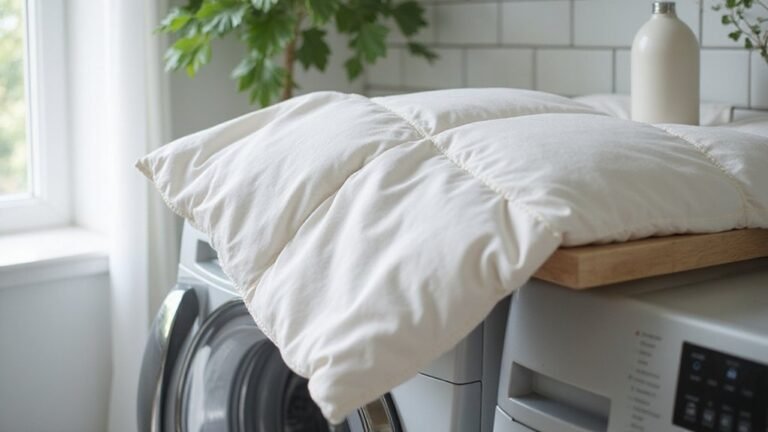
Comforters feel light because of their construction that creates a high loft of trapped air. Baffle-box design allows lightweight filling to puff up, increasing overall thickness without adding much weight. This fluffy structure acts like a cushion of air, making the comforter seem like a cloud despite providing ample warmth. The sensation of lightness comes from the way the air pockets distribute pressure evenly across your body, reducing the feeling of any heavy weight pressing down. For a long-lasting fresh result, regularly cleaning your tower fan in a similar fashion helps remove dust buildup that can weigh down its performance. To maintain the comforter’s airy feel, you should use a front-loading machine with gentle detergent to avoid crushing the delicate baffles. For bunk bed setups, a compact desk for bunk bed can provide a similar space-saving solution by utilizing vertical area.
In contrast, quilts have a denser, flatter construction. Their layers are stitched tightly together, resulting in a more compact, weighted feel that is grounded on your bed. The weight you perceive from a quilt primarily stems from this density and flatness, which transmits pressure directly to your skin. Thus, comforters appear airy and light because of their design that favors insulation through trapped air, while quilts feel heavier because of their more solid, compact construction.
Heirloom Quilt or Modern Comforter? Matching Your Bedroom Style
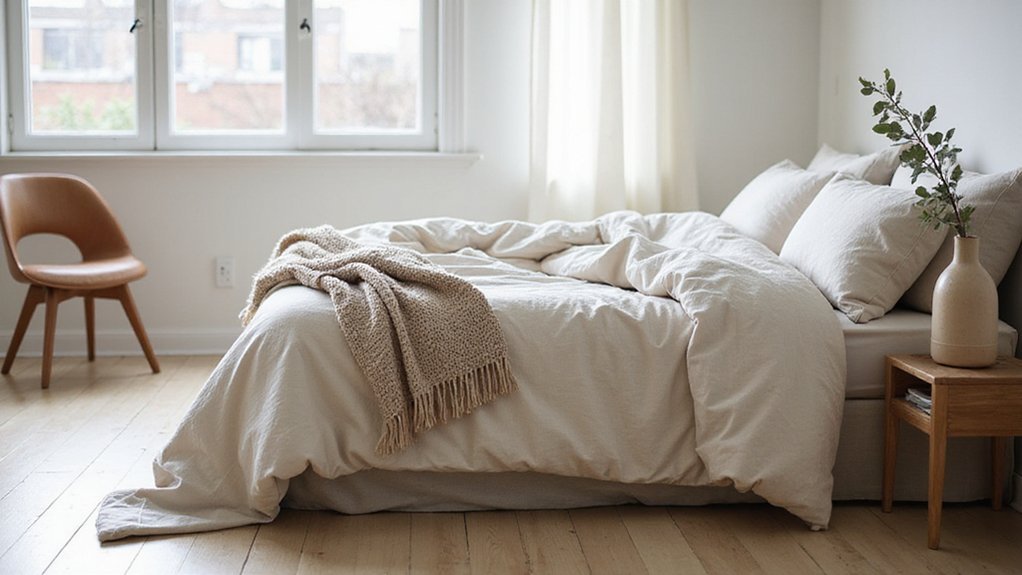
A comforter is typically heavier and fluffier than an heirloom quilt, making it a versatile choice for modern bedroom styles. Comforters often feature baffle-box construction, which keeps the filling evenly distributed and creates a plush, cloud-like feel. They usually come in solid colors or simple prints, emphasizing clean lines and a sleek appearance. This makes them ideal for a minimalistic look that focuses on a contemporary, luxurious vibe. For those who also prioritize sleep health, choosing a mattress with optimal back support can further enhance comfort and alignment.
In contrast, heirloom quilts are lighter but detailed, often showcasing intricate patchwork and decorative motifs that add visual interest. Their flat profile highlights handcrafted textures and keeps a traditional, cozy charm alive. The sturdy cotton batting and crisp fabric textures make quilts especially suitable for seasonal layering, allowing you to switch styles as the seasons change.
Choosing between the two depends on whether you want the dramatic volume and simplicity of a modern comforter or the textured, story-telling appeal of an heirloom quilt. Both offer unique ways to complement your bedroom’s overall style and ambiance.
Can You Machine-Wash Both? The Cleaning Reality Check
You can machine-wash both quilts and comforters, but the process differs significantly. Quilts require a gentle, cold-water cycle with color-catching sheets to prevent bleeding, while comforters usually tolerate warm water and standard detergents without extra precautions. Always load quilts alone into a large-capacity front loader to allow proper movement and avoid overloading, which can cause damage. Comforters fit well in standard machines, though oversized versions may still need a front loader. For silk pillowcases, always use a silk-specific detergent to avoid damaging delicate fibers. For budget-friendly closet shelving, using simple wood boards and brackets can keep costs low while adding storage. It is best to pre-treat stains on both quilts and comforters before washing to improve cleaning results.
Before washing, inspect quilts for loose seams to prevent unraveling and test for colorfastness by rubbing a damp cloth on the fabric. If the dye transfers, skip machine washing to avoid color bleeding. Comforters typically do not require this step. For drying, air dry quilts on low heat or sunlight to preserve their fibers. Use medium heat with dryer balls when drying comforters to help maintain loft. Never use hot water on quilts because it can cause shrinkage and bleeding, and thoroughly drying both ensures mildew prevention. Regular washing helps preserve the quilt, and post-wash crinkling can soften the fabric further.
Why Quilts Do Double Duty (and Comforters Don’t)
Quilts earn their versatility through craftsmanship and design features. Their three-layer construction—top, batting, and backing—are securely stitched, which helps them hold shape and resist shifting over time. This layered approach allows you to flip a reversible quilt for two distinct looks, instantly customizing your bedroom style without buying additional bedding. Material choices vary, with lighter cotton or wool blends that make quilts breathable enough for summer warmth and layerable for winter comfort. Unlike comforters, quilts lie flat on your bed or floor, requiring no fluffing or bulky inserts, and can be machine-washed with ease. Comforters, on the other hand, trap heat more aggressively and lack reversibility, making them a single-purpose option focused solely on warmth. This combination of breathable materials, versatile design, and ease of care makes quilts a practical, adaptable bedding choice that serves double duty daily. Unlike LED bulbs that flicker due to inconsistent electrical current, quilts maintain steady performance through their securely stitched layers.
Quilt vs. Comforter: Which Should You Buy This Season?
A quilt is generally better for lightweight, layered bedding, while a comforter provides deep, cozy warmth. Quilts have a flat profile with dense batting that keeps you comfortable without trapping excessive heat, making them ideal if you tend to run warm or prefer a less bulky feel. They often feature bright, varied colors through patchwork or decorative patterns and are constructed with tight stitching, enhancing their durability. Plus, quilts are machine-washable, which makes them easy to care for.
Comforters, on the other hand, are filled with high-loft down or synthetic materials, offering superior insulation and a plush, cloud-like feel. The baffle-box construction ensures even distribution of the fill, enveloping you in warmth without clumping. While comforters typically come in fewer color choices, their primary appeal is a deep, cozy layer that’s perfect for cold sleepers or chilly seasons. Overall, if you want versatility and layered style, a quilt is the way to go, but for maximum warmth and comfort, a comforter is your best bet.