Wondering how to keep your silk pillowcase looking luxurious without damaging it? Proper washing is key to maintaining its softness and shine while preventing snags or discoloration.
By following gentle methods like hand-washing with mild detergent and air drying, you can extend its lifespan and keep it feeling fresh.
This guide will walk you through the simple steps to care for your silk pillowcase correctly.
What the Care Tag Says About Washing Your Silk Pillowcase
Start by checking the care tag on your silk pillowcase, as it provides the essential instructions for proper cleaning. The tag clearly warns against water temperatures above 30°C because higher heat permanently weakens silk fibers, which can damage the fabric’s softness and durability. Always opt for cool or lukewarm water to keep the material’s structure intact. For anyone using a window air conditioner, avoid placing the pillowcase in drafts that could cause uneven drying or moisture issues. Proper drying helps maintain the cozy bedroom environment you desire.
The tag also specifies using only pH-neutral detergents formulated for silk. Avoid regular household detergents, bleach, and fabric softeners, as these products strip away natural oils and can cause color fading. Instead, choose gentle options like Woolite® or a few drops of baby shampoo. If machine washing, set your machine to a delicate or gentle cycle. For hand washing, soak your pillowcase for only 3 to 5 minutes, and never twist or wring the fabric—gently press out excess water instead. To preserve its quality, rinse thoroughly until the water runs clear, ensuring all detergent residues are removed. Queen-size silk pillowcases are designed to fit 60 by 80 inch mattresses, ensuring full coverage and proper care compatibility.
How to Inside-Out and Bag Your Pillowcase for Protection
Place the inside-out pillowcase into a mesh laundry bag. The bag acts as a barrier, preventing abrasion from other garments and impellers while allowing water to flow freely. Ensure the bag’s closure is secured tightly to keep the pillowcase contained, preventing it from slipping out during the wash cycle. Then, place the closed mesh bag directly into the drum before adding any detergent. Wash separately if different colors to prevent dye transfer. Using a gentle cycle is recommended for this delicate fabric care. Unlike heated blankets that require special cleaning care, silk pillowcases follow a different maintenance routine that avoids heat altogether. Using the mesh bag along with turning the pillowcase inside-out offers dual protection, significantly reducing mechanical stress, extending the lifespan of your pillowcase, and helping it maintain its brightness after washing. For optimal results, always place the bag in the drum before starting the cycle to ensure proper water flow and avoid tangling.
What’s the Best Water Temp and Detergent for Silk Pillowcases?
Use cold or lukewarm water—under 30°C—to wash your silk pillowcase. Silk proteins are sensitive to heat and can denature if exposed to hot water, causing shrinking and loss of shine. Hot water also accelerates fiber damage, so always opt for cold or gently warm water for cleaning.
If you choose to machine wash, select a gentle cycle with a delicate or silk-specific program. Keep the spin cycle low or turn it off altogether to prevent stretching or weakening the fibers. Using the correct water temperature and cycle helps preserve the silk’s softness, sheen, and durability over time.
For detergent, pick a mild, pH-neutral product designed for silk or delicate fabrics. Options include silk-specific soaps, baby shampoo, or gentle shower gels. Avoid any detergents containing enzymes, bleach, or whiteners, as these chemicals break down silk fibers and damage the fabric. You need only a small amount—less than you might expect—to effectively clean your pillowcase.
To boost shine and remove alkaline residues, add a splash of white vinegar to the final rinse. Vinegar helps restore silk’s natural luster and keeps the fibers soft. Never use fabric softener, as it coats silk fibers and diminishes their smooth appearance. Following these water and detergent guidelines ensures your silk pillowcase remains soft, vibrant, and in prime condition.
How to Hand Wash a Silk Pillowcase in 5 Minutes
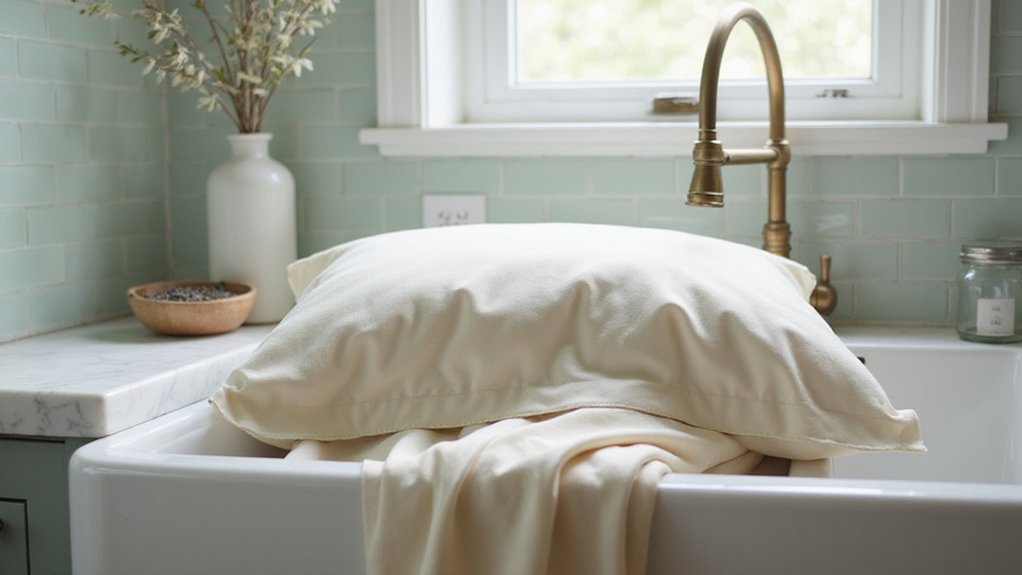
To hand wash your silk pillowcase in 5 minutes, start by filling a sink with cool water and adding a few drops of a mild, silk-safe detergent. Turn the pillowcase inside out to protect its fibers and fully submerge it. Gently swish the fabric for 3 to 5 minutes, focusing on areas near your face, but avoid scrubbing to prevent damage. Drain the soapy water and rinse the pillowcase several times with fresh cold water until no soap residue remains. For an added safeguard against color fading caused by detergent residue, add a spoonful of white vinegar to the final rinse. To remove excess water, gently press without wringing or twisting. Wrap the pillowcase in a clean towel and gently roll it to absorb moisture. Finally, lay it flat in the shade to air dry, keeping it away from direct sunlight and heat sources to preserve its sheen. Before beginning, perform a color bleed test using a small, inconspicuous area to ensure the dye will not run. When choosing where to air dry your silk, consider that a dedicated surface like a desk may offer better space than a crowded vanity. Unlike percale or sateen sheets, which can vary widely in fabric weave and feel, silk pillowcases require gentler handling to maintain their unique smooth texture and luster. For a more budget-friendly alternative, microfiber sheets offer a durable and wrinkle-resistant option that requires less delicate care.
How to Machine Wash a Silk Pillowcase Without Damage
To machine wash a silk pillowcase safely, follow these steps. First, turn the pillowcase inside out and place it in a fine mesh laundry bag to prevent snags and damage. Check the care tag to confirm it is machine washable, as not all silk types tolerate washing machines. Use only cold water at 30°C or below with the delicate or gentle cycle, which minimizes agitation and reduces the risk of tearing or shrinking. For a budget-friendly approach, consider using low-cost lumber similar to that used in DIY bunk bed frames for a drying rack. Skip bleach and fabric softeners to protect the silk fibers; instead, add half a cup of distilled white vinegar to help preserve color and shine. For stains, opt for a silk-safe liquid detergent that is gentle enough for natural fibers. Keep the cycle time under 30 minutes to avoid unnecessary wear. Immediately remove the pillowcase after the cycle ends, gently press out excess water without wringing, and lay it flat on a clean towel to absorb remaining moisture. Using a low heat setting or air-drying, you can also refer to the gentle washing methods recommended for weighted blankets to ensure the fabric stays intact. If you suffer from allergies, using a silk pillowcase can help reduce exposure to dust mites when paired with improved indoor air quality from a purifier. Never leave it sitting in the washer, as prolonged dampness can cause wrinkles or damage.
How to Dry Your Silk Pillowcase Without Ruining It
After washing your silk pillowcase, air drying is the safest method. Gently press out excess water without wringing, then lay it flat on a clean towel and roll it tightly to absorb moisture. Unroll and place the pillowcase on a mesh rack in a cool, well-ventilated area, avoiding direct sunlight or heat sources. Never use fabric softeners, as they can dull silk’s natural sheen. If tumble drying is necessary, use the air-dry or no-heat setting only if the care instructions permit. Smooth the pillowcase back to its original shape without stretching. Allow it to dry completely, which can take between two to eight hours. Avoid hanging it by the corners to prevent deformation.
How to Steam and Iron Your Silk Pillowcase for a Silky Finish
To steam and iron your silk pillowcase for a silky finish, follow these guidelines carefully. For steaming, fill your steamer with fresh water and set it to the lowest heat setting, ideally one labeled “silk” or “delicate.” Hold the steamer head 1 to 2 inches above the fabric, moving from top to bottom. Let gravity help relax wrinkles without letting the steamer touch the silk directly. Focus on visible creases, but avoid direct contact to prevent damage. For ironing, turn the pillowcase inside out and place a pressing cloth over it. Use the coolest heat setting on your iron, often marked as “low” or “silk,” and make brief, gentle passes over the fabric. Do not press too hard or linger in one spot, as high heat or prolonged contact can damage silk. After ironing, allow the pillowcase to cool for about a minute before handling it further. Always stop if the fabric feels damp to prevent water spots or texture changes. Before using, ensure the silk is fully air dried for a silky, smooth finish. For a similar balance of budget-friendly tips and care, you might explore inexpensive materials and techniques when making your own home textiles.