Feeling like your home could use a little more moisture? You don’t need a fancy humidifier — simple DIY methods can do the trick.
From placing water bowls on sunny windowsills to building your own fan-powered or sponge-based humidifiers, there are easy ways to improve indoor humidity.
Keep reading to discover how these solutions can help create a more comfortable environment.
Why Your Home Needs a Humidifier (and How to Measure It)
Indoor humidity should stay between 30% and 50%. Maintaining this range helps prevent health issues by reducing flu virus survival and alleviating dry skin, allergies, and respiratory discomfort. If the humidity drops below 30%, you may experience dry nose, throat, and eyes, along with increased coughing. On the other hand, humidity above 60% encourages mold growth, dust mites, and asthma triggers. To keep track, use a hygrometer—similar to a thermometer but for moisture. Check it every few days to avoid over-humidification. This way, you can adjust your home’s moisture level before health problems develop. A window air conditioner can also help dehumidify a room, but ensure its drainage and seal are properly installed to avoid water damage. A queen mattress sized at 60 inches wide and 80 inches long requires a humidifier with enough output to maintain proper humidity across its bedroom space.
Add Moisture With Just Water and Sun
You can add moisture using just water and sunlight by relying on natural evaporation. Place a bowl or vase of water on a sunny windowsill; this is one of the simplest methods. As the water warms in the sun, it gradually releases humidity into the air. For a quicker boost, set a metal bowl of water near a sun-facing heat vent or radiator. Refill the water about twice a week to keep the process ongoing.
Another effective technique involves draping a cloth over a container so its end dips into sun-warmed water. Placing a small fan behind it will circulate the moisture into the room. Even a decorative bowl on a sunlit shelf can slowly humidify your space. You can also dampen curtains lightly and let them dry in the sun for additional humidity. These methods require no gadgets—just water, sunlight, and a bit of patience.
Boost Humidity Through Cooking, Showering, and Laundry
You can increase indoor humidity effectively by using everyday activities like cooking, showering, and laundry. When cooking, leave pot lids off to allow steam to release freely or simmer soups without covering the pot for a fragrant moisture boost. Just ensure you monitor your kitchen’s humidity to stay between 30 and 50 percent, and avoid boiling pots dry to prevent mold growth from excessive moisture. After showering, keep the bathroom door open and skip the exhaust fan to let the steam spread into adjacent rooms. This natural ventilation helps raise moisture levels without extra equipment. If you also apply a one-way mirror film to your windows, you can maintain privacy while letting in sunlight that naturally adds warmth and slight vapor to the air. For laundry, air-dry clothes indoors on a rack or hang wet towels to release moisture gradually. Additionally, open the dishwasher after the rinse cycle to let steam naturally dry your dishes. These simple adjustments turn daily chores into practical methods for boosting indoor humidity naturally and efficiently. For larger spaces, choosing between full and queen mattresses can also impact comfort and how much room you have for other moisture-producing activities.
Build a Simple Fan-Powered Humidifier in Minutes
A simple fan-powered humidifier can be built in just a few minutes using everyday materials. Start with a wide, shallow container filled with water, which provides a large surface area for evaporation. Hang absorbent fabric strips into the water; these strips act as your evaporation medium by drawing water upward through capillary action.
Next, secure a computer fan over a hole cut into the lid of a sturdy box or container, mounting it face down. This orientation ensures the fan blows air directly across the damp fabric, optimizing airflow for maximum evaporation. Slightly angling the fan downward helps increase the evaporation rate by directing airflow across a larger area of the moist fabric.
Drill a small outlet hole on the side of the container to allow humidified air to escape efficiently. Connect the fan to a GFI power strip for safety and plug it in. Fill the container with water, turn on the fan, and within minutes you will notice an increase in humidity as moist air circulates into the room. For long-lasting, fresh results, regularly clean the fabric strips to prevent mineral buildup. This setup provides a cost-effective, customizable way to boost indoor humidity quickly.
Make a Sponge-and-Bag Humidifier for Any Room
To make a sponge-and-bag humidifier, you’ll need a large sponge, a plastic freezer bag, scissors, and distilled water. First, punch holes in the bag with scissors to allow airflow. Then, soak the sponge thoroughly with distilled water, squeezing out the excess so it’s damp but not dripping. Place the damp sponge inside the bag, sealing it tightly. Use a strong adhesive to attach the bag to a central wall away from heat sources. This setup helps distribute moisture effectively and allows you to monitor humidity with a simple hygrometer.
The sponge acts as a wick, releasing moisture as it evaporates through the holes. Room temperature and airflow influence how quickly the sponge dries out and how much moisture is released. For maintenance, replace the sponge weekly and clean the bag regularly to prevent mold buildup. This method is cost-effective and suitable for small, targeted areas where you need to raise humidity naturally. As with beginner quilt making, careful attention to material selection and placement ensures better results. Air purifiers, on the other hand, filter particles rather than adding moisture, which is a distinct benefit of air purifiers.
Use Houseplants and Air-Dried Clothes to Add Moisture
Using houseplants and air-dried clothes can significantly increase indoor humidity naturally. Place two healthy, sizable plants per 100 square feet in your space. Boston Ferns and Peace Lilies are particularly effective because they release moisture through transpiration, which can raise humidity levels by up to 10 percent in enclosed rooms. Grouping these plants together namely creates a natural microclimate that enhances their evaporative effect. Position the plants in indirect sunlight and set their pots on saucers filled with pebbles and water to further boost evaporation. Unlike air purifiers that actively clean air, these plants also help improve indoor air quality through natural filtration. For optimal results, use a changing table to organize your plant pots and supplies. For those seeking added comfort while tending to plants, a memory foam body pillow can provide excellent back support during longer periods of standing or kneeling.
In addition, air-drying your laundry indoors contributes extra moisture. Hang shirts, towels, or other clothes on a rack near your plant groupings—this way, the drying process humidifies the air as water evaporates from the fabric. This simple approach uses no extra electricity, making it a cost-effective way to maintain a more comfortable indoor environment during dry seasons. Combining both methods provides a natural, continuous boost in moisture levels without the need for additional equipment.
Keep Your DIY Humidifier Safe and Clean
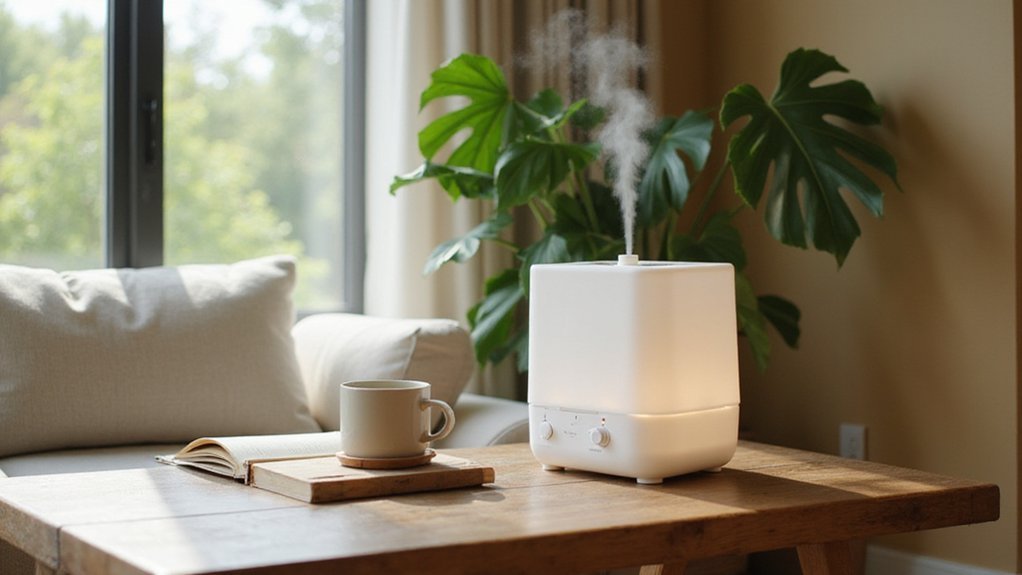
To keep your DIY humidifier safe and clean, follow essential maintenance routines. First, monitor indoor humidity levels with a hygrometer, aiming for 30% to 50% to prevent mold growth. Empty and rinse the water tank daily to avoid bacterial buildup. Clean the tank every 2 to 3 days using a 3% hydrogen peroxide solution—avoid chemical cleaners that may be harsh or leave residues.
Filter maintenance is crucial; replace or clean demineralization cartridges according to the manufacturer’s instructions to reduce mineral deposits. Use distilled or demineralized water to limit scale buildup and mineral dust released into the air. For electrical safety, always unplug the device before cleaning, and never handle the cord with wet hands.
Position the humidifier on a flat, stable surface at least 60 centimeters above the floor and keep it at least 30 centimeters away from walls to ensure proper airflow. When indoor humidity reaches 45% to 50%, turn off the device to prevent over-humidification, which can lead to mold and damage. Regular upkeep will help keep your DIY humidifier both safe to use and effective at maintaining a healthy indoor environment.