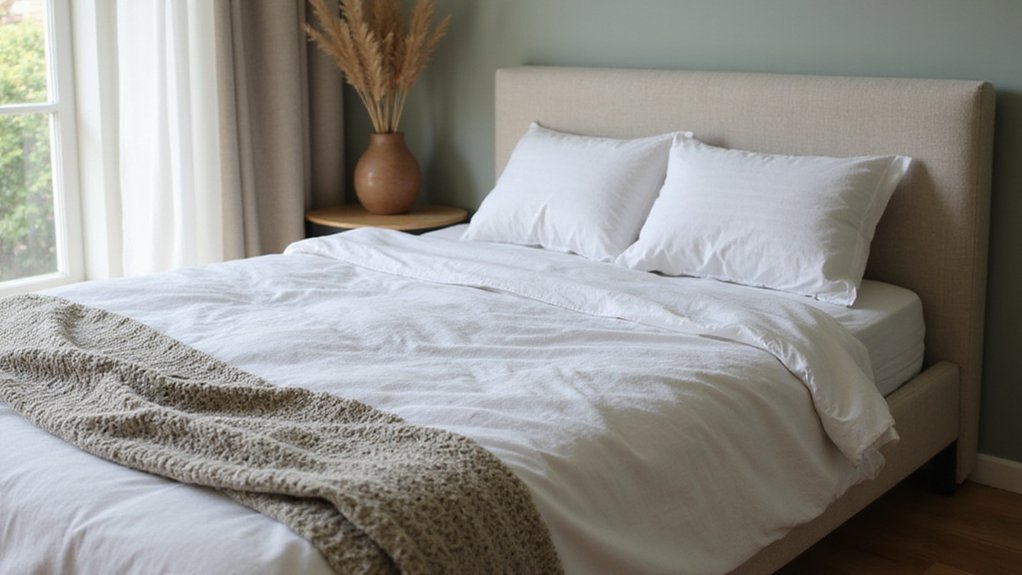
If you’re wondering what makes percale sheets stand out, the answer lies in their simple, tight weave. They have a crisp, matte feel similar to your favorite cotton shirt.
Their breathable, durable nature makes them great for hot sleepers. Keep reading to learn how they compare to other sheets and what to look for when buying.
What Makes a Sheet Percale? (Definition and Weave Pattern)
A sheet is considered percale when it features a specific weave pattern characterized by a plain, one-over-one-under structure. In this pattern, each weft thread passes over one warp thread and then under the next, creating a consistent crisscross design. This tight, grid-like construction results in a fabric that feels crisp and matte, resembling the texture of a cotton button-down shirt.
The simplicity of this weave is more than just aesthetic. It reinforces the fabric’s durability because the balanced arrangement of warp and weft threads locks together tightly. This structural integrity makes percale sheets resistant to shifting and fraying over time. You’ll notice that they feel smooth on both sides, breathe well, and can withstand repeated washing without losing their crispness. This straightforward weaving pattern delivers reliable performance, combining long-lasting strength with a clean, comfortable feel. Similarly, rock salt lamps are celebrated for their potential to improve air quality by attracting moisture and trapping impurities. To ensure a proper fit on your bed, queen mattress dimensions guide the selection of fitted sheet sizes. Choosing the right mattress size is also crucial for bedroom comfort and space.
Why Does the Weave Pattern Matter More Than the Material?
The weave pattern matters more than the material because it directly influences how your sheets feel, breathe, and hold up over time. The plain weave used in percale, for instance, creates a crisp, matte surface that feels cool and smooth against your skin. This pattern locks the threads together tightly at every intersection, ensuring durability and resistance to pilling, even after frequent washing. Over time, the fabric may soften, but the structural integrity remains strong, preventing sagging or bunching. The tight weave also allows for maximum breathability, helping air circulate evenly so you stay comfortable throughout the night. In essence, the way the threads interlock defines the sheet’s performance far more than the actual material, which is just one part of the equation. A minimum of 70 threads per square centimeter in percale contributes to this high thread density and resulting durability. To achieve this performance, careful installation steps ensure the sheet fabric is stretched evenly and secured without wrinkles. Similarly, just as air purification systems rely on effective filtration mechanics rather than mere material composition, the percale weave’s structural tightness ensures consistent performance regardless of the cotton type used. A well-chosen entrance shoe rack, for example, prioritizes structural stability over decorative material to withstand daily use.
Best Cotton Varieties for Percale Sheets (Egyptian, Supima, Upland)
Egyptian, Supima, and Upland are the top cotton varieties for percale sheets. Egyptian cotton’s long staple fibers produce smoother yarns, which increase thread strength and reduce fraying over time. Authentic Egyptian percale sheets typically have thread counts between 300 and 400, offering a crisp, breathable feel perfect for warm nights.
Supima cotton, grown in the U.S., features extra-long staple fibers that resist pilling and tearing, making sheets more durable. With thread counts generally from 200 to 400, Supima allows for a softer, more lustrous finish that stays crisp longer and feels gentle against the skin.
American Upland cotton is a more budget-friendly option. Its shorter staples mean you should opt for lower thread counts, around 200 to 300, to prevent a rough texture. While it provides the cool, breathable quality typical of percale, Upland cotton’s durability is lower compared to Egyptian and Supima varieties, especially if processed poorly.
What Does Thread Count Mean for Percale Quality?
A thread count of 200 to 300 offers the best balance for percale sheets. While higher counts—over 500—may seem appealing, they often compromise breathability and can diminish percale’s crisp, cool feel. A 180 thread count is the minimum to look for, but 300 provides a dense, durable fabric that still allows air to flow freely, making it ideal if you tend to sleep hot. Keep in mind that fabric dyeing techniques also influence the sheet’s texture, so opt for brands that use single-ply yarns and transparent counting methods. Trust the weave and fabric quality over exaggerated marketing claims.
Percale vs. Sateen: What’s the Difference?
Percale and sateen fabrics differ significantly in weave pattern, feel, and appearance. Percale employs a tight, one-over, one-under weave, which results in a matte finish with a crisp, cool touch. It’s lightweight, breathable, and tends to soften with each wash while maintaining a smooth, tailored look. Sateen, on the other hand, uses floating threads woven in a way that creates a silky sheen and a heavier drape. This pattern provides a smooth, luxurious feel that resists wrinkling and offers a more opulent appearance. When deciding, consider that percale sheets are generally more affordable than sateen, making them a budget-friendly choice.
Percale’s tightly locked threads make it resistant to pilling and snagging over time, ensuring durability and long-lasting crispness. Sateen’s exposed floats can be more prone to snags and pilling, especially with frequent washing. However, sateen’s slick surface means you typically don’t need to iron it, making it convenient for quick maintenance. Choose percale if you prefer a cool, crisp feel and enhanced durability, or opt for sateen if you desire the softness and sheen of a more luxurious, silky fabric.
Why Hot Sleepers Love Percale’s Breathability
Hot sleepers love percale sheets because of their superior breathability. The one-over-under plain weave creates microscopic air channels that provide 30–40 percent more inter-yarn space than sateen. These open grid patterns pull heat and moisture away from your skin, helping you stay cool and dry. As perspiration evaporates quickly, you won’t wake up feeling clammy or sticky. The crisp, lightweight feel of percale doesn’t hinder airflow. High-quality sheets often use long-staple cotton like Egyptian or Supima, with thread counts between 250 and 400. This combination maximizes breathability while maintaining durability. The weave’s structure also helps dissipate heat instead of trapping it, making it ideal for hot sleepers. Even after many washes, the weave stays open and effective, ensuring consistent cooling performance night after night. To maintain this performance, it is important to use a gentle machine cycle to avoid damaging the delicate weave during cleaning. For enhanced comfort, pairing these sheets with an air purifier can further improve your sleep environment by removing airborne irritants that might disrupt rest. For those who prefer a rod-free setup, you can achieve a similar cooling effect by learning how to hang curtains without a rod using simple tools like clips and tension wires.
Do Percale Sheets Get Softer Over Time?
Yes, percale sheets tend to get softer over time. While they start out with a crisp, somewhat stiff feel, each wash helps relax the tightly woven fibers. Typically, it takes about three to five washes for them to reach their optimal softness. As you continue to wash and use them, the cotton fibers gradually break in, making the sheets more comfortable. Unlike many other types of sheets, percale’s durability allows this softening process to happen throughout their entire lifespan. Because of the dense weave, percale sheets last about three times longer than other fabrics and become even softer with each wash. Patience pays off—your sheets will become cozier the more you use and care for them.
How Should You Care for Percale Sheets?
To care for percale sheets and preserve their crisp, soft feel, wash them weekly in lukewarm water using a liquid detergent designed for delicates. Avoid fabric softeners and bleach, as these can damage the fibers and diminish their quality. Load your washing machine only halfway to prevent overloading, which ensures thorough cleaning and reduces wear. For color preservation, air-dry the sheets in the shade or tumble dry on low heat. Remove the sheets while still slightly damp to help prevent wrinkles, and if necessary, iron on low heat to smooth out any creases. Address stains promptly with mild stain removers such as baking soda, rinsing with cool water to avoid setting the stain. Store your clean, folded sheets in a cool, dry place using cotton covers—steer clear of plastic or cardboard storage to maintain breathability and prevent moisture buildup. Following these care steps helps maintain the sheets’ crispness, softness, and longevity.
How Long Do Percale Sheets Last?
With proper care, your percale sheets typically last between 2 to 4 years. High-quality options made from long-staple fibers can often endure up to 6 years. If you use your sheets daily without rotating, expect replacement every 1 to 2 years due to increased wear. Rotating two sets of sheets reduces wear and extends their lifespan. Washing every two weeks in cold water, avoiding bleach, and using wool dryer balls instead of softeners can significantly boost their longevity. Sheets made from sustainable materials tend to last longer because of better manufacturing processes. Standard percale usually reaches around 3 years of use, but with diligent care, you might extend their lifespan to 5 years before fibers weaken.
3 Signs of High-Quality Percale Sheets
To identify high-quality percale sheets, look for three key signs. First, feel the crispness and texture. Good percale feels smooth with a matte finish, similar to a crisp dress shirt. It shouldn’t be rough or stiff. Over time, washing will soften the fabric while maintaining its structured feel, which adds a luxurious touch to your bedding. While choosing your sheets, consider that a vanity with lit mirror can also enhance your daily beauty rituals by providing perfect lighting.
Second, assess breathability. Perfection in sheets means openness in the weave, allowing air to flow freely. This makes them ideal for hot sleepers because they won’t trap heat and will keep you cool throughout the night. For example, polyester sheets often trap heat and moisture, making them less suitable for those who sleep hot.
Third, examine the thread count and material. Aim for a thread count between 200 and 400, using single-ply, long-staple cotton. Avoid anything above 600, as higher counts often indicate multiple plies, which can compromise softness and durability. Check the stitching and weave pattern—tight stitches and a one-over-one-under weave help prevent pilling and ensure the sheets get softer with each wash without weakening.