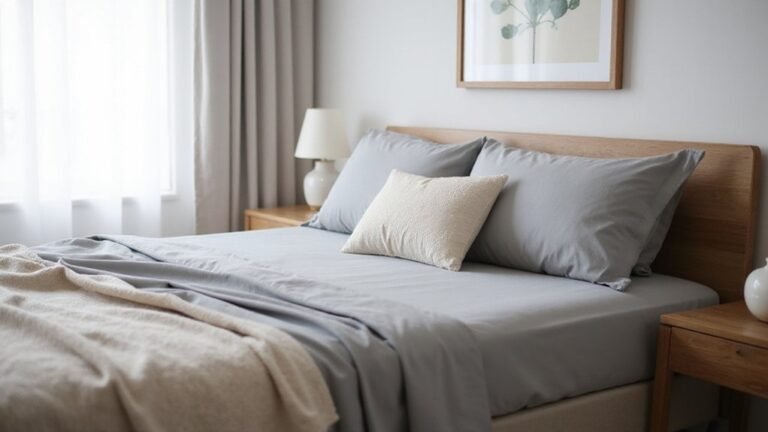
Choosing the right sheets can feel overwhelming, especially when deciding between cotton and bamboo. Each has its own feel and benefits, but your decision often comes down to your sleep habits and priorities.
Bamboo feels silky and stays cooler, ideal for hot sleepers, while cotton offers a traditional crispness and budget-friendly options.
The full story covers how each material compares in softness, durability, and care, helping you find the perfect fit for your bed.
Bamboo vs Cotton Sheets: What’s Actually Different at the Core?
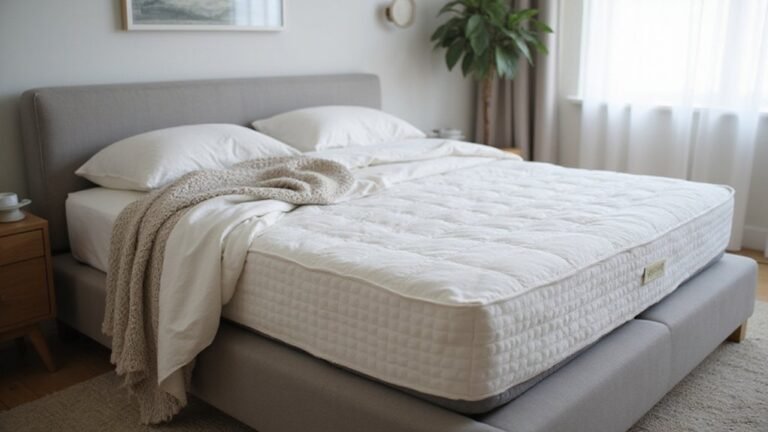
The core difference between bamboo and cotton sheets is what they’re made from—bamboo sheets come from semi-synthetic bamboo viscose, while cotton sheets are made directly from cotton fibers. You’ll notice the fabric texture immediately: bamboo feels silky and smooth, almost like soft rayon, offering a luxurious, gentle glide against your skin. Cotton, on the other hand, provides a more traditional, crisp feel that many associate with classic bedding. However, it’s worth noting that a queen mattress measures 60 inches wide by 80 inches long, so ensuring your sheets match these dimensions is critical for a proper fit.
Color variety also sets them apart. Bamboo viscose adapts well to dyes, resulting in richer, more vibrant hues that resist fading over time. Cotton sheets tend to showcase more natural, muted tones, and while they take dye well too, they often have a more subdued appearance. Care routines differ as well: bamboo sheets naturally resist wrinkles, which means less ironing and a more effortless look, while cotton sheets wrinkle more easily and generally require a bit more attention to maintain crispness. Choosing between them largely depends on whether you prefer bamboo’s sleek, durable feel or the familiar, breathable texture of cotton.
Which Feels Softer and Gentler on Your Skin: Bamboo or Cotton?
Bamboo feels softer and gentler on your skin compared to cotton. Bamboo fibers are naturally round, creating a silky-smooth sensation straight out of the package. You don’t need high thread counts to achieve that plush feel—bamboo consistently offers luxurious softness. Cotton, on the other hand, often starts with a crisper, rougher texture and requires multiple washes to become softer. For sensitive skin, bamboo’s hypoallergenic and antimicrobial qualities provide immediate comfort. Cotton’s softness varies more depending on type and processing; Egyptian or Pima cotton softens over time, whereas standard varieties tend to stay rough longer. Choosing the right bedding foundation can also affect overall sleep comfort, just like choosing between frames and platforms affects support and cost. Proper installation of sleep environment accessories is as important as selecting appropriate tools for a window unit. Unlike microfiber, bamboo fibers are naturally rounder, which contributes to a consistently smoother feel against the skin. Overall, bamboo provides a uniform, gentle, skin-friendly experience from the first use, making it the softer choice for most people.
Are Bamboo Sheets Better for Hot Sleepers Than Cotton?
Bamboo sheets are better for hot sleepers than cotton because they naturally draw heat away from your skin, keeping the surface 2–3°F cooler during sleep. They also wick moisture 40% faster than cotton, which helps prevent night sweats and discomfort. In trials, a significant majority of hot sleepers preferred bamboo sheets due to improved sleep continuity and reduced dampness. Additionally, bamboo’s eco-friendly benefits, like lower water usage, make it a guilt-free choice. When it comes to durability, bamboo sheets tend to resist pilling longer and hold up well after multiple washes, ensuring you stay drier, cooler, and more comfortable throughout the night. For best results, choosing between these options often involves weighing energy efficiency and maintenance differences, much like comparing humidifier types. According to expert advice, choosing the best cooling bed sheets also involves considering fabric weave for optimal airflow. Understanding how dehumidifiers help fight mold is similarly about controlling moisture levels in your environment.
Breathability and Cooling: Which Sheet Wins for Airflow?
Bamboo sheets are more breathable and cooler than cotton sheets. Their micro-gaps in the fiber structure create better airflow by lowering fiber density, allowing air to circulate freely. Cotton fibers tend to swell when wet and trap heat, reducing airflow during perspiration. This makes bamboo’s lightweight, open structure ideal for hot, humid climates.
Weave patterns also influence breathability. A bamboo sateen weave still outperforms cotton percale because bamboo fibers are inherently more breathable. Research shows bamboo is 17% more breathable than cotton, with a cooling score of 4.7 stars compared to cotton’s 3.9. Additionally, bamboo absorbs and evaporates moisture 40% faster than cotton, helping keep your surface temperature 2 to 3 degrees Fahrenheit cooler. If you often sleep hot, bamboo sheets can reduce that damp, sticky feeling and help you sleep more soundly.
Do Bamboo Sheets Last Longer Than Cotton After Repeated Washes?
Bamboo sheets generally last longer than cotton sheets after repeated washes, often maintaining their quality for 5 to 7 years, with some lasting up to 15 years. Their fibers are inherently stronger, which helps prevent thinning and holes that typically develop in cotton over time. You’ll notice that bamboo retains a smooth fabric texture without pilling, even after many washes, whereas cotton tends to become rough and frayed. Proper care—using cold water and low heat—can extend bamboo sheets’ lifespan further, making them a durable investment. Additionally, bamboo holds vibrant colors and prints well, without fading quickly, giving you more variety and longevity in your bedding options. This durability parallels how queen mattresses provide more space and resilience than full sizes for long-term comfort and use.
Will My Sheets Shrink? A Realistic Look at Both Materials
Both cotton and bamboo sheets will shrink to some extent, but the amount differs. Cotton sheets typically shrink 3–5 percent after the first wash, especially if hot water or high heat drying is used. Bamboo rayon can shrink significantly more—up to 15–20 percent—if exposed to high heat. Using pre-shrunk or heat-set labels can help minimize this risk for both materials. For bedding that retains its shape over time, consider opting for a sham pillowcase designed with pre-shrunk fabric. Air purifiers work through similar filtration principles, but sheets require different care to avoid damage. To maintain sheet quality, it is also wise to periodically use mild cleaning solutions when washing to prevent buildup and fabric wear.
To keep your sheets smoother and retain color, wash them in cold water with gentle cycles. While color options don’t usually shrink, harsh washing can cause fading over time. Pre-washing new sheets before their first use can reduce future shrinkage by more than 90 percent. After this initial step, both materials tend to stabilize, with less than 1 percent additional shrinkage with consistent care.
Which Is the Eco-Friendly Choice: Bamboo or Cotton?
Bamboo is generally more eco-friendly than cotton due to its rapid growth and minimal resource requirements. It uses about 93% less water during cultivation and does not need irrigation, which significantly reduces water consumption. Bamboo also absorbs approximately 5 tonnes of CO2 per hectare annually, helping to improve air quality. Additionally, it requires no pesticides or fertilizers, unlike conventional cotton, making it a cleaner crop to grow. Using your sheets in conjunction with a dehumidifier, like the Vicks model, can help maintain a dry sleeping environment. For a comfortable bedroom, a comforter can also be paired with these eco-conscious sheets for optimal coziness. Properly hanging your bamboo sheets after washing can prevent wrinkles, just as using perfect sweater hangers helps maintain garment shape and avoid common mistakes.
However, the environmental benefits can be compromised during processing. Bamboo fibers often undergo chemical treatments, such as the use of harsh solvents, to soften and make the material fabricable. These chemicals can negate some of its eco-friendly advantages unless processed sustainably. Organic cotton, on the other hand, is grown without synthetic pesticides or fertilizers, which benefits both the environment and farm workers. But organic cotton still demands considerable amounts of water—typically more than bamboo—making its environmental footprint dependent on local water availability and farming practices. Full life cycle assessments show bamboo has a marginal advantage over cotton, with scores of 453 versus 506.
Bamboo vs. Cotton: Which Is More Affordable (And Where Does Egyptian Cotton Fit)?
Cotton sheets are generally more affordable, with sets starting under $50 and most falling between $80 and $150. In comparison, bamboo sheets usually cost 20 to 50 percent more, with good sets priced between $120 and $200. This price difference comes from the more complex processing and degumming required for bamboo, which increases production costs. Additionally, supply chains affect prices: cotton prices fluctuate due to commodity markets, while bamboo costs can rise with increased focus on sustainable sourcing. However, don’t assume all cotton is cheap. Egyptian cotton represents the luxury tier, with sets reaching up to $600, which narrows the gap with bamboo. Organic cotton also tends to cost more than standard cotton, sometimes exceeding bamboo’s price. If keeping costs low is your main priority, cotton offers the best value. If you prefer softer, moisture-wicking sheets, the higher price of bamboo can be justified by its performance benefits. Your budget and priorities will guide your choice. For buyers considering children’s furniture, remember that similar factors like safety and material quality apply when selecting top kid bunk beds. For a similar approach to selecting high-quality home fixtures, consider the quality and performance comparisons outlined in a dedicated vanity mirror guide. For guidance on selecting the right fixture, consider the practical guidance and expert recommendations provided in a dedicated ceiling light guide.
How to Care for Your Sheets (Softness and Longevity Guaranteed)
To care for your cotton sheets properly, follow these guidelines to maintain their softness and longevity. Wash them in cold or warm water using only half the recommended amount of a mild, pH-neutral liquid detergent. Avoid fabric softeners and bleach altogether because these harsh chemicals coat fibers and lead to fiber damage over time, weakening the thread durability. When drying, opt for low heat and remove the sheets while slightly damp, allowing them to air dry completely. This method helps prevent fiber damage caused by excess heat. Hanging damp linens preserves fabric longevity and reduces wrinkles.
For stains, blot immediately and then spot-clean with a mild dish soap. To address yellowing, add half a cup of white vinegar to the wash cycle; never use chlorine bleach as it weakens the threads. Wash your sheets every one to two weeks to keep them fresh and hygienic. Rotating between two sets of sheets can reduce laundry frequency and extend their lifespan. Always store clean, fully dried sheets inside a matching pillowcase to keep them in good condition.
Be mindful of the manufacturing process—whether your sheets are combed or carded—as it impacts how they respond to care. Always check the label for specific instructions tailored to your sheet type. Avoid chemical dryer sheets and instead use natural dryer balls, which help soften fibers naturally without chemical buildup. Proper care not only preserves the softness but also ensures your sheets stay durable and comfortable over time.