Wondering whether you should add a humidifier or a dehumidifier to your home? The right choice depends on your comfort and your environment.
If your space feels dry with static shocks or dry skin, a humidifier can help.
If you notice mold or condensation, a dehumidifier might be the better pick.
Keep reading to learn how to find the right balance and save on energy bills.
What’s the Difference Between a Humidifier and a Dehumidifier?
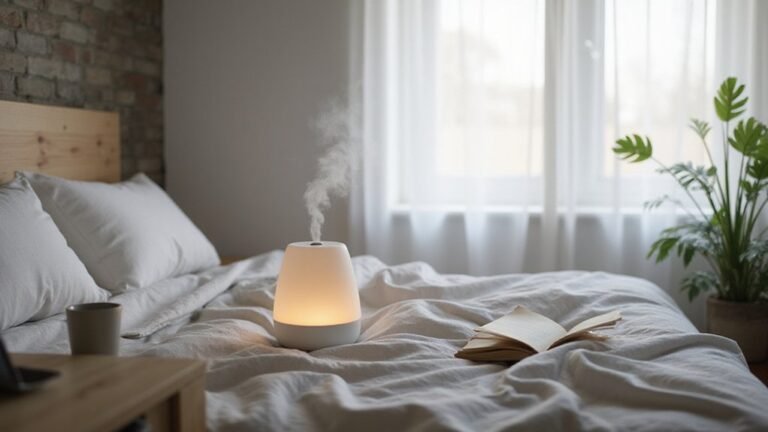
A humidifier adds moisture to the air, increasing relative humidity in dry environments, while a dehumidifier removes excess moisture when humidity is too high. You’ll use a humidifier when indoor humidity drops below 30%, typically in winter, to prevent dry skin and respiratory irritation. Conversely, a dehumidifier is useful when humidity exceeds 50%, common during spring or summer, to reduce mold and dust mites. Duct humidifiers can be installed into HVAC systems for whole-home humidification. For further guidance, note that a queen mattress measures 60 inches wide by 80 inches long. Ultrasonic models use high-frequency vibrations to produce a cool mist, while evaporative types rely on a fan to wick moisture from a wet wick.
Both devices feature filters: humidifiers often have basic filters to trap minerals from water vapor, preventing white dust, while dehumidifiers pull air through filters to capture dust, allergens, and other particles before extracting water. When placing them, position a humidifier in main living areas for even moisture distribution; place a dehumidifier in damp spaces like basements or bathrooms. Maintaining a relative humidity level between 30% and 50% maximizes comfort and prevents issues caused by too dry or too humid air.
Signs You Need a Humidifier (Not a Dehumidifier)
If your home consistently feels uncomfortably dry, it’s a sign you need a humidifier. Common signs include dry, itchy skin, chapped lips, and nosebleeds. You might also experience a persistent cough or dry throat that isn’t caused by allergies—it’s your air lacking sufficient moisture and irritating your airways. Waking up with congestion can also indicate low indoor humidity levels that a humidifier can improve. Unlike fixing a drafty window air conditioner, a humidifier addresses moisture deficits rather than temperature control.
Indoor humidity below 30% can impair your air quality. You’ll notice increased static shocks, cracks in wood furniture, and a dry sensation in your nasal passages. Using a hygrometer helps confirm these signs; readings under 40% suggest it’s time to add moisture. A humidifier helps soothe your respiratory system, makes mucus easier to clear, and enhances overall comfort when dryness is compromising your health. Remember, a humidifier is the right choice when low humidity, not excess moisture, is behind your discomfort.
Signs You Need a Dehumidifier (Not a Humidifier)
If you notice persistent condensation on your windows, musty odors in basements or closets, or mold growing on soil or walls, you likely need a dehumidifier. When indoor humidity levels exceed 50 percent regularly, excess moisture becomes a problem. This can cause wood trim to warp, wallpaper to peel, and promote mold and dust mite growth, which worsens respiratory issues like asthma. High humidity often feels clammy or sticky even with the air conditioning running, signaling that moisture control is needed. If your home shows any of these signs, a dehumidifier can help reduce moisture, protect your belongings, and improve your overall comfort and health. Unlike battery-operated string lights that rely on portable power sources, dehumidifiers are typically plugged into a wall outlet for continuous moisture removal. Using a hygrometer to measure relative humidity helps confirm whether levels are above ideal ranges, as indoor readings over 60% warrant using a dehumidifier for effective moisture control.
Which One Do You Need? A Simple Decision Chart
Measuring your indoor humidity is the first step, and using a hygrometer makes this straightforward. Aim for a reading between 30% and 50% for optimal comfort. If your humidity falls below 30%, you’ll need a humidifier to add moisture to the air. Conversely, if it rises above 50-60%, a dehumidifier is necessary to remove excess moisture. Seasonal changes influence your needs: dry winter air often benefits from a humidifier to reduce static shocks and prevent furniture from cracking. During humid summers, a dehumidifier helps eliminate musty smells and condensation. Your local climate also matters—arid regions generally call for humidifiers, while damp or damp-basement environments are better suited for dehumidifiers. For window air conditioners that aren’t cooling, the problem is often linked to excess indoor humidity making the unit work harder. Just as a full mattress offers less space than a queen, choosing a smaller dehumidifier may leave you with insufficient moisture removal for larger rooms. Regular maintenance of these appliances is essential to keep them running efficiently. When selecting a bed foundation, note that a box spring is typically required for proper support of a traditional innerspring mattress. Choosing the right device not only improves your living conditions but also helps prevent mold growth and overly dry air.
When to Use a Humidifier: and When to Use a Dehumidifier?
If your indoor humidity level drops below 30%, you need a humidifier. Dry air can cause cracks in furniture and damage your indoor decoration. It also leads to static electricity, chapped lips, and nosebleeds. This situation often happens during winter when heating systems dry out your home. Adding moisture with a humidifier improves comfort and helps protect your belongings. For a quick fix, you can drape a damp towel over a chair to mimic the effect of hanging a curtain without a rod in a pinch. When choosing a solution, consider that a single mattress offers a compact option for a smaller space.
On the other hand, if humidity rises above 50%, a dehumidifier is needed. Look for signs like condensation on windows, musty smells, or visible mold growth. Excess moisture can harm air quality by fostering dust mites and allergens. You’re likely to encounter these issues during damp summer months or in basements. Using a dehumidifier helps remove excess moisture, preventing mold growth and maintaining a fresher environment. For stylish storage alongside a dehumidifier, consider browsing queen headboard options to match your decor.
Always use a hygrometer to monitor your indoor humidity. Keep it between 30% and 50% for optimal health and comfort.
Will a Humidifier or Dehumidifier Help You Breathe Better?
If humidity levels exceed 50%, using a dehumidifier can help reduce allergens like mold and dust mites, which can alleviate asthma and allergy symptoms. However, setting the humidity too low can cause problems; air that is overly dry may trigger dry coughs, nasal dryness, and nosebleeds. It can also increase your risk of pneumonia and respiratory infections.
To promote better breathing, aim to keep indoor humidity between 30% and 50%. Use a humidifier when air is too dry to add moisture, or a dehumidifier when it’s too damp to remove excess moisture. Continuously monitor levels with a hygrometer, ensuring your air quality remains comfortable and healthy. Maintaining proper humidity not only supports clearer breathing but can also improve overall sleep quality without creating new health concerns.
Energy Costs: Which Unit Will Save You More Money?
Humidifiers use significantly less energy than dehumidifiers, with typical models consuming just 30 to 50 watts compared to 300 to 700 watts for dehumidifiers. This difference translates into noticeable savings on your energy bills. For instance, a 30-pint dehumidifier costs around $17.66 each month to operate, whereas a humidifier’s cost is minimal in comparison. Choosing the right size to suit your space ensures you maximize these savings. Although dehumidifiers are still more energy-efficient than HVAC systems, if lowering your electricity bill is your priority, a humidifier is the better choice. For example, expert recommendations emphasize selecting a dehumidifier with the appropriate pint capacity for your room size to avoid unnecessary energy waste. Notably, the linen versus cotton debate in bedding similarly involves weighing cost and comfort to find the best fit for your space. When comparing options, evaluating energy savings can help guide your decision just as considering cost and use guides the choice between comforters and duvets.
5 Features to Compare Before Buying Your Humidifier or Dehumidifier
Choosing the right device depends on practical features suited to your space. First, match the capacity to your room size. For rooms up to 500 square feet, a dehumidifier with 20 to 30 pints per day is sufficient. Larger areas benefit from models with 35 to 50 pints. To improve air quality, look for a built-in humidistat that automatically maintains humidity levels between 45% and 60%, helping prevent mold growth. An air purifier can also be used alongside these devices to capture airborne particles like dust and allergens. Additionally, using a duvet cover can help protect your bedding from dust mites and allergens.
Drainage options are also important. A continuous hose connection allows for automatic drainage in damp spaces, saving you from frequent manual emptying. In smaller or less humid areas, a manual water tank can suffice. Portability features such as wheels make it easier to move the device between rooms. Quiet operation is essential for bedrooms, especially models with night modes designed for minimal noise. For localized warmth without altering the room’s humidity, consider using a heated throw on a couch or armchair.
Safety features should not be overlooked. Look for cool-to-the-touch exteriors, overheat protection, and antimicrobial coatings that reduce impurities. Lastly, check the warranty coverage before making your purchase to ensure support for potential repairs or defects.