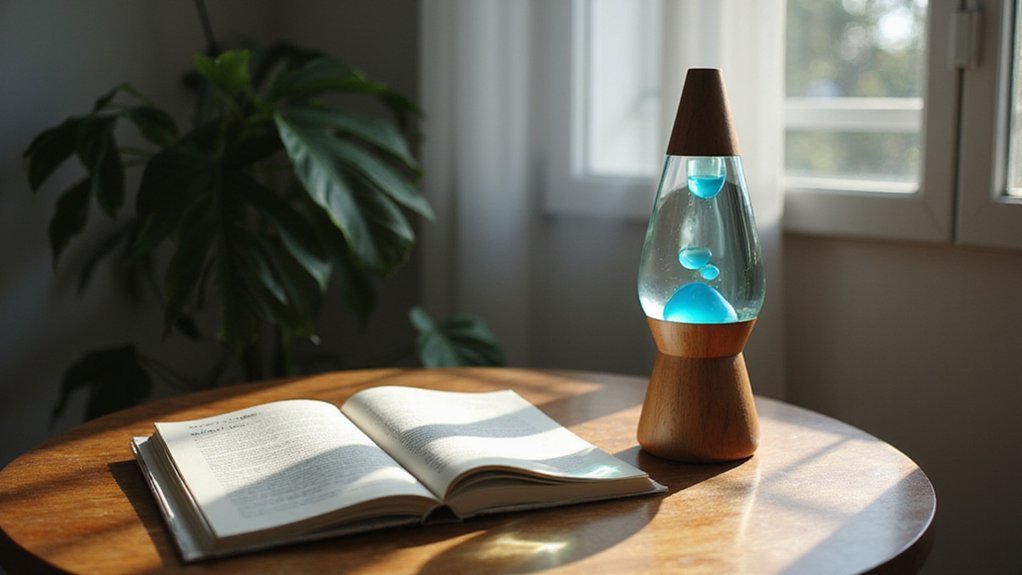
Ever wonder what makes a lava lamp’s mesmerizing blobs move so smoothly? Inside, a simple mixture of wax, water, mineral oil, and other ingredients creates that classic flowing motion.
By understanding how each part works, you can even learn how to tweak the effect yourself. Keep reading for a full breakdown of what’s inside and how it all comes together.
What Exactly Is Inside a Lava Lamp?
Inside a lava lamp, the core components include a clear liquid base, usually water, mixed with translucent dyes for color. These dyes give the lamp its vibrant appearance and can produce various shades. To prevent bacteria and mold growth, chemical preservatives are added, ensuring the lamp remains clean and odorless. Mineral oil or similar clear, inert liquids can also serve as the base material, creating a smooth, flowing effect. For those seeking a similar ambiance in their beauty rituals, a vanity with lit mirror offers a corresponding visual appeal. To avoid common mistakes when handling the lamp, it is helpful to hang sweaters on hangers using the proper techniques for storage. Using gentle detergent helps maintain the clarity of the liquid when cleaning the lamp’s exterior.
The “lava” itself is mostly paraffin wax, often combined with carbon tetrachloride to increase its density so it can rise and fall properly within the liquid. Since wax and water do not mix, they remain separate, which is crucial for the flowing motion. Companies keep the exact makeup of additives secret to maintain the proper density balance. To help the wax move smoothly and respond evenly to heat, a safe solvent like mineral oil may be mixed in along with propylene glycol or isopropyl alcohol.
At the bottom of the lamp, a small metal spring spreads heat evenly from the bulb and breaks the surface tension of the wax. This allows the lava to form bubbles and flow fluidly. The glass bottle that contains all these components is typically made from soda-lime glass, chosen because it is economical, durable, and transparent, so you can watch the mesmerizing flow inside.
The Physics of a Lava Lamp’s Rising and Falling Cycle
The rising and falling cycle of the wax in a lava lamp is driven by changes in density caused by heating and cooling. When you turn on the light, the heat source warms the wax at the bottom, causing its molecules to expand and become less dense than the surrounding liquid. This buoyancy makes the wax rise. As it ascends, it moves away from the heat and cools, causing the molecules to contract and increase in density. When it becomes denser than the liquid, gravity pulls it back down. This continuous process of heating, expanding, rising, cooling, contracting, and sinking repeats endlessly, creating the mesmerizing movement you see. The cycle hinges on the delicate balance between heat, density, and gravity, demonstrating a natural convection loop that keeps the lava lamp in motion. The glass tube design dictates the flow of the wax, ensuring meticulously engineered movement. Just as a bed frame must accommodate standard queen dimensions for a proper fit, the lava lamp’s base and globe are precisely sized to maintain the optimal thermal balance for this convection cycle. To ensure reliable operation, the heat source must be properly aligned and free of dust, similar to how installing a window air conditioner requires a snug seal to prevent air leaks and maintain efficiency. For those seeking a softer touch in their home, the materials used in cotton vs. bamboo sheets offer different comfort and cooling properties that can rival the visual appeal of the lamp’s motion.
How a Lava Lamp’s Heat Source Gets the Wax Moving
The heat source at the bottom of the lava lamp is an incandescent bulb that provides both illumination and thermal energy. When powered, it generates intense heat, creating the temperature difference necessary for the wax to move. The lamp’s wiring includes a thermostat or a heat regulation circuit to prevent the bulb from overheating, ensuring a stable temperature at the base. As the wax absorbs heat from the bulb, its molecules gain energy and spread apart, causing thermal expansion. This makes the wax less dense than the surrounding water, enabling it to lift off from the bottom due to buoyancy. The continuous cycle of wax rising and sinking is driven by convection currents that sustain the lamp’s mesmerizing motion. The consistent heat from the bulb sustains these convection currents, driving the continuous cycle of wax rising and sinking that creates the lamp’s mesmerizing motion. Understanding the required bulb wattage can help ensure the lamp operates effectively, much like choosing between Cal King and King mattress sizes affects room fit and comfort. For a similar hands-on approach, selecting budget-friendly yarn can make knitting a cozy blanket at home more affordable. Heating the container using a stand-alone hot plate demonstrates the same principle of convection, where hot material rises and cold sinks to simulate planetary processes.
Why Wax and Water Don’t Mix in a Lava Lamp
Temperature effects amplify this behavior. At room temperature, wax is denser than water, so it sinks. When you heat the lamp, wax expands, becoming lighter. Despite this density shift, the molecular makeup remains incompatible. The wax blobs float through the water without dissolving or merging. Each bubble keeps its shape and bounces off others because their chemical bonds prevent any mixing. This is why the wax and water stay separate, creating the familiar lava lamp motion. Similarly, ceiling fan sizing for a bedroom must match the room dimensions to ensure proper airflow without overpowering the space. An air purifier’s effectiveness relies on matching the room size to its clean air delivery rate. Following a DIY quilt guide can help you choose the right batting and fabric layers for a cozy, handmade project.
Why Add Mineral Oil and Isopropyl Alcohol to the Wax?
Adding mineral oil and isopropyl alcohol is essential because they fine-tune the wax’s density, ensuring it rises and falls properly within the lamp. Without these additives, most waxes would either float on top or stay stubbornly at the bottom, ruining the visual effect. By adjusting the mineral oil’s specific gravity with 90% and 70% isopropyl alcohol, you control how the wax responds to heat. The 90% alcohol increases the density of the oil, pushing the wax down, while the 70% alcohol decreases the overall density, allowing the wax to lift when heated. This precise balance is crucial for smooth, consistent movement of the wax blobs. Using a 40-watt light bulb inside a tin can provides the controlled heat source to activate this density-driven movement.
These additives not only improve the lamp’s visual performance but also enhance its longevity. Correct density prevents premature degradation of the wax and other components, making your lava lamp last longer. This careful fine-tuning ensures the wax’s buoyancy is just right, contributing to vibrant colors and a dynamic display. Without such adjustments, the wax’s behavior would be off, compromising the entire visual experience and the durability of your lamp.
What Does the Metal Coil at the Bottom Actually Do?
The metal coil at the bottom of a lava lamp serves multiple crucial functions. Primarily, it breaks the surface tension of the cooled wax blobs, encouraging them to merge into larger, more cohesive masses rather than floating as small fragments. This coalescence is vital for maintaining a smooth cycle of rising and falling wax, ensuring the lamp operates consistently. Additionally, the coil accelerates the melting process by conducting heat directly from the bulb into the wax. Instead of relying solely on the ambient heat of the glass, the coil keeps the wax in direct contact with the hottest part of the lamp, promoting even and rapid melting. Without it, uneven heating could cause sluggish or erratic movement, disrupting the flow. The coil also helps prevent issues related to static electricity, which can cause wax to cling to the sides of the glass instead of flowing freely. Moreover, it aids in maintaining uniform heat distribution, which is essential for preventing chemical reactions inside the lamp from stalling. The coil also serves to disrupt surface tension and mechanically agitate the wax, helping reform larger globules through collisions that often cause bouncing rather than merging. This process is similar to how proper washing techniques ensure a goose down comforter remains fluffy and free of clumps. Overall, this simple metal coil plays a critical role in the reliable, smooth operation of a lava lamp.
How the Glass Shape and Top Space Improve Flow
The top space should be about 2 inches to accommodate thermal expansion. Without this clearance, the liquid wax can expand and overflow, causing uneven burning or mess. This space allows the wax to lift and reconnect smoothly as it melts, preventing pressure buildup inside the container. The curved shape of the bottle also helps by acting as a tension breaker, making it easier for falling wax blobs to join the main body instead of sticking or breaking apart. Room temperature affects lamp operation, so placing it away from radiators or window sills prevents thermal disturbances that disrupt this smooth flow.
A well-designed glass shape and appropriate top space promote even heat distribution and a steady flow of wax. Smooth interior surfaces reduce wax trapping, which can cause irregularities in flow and burning. Conversely, irregular shapes tend to trap wax, leading to inconsistent performance. By carefully considering both the shape and the top space, your lamp will flow more smoothly, burn more evenly, and be easier to maintain.
Safety Rules You Need to Follow
To ensure safe operation, you should limit the usage of a lava lamp to 8 to 10 hours at a time and then allow it to cool completely before turning it on again. This prevents overheating, which can cause damage or pose a fire risk. If the lamp malfunctions or shows signs of electrical issues, such as flickering or sparking, unplug it immediately. Using an inline dimmer switch can help reduce heat buildup during operation. Always place your lava lamp on a stable, level surface away from flammable materials like paper or curtains. Maintaining room temperature between 20°C and 24°C helps keep the lamp functioning safely and efficiently. Additionally, due to risks of excessive heat if placed near stoves or direct sunlight, keep the lamp away from such external heat sources.
For electrical safety, inspect the plug and socket regularly for burn marks or signs of excessive heat, which could indicate wiring problems. Use only bulbs recommended by the manufacturer, as higher wattage bulbs can cause overheating. Always unplug the lamp before cleaning or attaching any parts to avoid electrical shock. Keep the lamp out of reach of children and pets because the glass gets extremely hot during operation. If the glass breaks, wear rubber gloves when handling the pieces and dispose of the shattered glass safely. Absorb any leaking liquid with disposable towels, and dispose of broken parts responsibly. Following these safety steps minimizes the risk of injury and damage, and always choose lava lamps from reputable retailers to ensure proper safety standards.