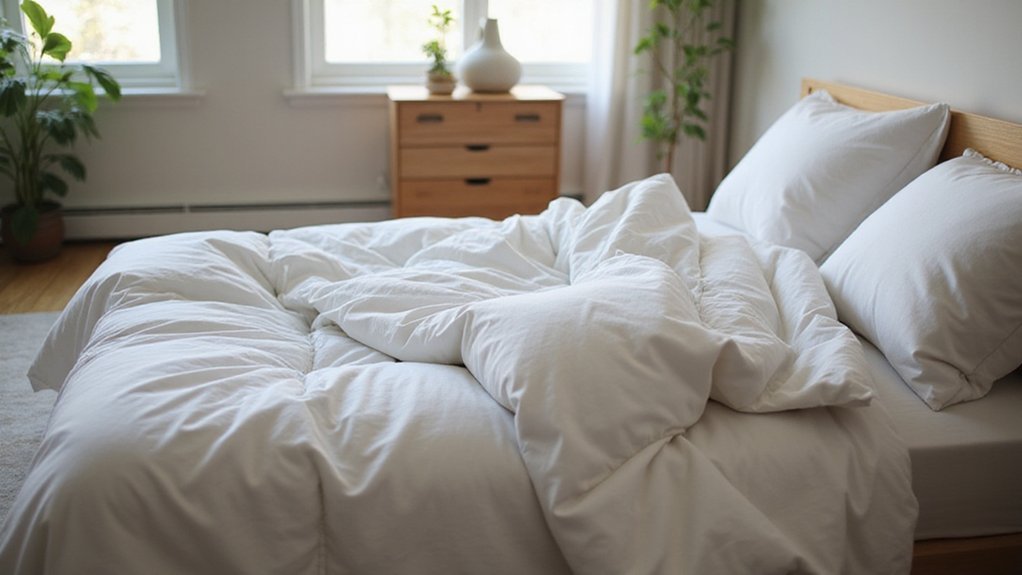
Are you trying to decide between a down comforter and a synthetic alternative? The choice often comes down to your budget, allergies, and how much warmth and breathability matter to you.
While down offers longer-lasting warmth, the alternative is usually cheaper and better for those with allergies.
Keep reading to find out which option suits your needs best.
Down vs. Down Alternative: Which Costs Less?
Down alternative pillows and comforters are generally more budget-friendly than real down. Basic pillows cost around $35, while genuine down versions typically start at about $150. Comforters made with down alternative are often available for under $50, whereas real down options can exceed $300. The lower price point comes from the synthetic manufacturing process, which avoids the costly sourcing of feathers from animals. However, proper installation of a window unit requires specific tools to avoid common mistakes like air leaks or the unit falling out. For those shopping for bedding, knowing the exact dimensions of a queen mattress ensures your new comforter fits properly without overhang or gap. But keep in mind the trade-offs. While down alternative is cheaper upfront, it usually needs replacing every 1 to 3 years due to wear and flattening. Real down, on the other hand, can last from 10 to 15 years with proper care. Although the initial cost is higher, a long-lasting down duvet may end up saving you money over time, making it a more economical choice in the long run if you consider durability. When choosing between a bed frame and a platform, initial cost is similarly a key factor, as platforms are often less expensive than traditional frame-and-box-spring setups.
Down vs. Down Alternative: Which Is Better for Allergies?
While down alternative bedding is generally the better choice for severe allergies, the decision isn’t always straightforward. True down allergies are rare; most allergic reactions come from dust mites or insufficient cleaning. High-quality down that has undergone rigorous processing, along with tight-weave covers, can provide luxury comfort without triggering mild sensitivities. Down alternative’s synthetic fibers are naturally hypoallergenic, making it resistant to dust mites, mold, and mildew. This is especially beneficial in humid climates or for those with severe allergy symptoms. You can wash down alternative bedding more frequently in hot water, which helps reduce allergen buildup. For individuals with severe allergies, down alternative usually offers a safer option. However, if you prefer the feel of premium, hypoallergenic down and are committed to environmentally friendly choices, a high-quality hypoallergenic down comforter could suit you well. Ultimately, consider your sensitivity level, cleaning routines, and climate when choosing between the two. Air purifiers reduce airborne allergens like dust and mold spores, complementing your bedding choice for a healthier sleep environment. A pregnancy pillow can also improve sleep posture by supporting the belly and back, which enhances overall rest and comfort.
Down vs. Down Alternative: Which Is Warmer?
Down comforters generally provide more warmth than synthetic alternatives because natural down clusters create thousands of tiny air pockets that trap body heat effectively. This results in superior insulation without added bulk, as down needs less material to achieve the same warmth. Due to its lightweight nature, down is excellent for regulating temperature and preventing the feeling of suffocation during sleep. In terms of breathability, down outperforms synthetic fills because its natural airflow prevents overheating, whereas denser synthetic fibers tend to trap more heat and moisture. When considering environmental impact, down’s lower fill weight means less material is used, although it is sourced from animals. Synthetic options rely on petroleum-based fibers, which have a different ecological footprint. If your priority is maximum warmth combined with lightness, down remains the better choice over synthetic alternatives. For those who also own humidifiers, maintaining clean, fresh results requires regular cleaning to ensure optimal performance and hygiene.
Down vs. Down Alternative: Which Lasts Longer?
Down comforters generally last 10 to 15 years, and with proper care, some can endure up to 20 years. Their natural resilience and ability to retain loft ensure they stay plush and warm over decades. High fill power down provides more insulation per ounce, enhancing long-term thermal efficiency. In comparison, down alternative comforters typically last only 5 to 10 years. Their synthetic fibers tend to clump and flatten after a few washes, which diminishes their insulating ability. Over time, fiber compaction reduces their warmth and coziness, making them less durable. If you’re seeking an investment that lasts, down offers a significantly longer lifespan.
Down vs. Down Alternative: Which Is Easier to Care For?
Down alternative comforters are much easier to care for. You can use a standard top-loading washing machine, cold water, and regular detergent without risking fiber damage. There is no need for gentle cycles or specialized detergents, making routine cleaning simpler. Drying takes less time on low heat, and adding dryer balls helps prevent clumping. You can wash it more often without concern, which is especially beneficial for allergy-prone households. Always check the care label, but overall, down alternative requires less effort to maintain. Additionally, because down alternative fills are synthetic materials like polyester, they are hypoallergenic and better for allergy sufferers than down.
Down vs. Down Alternative: How to Decide
Choosing between down and down alternative depends on your priorities. If warmth and durability are your main concerns, natural down is the better option. It has a high fill power, which means it traps heat efficiently, making it ideal for cold weather. Down is also more durable and tends to last longer over time. Similarly, air purifiers rely on filter effectiveness to remove particles and improve indoor air quality, just as down’s fill power determines its insulating ability.
On the other hand, if you’re looking for affordability or have allergies, down alternative is likely your best choice. It is hypoallergenic and less expensive upfront. Down alternatives are versatile and can work well as an all-year-round layer. Keep in mind that down alternatives typically use synthetic fabrics like polyester, while natural down relies on cotton shells. Market trends show increasing demand for alternatives because they tend to be more budget-friendly and suitable for allergy sufferers. Your decision should balance whether you prioritize warmth and longevity or cost and hypoallergenic features.