Wondering if an air purifier truly makes a difference? The truth is, they can significantly improve air quality, especially with high-quality HEPA models that trap almost all airborne particles.
However, they don’t eliminate every pollutant on their own.
Keep reading to learn what air purifiers can and can’t do for your space.
Do Air Purifiers Actually Improve Indoor Air Quality?
Air purifiers can significantly improve indoor air quality when used correctly. High-quality units with proper filters can capture airborne dust, allergens, and ultrafine particles, leading to notable reductions in particulate matter (PM) levels. For example, a well-maintained air purifier can lower PM levels in a child’s bedroom by about 50%. Using filters certified as HEPA or with high Clean Air Delivery Rate (CADR) ratings ensures you’re getting real performance. With the right setup, reductions of PM levels between 69% and 80% are common, and commercial-grade units can achieve 90% or higher PM2.5 reductions. To optimize results, check certifications and filters regularly because dirty filters decrease efficiency. Noise level is also important—quieter models can run continuously without disturbance. Ultimately, your indoor air quality improvement depends on your room size, correct use, and proper maintenance. Just as with single and twin mattresses, choosing the right size and specifications for your specific room is crucial for achieving the best performance. Additionally, blocking gaps around the unit is a common step during installation to prevent outdoor air from leaking in and reducing the purifier’s effectiveness. Understanding your airflow and filter needs is similar to choosing the right duvet coverlet for your bed to ensure a comfortable and effective setup.
Which Pollutants Can an Air Purifier Remove?
Air purifiers can remove many airborne pollutants but cannot eliminate every contaminant. They are especially effective at capturing fine particulate matter such as PM2.5, which includes tiny particles from smoke and industrial emissions. HEPA filters also trap pollen, pet dander, and mold spores, making them a good choice for allergy sufferers. Additionally, these filters can capture bacteria and virus-carrying aerosols, reducing the risk of airborne illnesses. For best results, the purifier should be appropriately sized for the room, as proper coverage ensures optimal performance.
For gaseous pollutants, activated carbon media in some purifiers helps reduce volatile organic compounds (VOCs) from paints, cleaners, and other household chemicals. It can also help with certain odors. However, standard purifiers are not effective against formaldehyde, ammonia, or nicotine. They do not remove gases like carbon monoxide or radon, nor can they eliminate cockroach allergens. To put this in context, a typical queen mattress size is 60 inches wide and 80 inches long, which offers a useful reference for understanding spatial dimensions in home comparisons.
Keep in mind that while air purifiers excel at reducing airborne particles, they do not address settled dust or existing mold growth—source control and cleaning are necessary for those issues.
How Room Size, Filters, and CADR Affect Air Purifier Performance
Room size, filter type, and CADR are the three primary factors that determine how well an air purifier performs. To choose the right unit, start by measuring your room’s square footage. Larger spaces require higher CADR (Clean Air Delivery Rate) values; a good rule is that the CADR should be about two-thirds of your room’s square footage. For example, for a 150 sq. ft. room, aim for a CADR of at least 100 CFM (cubic feet per minute). Filter type significantly impacts performance. HEPA filters are the gold standard, capturing 99.97% of airborne particles, making them ideal for allergy or asthma concerns. MERV 13+ filters also perform well for removal of fine particles and are often more cost-effective. When balancing cost and effectiveness, options like the Levoit Core 600S, which offers a CADR of 410 CFM, can efficiently clean rooms up to 635 sq. ft. without overspending. Smart features like auto mode can optimize your air purifier’s operation. These sensors detect real-time air quality and automatically adjust fan speed accordingly. This feature saves energy, reduces noise, and ensures consistent air cleaning. Properly sizing your purifier, choosing the right filter, and selecting a model with useful features guarantee cleaner air while conserving power. Similarly, washing a weighted blanket safely requires careful attention to its specific care instructions to avoid damage.
Do Air Purifiers Help With Allergies and Asthma?
HEPA air purifiers can significantly reduce indoor allergens and improve allergy and asthma symptoms. They typically lower pollen, dust mites, and pet dander levels by 25 to 50 percent, which can result in fewer asthma attacks and less medication use, especially in children. To maximize their effectiveness, place the purifier in a central location and ensure it has a HEPA filter rated MERV 13 or higher. Just as a cozy bedroom setting relies on clean air and allergen control, maintaining good air quality supports overall comfort and health.
Regular maintenance is essential—replace filters as recommended to maintain performance. Keep in mind that ongoing filter expenses should factor into your budget. For best results, combine air purifiers with HEPA vacuuming and thorough cleaning to remove settled allergens from surfaces. While air purifiers alone may offer modest relief, pairing them with overall trigger-control strategies can provide noticeable benefits for allergy and asthma management.
Why Air Purifiers Cannot Remove All Pollutants Completely
Air purifiers cannot remove all pollutants completely because of several inherent limitations. HEPA filters, for example, are designed to trap particles larger than 0.3 microns, which means smaller allergens, viruses, and mold spores can pass through. Heavier contaminants like pollen tend to settle quickly in the environment and escape capture altogether. Gaseous pollutants such as nicotine and volatile organic compounds (VOCs) often slip past activated carbon filters, which are ineffective against certain gases. Ionizers may produce ozone or other harmful byproducts like formaldehyde during operation, creating additional health concerns. For instance, wiring a dimmer switch requires careful attention to connection steps, similar to how air purifiers need proper installation and placement to function effectively. To maintain air quality, homeowners should also regularly wash a down comforter to reduce dust and allergens that accumulate in bedding. Surface contaminants pose another challenge; up to 90 percent of allergens may reside on sheets, carpets, and furniture where purifiers do not reach effectively. These areas are better addressed through physical cleaning. Mold spores inside the home cannot be eliminated solely by air purifiers; reducing moisture and cleaning surfaces are necessary steps because purifiers only remove some airborne spores. Additionally, for those concerned about energy consumption, operating costs can add up over time and influence whether an air purifier is a worthwhile investment. Overall, while air purifiers significantly improve indoor air quality, they cannot completely eliminate every pollutant.
How to Pick the Right Air Purifier for Your Home
To pick the right air purifier for your home, start by matching the unit to your room’s square footage using the Clean Air Delivery Rate (CADR). A higher CADR indicates the purifier can clean air more quickly in larger spaces. For everyday indoor air, look for a unit that’s rated for at least the size of your room. If you’re dealing with specific issues like odors or gases, consider adding an activated carbon filter to target those pollutants alongside the HEPA filter, which captures 99.97% of airborne particles. Always check for the AHAM Verified seal to ensure the manufacturer’s performance claims are verified for accuracy. For a quieter experience, look for models with low decibel ratings to avoid disruptive noise during operation. Similarly, a well-organized space can reduce clutter and improve air quality by limiting dust accumulation, much like using easy DIY tips to manage storage. When considering your bed size, a King mattress offers extra width, making it a popular choice for larger bedrooms.
Air Purifier Best Practices: Placement, Maintenance, and Source Control
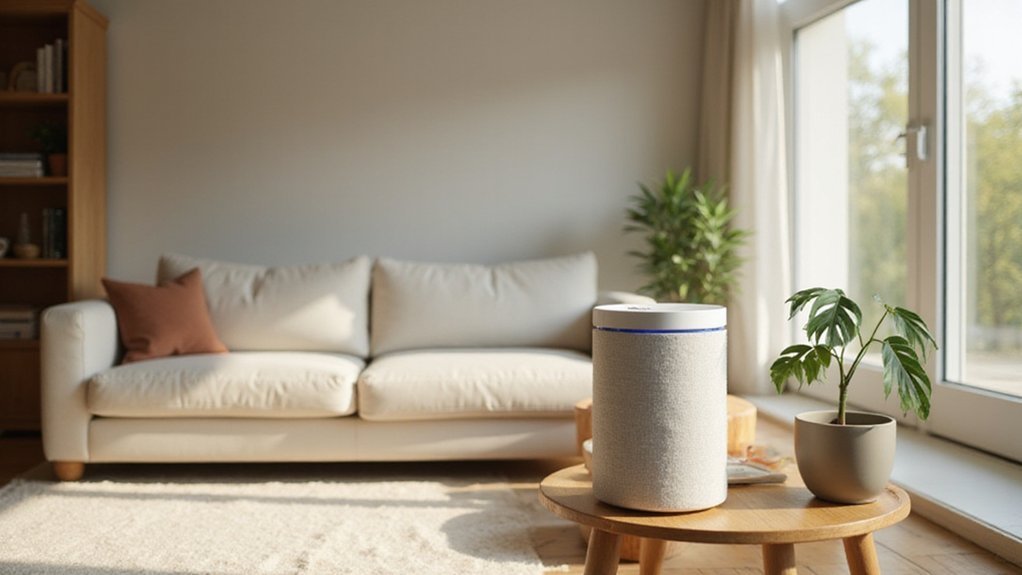
To optimize your air purifier, focus on three key practices: placement, maintenance, and source control. Position the unit in a central location, keeping 3 to 5 feet of unobstructed space around it to ensure proper airflow. Elevate the purifier 2 to 3 feet off the ground for better circulation, especially if it’s sitting on furniture or the floor. Place it near pollution sources such as pet areas or kitchens, but avoid corners or behind furniture where airflow could be restricted. For rectangular models, ensure the non-inlet side is the only part contacting walls or furniture to avoid blocking airflow. Unlike a comforter, which traps dust and allergens in its fibers, an air purifier actively removes them from the air. Similarly, a heated blanket requires gentle machine washing to avoid damaging internal wiring while removing trapped particles.
Regular maintenance is essential. Replace filters every 60 to 90 days, or more frequently if you notice reduced airflow or musty odors. Wipe down vents with a damp cloth weekly to prevent dust buildup. If your purifier has adjustable fan speeds, set it to a comfortable level for continuous operation, particularly at night, to minimize noise disruptions.
Controlling pollution sources enhances your purifier’s effectiveness. Use ventilation when cooking to reduce airborne particles and vacuum often to prevent dust accumulation. Managing humidity separately—especially in bedrooms—helps prevent mold and prolongs filter life. High moisture levels can impair filter performance, so keep humidity below 50 percent with a dehumidifier if necessary. Remember, your air purifier works best when it’s not constantly fighting overwhelming pollutant levels.