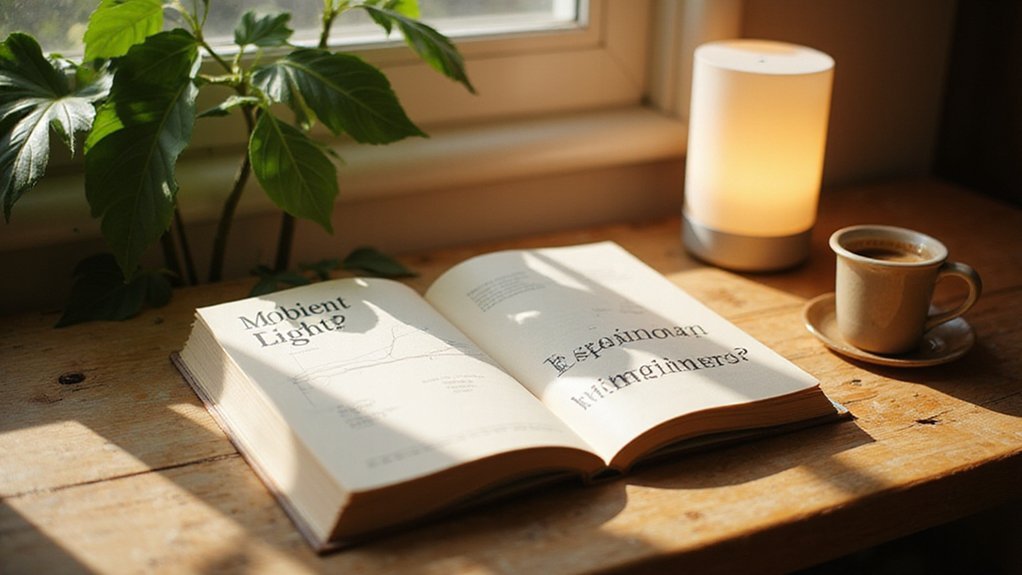
Have you ever wondered what keeps a room feeling inviting without being too harsh or too dull? That’s where ambient light comes into play. It’s the soft, even glow that fills a space, creating a warm and safe environment.
Mastering this basic layer of lighting makes your home both cozy and functional, and it’s easier than you might think to get it right.
What Exactly Is Ambient Light : and Why Does It Matter?
Ambient light is the natural or existing illumination that surrounds you in a space. It includes sunlight entering through windows, streetlights at night, or ceiling lights turned on in a room. This type of light is usually the main source of illumination in most environments, setting the overall tone and mood. Because it is evenly spread throughout a space, it helps your eyes adjust smoothly between different areas and avoids harsh shadows. Just like choosing the correct mattress size ensures a proper fit for your bed, balancing ambient light with task lighting ensures optimal function and comfort in a room.
Ambient light plays a crucial role in creating a sense of safety and comfort. It reduces sharp contrasts and softens facial features, making the environment feel welcoming and cozy. Without enough ambient light, navigation becomes difficult, and perceiving depth or spatial relationships is harder. For example, creating a DIY pillowcase at home is an affordable way to add personal style to your bedroom. For this reason, ambient lighting is essential not just for vision but also for emotional and psychological wellbeing. Its presence influences how you feel in a space, whether alert and energetic or relaxed and at ease.
How Ambient Light Differs From Task and Accent Lighting
Ambient lighting provides the foundational layer for a room’s illumination, creating a soft, even glow that allows you to move safely and feel comfortable. Unlike task or accent lighting, which focus on specific zones or objects, ambient light fills the entire space uniformly. It sets the general mood and prevents harsh shadows or dark corners that can make a room feel unwelcoming. Think of it as the baseline in your lighting hierarchy: essential for everyday activities and creating a cozy atmosphere. Without adequate ambient lighting, your other lights may feel too intense or ineffective, making the room look stark or uninviting. Each layer of lighting—ambient, task, and accent—serves its own purpose, but ambient light is the indispensable foundation that ties everything together. Dimmer switches offer adjustable brightness for this foundational layer, enabling mood control from cozy to lively atmospheres.
Where to Use Ambient Lighting in Your Home (Room by Room)
Place ambient lighting throughout your home strategically for optimal effect. In the living room, install ceiling fixtures as the main source of ambient light, and complement them with mid-century style floor lamps to add warmth and create a cozy atmosphere. Keep windows unobstructed by heavy curtains to maximize natural sunlight during the day. For those who also perform detailed makeup routines, a vanity with lit mirror can serve as a targeted ambient source in a dressing area. In the kitchen, opt for uniform overhead lighting with neutral white tones between 3000K and 4000K to support daily tasks and provide clear visibility. For the bedroom, place a central overhead fixture and balance it with wall sconces or floor lamps on either side to prevent shadows, while using warm light around 2700K to 3000K for a relaxing environment. In the dining room, position lighting directly above the table, choosing warmer temperature options from 3000K to 3700K to foster an inviting ambiance. Incorporate vintage accents and decorative fixtures with uplight and downlight configurations to add character and coziness. Additionally, light both sides of bathroom mirrors and install dimmers to easily adjust brightness levels, ensuring comfortable illumination without harsh glare. Using a consistent color temperature avoids chaotic aesthetics when mixing decorative fixtures with ambient sources. To maintain an unobstructed airflow for any cooling devices in the room, ensure that window air conditioner units are not blocked by heavy drapery or furniture. Similarly, air purifiers are most effective when placed without obstructions, as unrestricted airflow is crucial for their performance.
What Color Temperature Creates a Warm, Inviting Room?
A color temperature between 2700K and 3000K creates a warm, inviting room. This range mimics the cozy glow of a sunset, making it ideal for living rooms and bedrooms where you want to foster comfort and relaxation. When selecting bulbs, aim for this specific temperature range, which is endorsed by the American Lighting Association for its ability to influence lighting ambiance positively. The warm hues of yellow and orange in this spectrum evoke feelings of energy and positivity, helping to breathe life into your space. To enhance the cozy effect even further, consider bulbs in the 2000K to 2700K range for a softer, more golden glow. Pairing warm-colored lighting with warm-toned walls and flooring will deepen this inviting atmosphere. To balance the color palette, follow an 80/20 rule: 80% warm colors and 20% cool, tying everything together with a light beige throw for visual harmony.
5 Budget-Friendly Ambient Lighting Fixtures for Every Room
You can achieve effective ambient lighting for around $50 to $100. Start with a $15–$30 floor lamp in a corner, such as a secondhand tripod or a tunable Smart Govee Floor Lamp, to add height and focus. String or fairy lights under $20 can spread soft, warm light across large rooms without breaking the bank. Vintage plug-in wall sconces, costing about $10 each, bounce light off walls for even coverage and a cozy ambiance. When selecting a floor lamp for the bedroom, ensure its queen mattress dimensions complement the lighting height to avoid casting harsh shadows across the bed.
Add flameless LED candles, which come in packs of three for about $5, to create layered, cozy accent lighting without fire hazards. Smart bulbs integrated into existing lamps allow you to adjust brightness easily, especially when paired with a $10 dimmer switch. For a hidden, professional look, position LED strips just an inch from shelf edges to softly backlight objects and hide the source. For spaces with excess moisture, a dehumidifier and humidifier cost comparison can help you choose the right appliance for comfort alongside your lighting setup. Understanding how LED bulbs produce consistent, energy-efficient light ensures your bedroom remains comfortable without frequent bulb replacements.
This budget-friendly setup covers multiple areas of your home while keeping costs low and providing flexibility in lighting schemes.
A Brief Look: How Car Interiors Borrow Ambient Lighting for Safety
Ambient lighting in your vehicle should stay below 0.1 candelas per square meter. This level provides enough visibility to find controls without causing glare or distraction. Anything brighter risks impairing your ability to see the road clearly. For vehicle owners wanting to enhance their interior, aftermarket kits are available for customization.
Manufacturers generally avoid red or blue lighting inside the cabin because these colors can be confused with emergency signals. Instead, soft, warm glows—often in neutral or muted tones—are used to promote safety and comfort without compromising night vision. Unlike a heated throw for personal warmth at home, which focuses on cozy relaxation, vehicle ambient lighting prioritizes functional safety over comfort.
Smart LED systems adapt their brightness based on ambient conditions, ensuring the interior remains subtly lit during night drives. To maintain safety, it’s essential that these lighting systems are calibrated correctly, so their luminance never exceeds the recommended threshold. This balance helps you stay aware of your surroundings while reducing fatigue and eye strain.
Can You Rely on Natural Light as Your Ambient Source?
Natural light can work as your ambient source, but you shouldn’t rely on it exclusively. Its unpredictable nature makes it unreliable for consistent results. Assuming natural light is always better can lead to compromises in image quality or timing. Relying solely on it is risky, because it involves skill, perfect timing, and a bit of luck.
Although natural light’s diffuseness matches how your eyes perceive depth and three-dimensionality, it’s often directional enough to override your assumptions about overhead light. This means you might need to adjust your technique to account for shadows, highlights, and directionality.
From a technical standpoint, natural light’s low intensity can be challenging. You’ll often need a tripod, slower shutter speeds, or larger apertures like f/1.8 to compensate. Ensuring proper white balance in-camera is also essential to maintain accurate color.
On the health side, natural light helps protect against conditions like tuberculosis, leprosy, and depression, but indoor lighting levels are typically eight times lower than outdoors. While natural light offers benefits, you cannot depend on it entirely for your shoots.