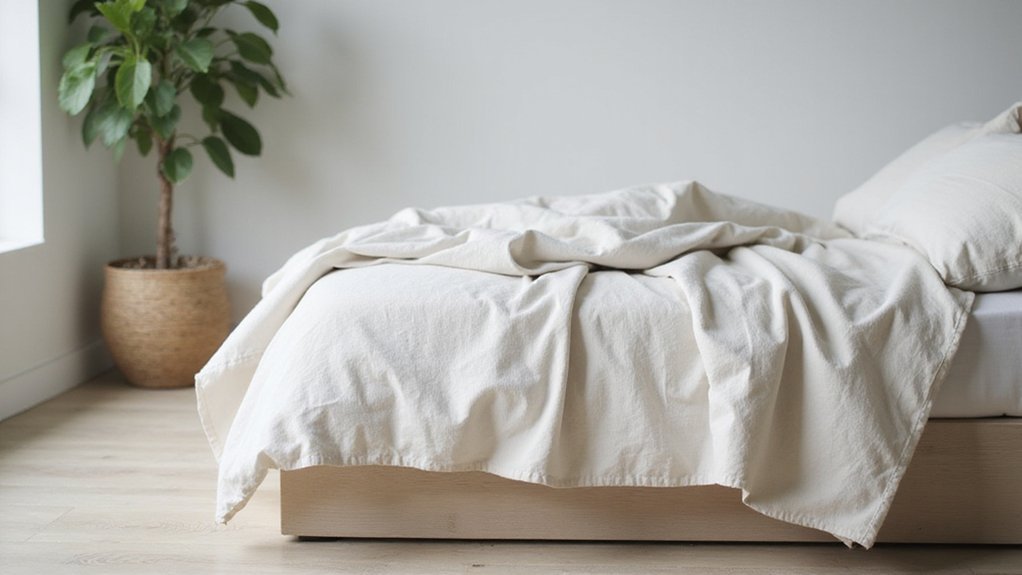
Not sure whether percale or sateen sheets will feel best on your skin? The choice mostly depends on your sleep style and comfort preferences.
Percale feels crisp, cool, and matte, ideal if you tend to sleep hot.
Sateen feels silky, smooth, and a bit warmer, perfect if you want a luxurious touch.
Keep reading to see which one suits your sleep needs best.
What’s the Difference Between Percale and Sateen Weaves?
Percale and sateen weaves differ mainly in their thread interlacing patterns. Percale features a simple one-over, one-under grid, which results in a crisp, matte finish. Sateen, by contrast, floats four threads over one, creating a silky, smooth surface with a subtle sheen.
This structural difference influences the fabric’s feel and function. Percale’s tight, balanced weave produces a lightweight and breathable fabric that feels cool to the touch. It also handles fiber elasticity better, making it less prone to pilling over time. Additionally, percale sheets soften with each wash, enhancing their comfort over time. For a standard queen setup, understanding the exact dimensions of your mattress can help prevent fitted sheet slippage. Sateen’s denser construction makes it heavier and warmer, with a luxurious, silky texture that feels soft against the skin. Additionally, because sateen exposes more surface threads, it retains dye more effectively, ensuring vibrant, long-lasting colors. Your choice depends on whether you prefer the crisp durability of percale or the smooth, color-rich appeal of sateen.
Percale vs Sateen: Which One Sleeps Cooler?
Percale consistently sleeps cooler than sateen due to its weave structure. The plain weave of percale, which involves one thread over, one under, creates an open, breathable pattern that efficiently allows trapped body heat to escape. This openness promotes better airflow, making it ideal for hot sleepers or humid climates. In contrast, sateen’s denser three-over, one-under weave restricts airflow and traps heat, leading to a warmer sleep environment. For optimal cooling, select 100% cotton percale with a thread count between 200 and 400, and consider organic cotton options for enhanced breathability and hypoallergenic benefits. Percale’s moisture-wicking properties help dissipate body heat faster, ensuring you stay comfortable throughout the night. For a child’s room, Top Kid Bunk Beds often pair well with percale sheets, as the breathable fabric helps maintain a comfortable temperature in shared sleeping spaces. Choosing Between Full and Queen Mattresses is a separate decision focused on bedroom space and cost, rather than sheet weave. If you are looking to build a complete sleeping setup on a budget, you can also explore DIY bed frame ideas to save money and customize your space.
How Percale and Sateen Feel Against Your Skin
Percale and sateen feel distinctly different against your skin. Percale offers a crisp, cool, and matte surface—similar to a freshly pressed shirt—creating a light and breathable feel. Its one-over-under weave results in an open, textured pattern that rustles faintly when new. Sateen, on the other hand, provides a silky, smooth, and luxurious glide, feeling plush against your skin. Its four-over-one-under float pattern produces a denser, more uniform surface that slips smoothly without resistance. Upon washing, percale softens gradually, while sateen remains plush from the start. Sateen reduces friction, making it better for sensitive skin, but percale’s airy texture prevents cling. Sateen stays silent when moved, whereas percale’s rustling is noticeable. Both fabrics deliver unique comforts: one crisp and cool, the other warm and drapey, depending on your sensory preference. Proper surface preparation ensures the film adheres without bubbles, much like starting with a clean fabric foundation. A contrasting ceiling type, such as a vaulted ceiling, introduces similar considerations for lighting texture and heat. For a similar sense of finishing detail, converting can lights to pendants requires careful material matching.
Which Percale or Sateen Weave Is More Durable?
Percale is more durable than sateen. Its one-over, one-under plain weave distributes stress evenly across threads, preventing any single thread from bearing excessive mechanical work. This tight structure enhances its tensile strength and tear resistance, even after multiple hot washes. A thread count analysis reveals percale’s balanced architecture better withstands wear over time. Additionally, its dye retention remains strong because fewer surface threads face friction, reducing color fading. Beginner quilt makers may find percale easier to work with due to its stable and less slippery surface, which is a key consideration in beginner quilt making kits. For those seeking a decorative option, a best end bench can add functional seating at the foot of the bed. Percale’s resilience makes it ideal for households with children who require frequent laundering.
In contrast, sateen’s longer floats are exposed during washing, making it more vulnerable to pilling and abrasion. It tends to lose its sheen faster under heavy use. While both weaves made from quality long-staple cotton can last, percale’s tighter weave offers a slight edge in resisting damage. This makes it a better choice for households with children or pets, as it can handle more frequent washing and rougher treatment. Sateen, on the other hand, benefits from gentler washing cycles to preserve its smooth finish.
Do Percale or Sateen Sheets Wrinkle More?
Percale sheets wrinkle more than sateen, and you’ll see it every time you make the bed. The 1-over-1-under weave of percale creates distinct thread crossings that tend to hold creases, especially after a spin in the dryer. These wrinkles are visible daily and are more noticeable because of percale’s crisp, matte finish. In contrast, sateen’s 3-over-1-under pattern naturally resists creases, so it often comes out of the dryer looking smooth with less effort. Hotels tend to use percale for its breathability and crispness, which aligns with their simpler weaving process and cost-effectiveness. A similar attention to fabric care can be applied to washing goose down comforters to maintain their loft and freshness over time.
This difference affects more than just looks. Percale’s looser weave offers better breathability, making it a good choice if you sleep hot. However, this looser structure makes it more prone to wrinkles. Sateen’s denser weave not only resists creasing but also helps with color retention, keeping your sheets vibrant longer. Its smooth surface also traps fewer particles, which can benefit allergen resistance. If you prefer a sleek, wrinkle-resistant look with minimal ironing, sateen might be your best option. But if you prioritize cooling and don’t mind some extra wrinkles, percale offers a crisp, breathable feel.
How to Care for Percale and Sateen Bedding
To care for your percale and sateen bedding, follow this routine. Wash them in cold or lukewarm water with half the recommended amount of mild detergent to protect the fibers and maintain vibrant colors. Avoid chlorine bleach because it weakens seams and causes fading; instead, add white vinegar for a natural brightening effect. Tumble dry on low heat and remove the sheets while they are slightly damp to help prevent wrinkles. Using dryer balls can also help reduce creases. Iron only on low heat if you want a crisper finish, but skipping ironing will extend the lifespan of your sheets. Address stains promptly with OxiClean or a gentle detergent to keep your bedding looking fresh. Wash your sheets weekly, but do not overload the washing machine—fill it to about half capacity for effective cleaning and to prevent undue stress on the fabric. Since thread count matters less for durability and softness, proper care techniques are key to keeping both percale and sateen sheets soft and long-lasting. Store your bedding in a cool, dark, breathable space, avoiding plastic containers to prevent damage from moisture and mildew.
Percale vs Sateen: Which Looks Better on Your Bed?
Sateen, with its silky, subtle sheen, delivers a luxurious, opulent aesthetic. It features a smooth surface that drapes beautifully, softening your bed’s silhouette and creating a cozy, inviting feel for bedding layering. The lustrous finish enhances rich, deep tones, making color coordination effortless and elevating the overall look of your bed. While sateen exudes warmth and sleekness, percale offers a crisp, airy appearance that emphasizes a more structured, fresh style. Your choice between these weaves depends on whether you prefer a polished, warm vibe or a sharp, breathable look. However, the process of selecting bedding can feel similarly detailed to researching high-quality vanity mirrors, as both involve comparing materials and finishes for your personal routine. Percale’s one-over-one-under weave creates its characteristic matte finish and crisp feel. Installing a window air conditioner requires the right tools and careful measuring of your window frame.
Who Should Choose Percale Sheets?
If you tend to sleep hot or live in a warm climate, percale sheets are an ideal choice. Their lightweight and breathable weave promote cooling airflow and prevent heat from trapping, helping you stay comfortable all night. The crisp, matte texture gives your bedroom a fresh, casual look—no shiny finish, just a clean, just-made-bed feel. Additionally, percale’s hypoallergenic qualities make it suitable for sensitive skin, especially since lighter colors and natural fibers reduce irritation. If durability matters to you, percale resists pilling and naturally softens over time without losing its crisp feel. It is also budget-friendly, with high-quality queen sets usually costing between $100 and $200. If you prioritize breathability, longevity, and a cool, crisp feel, percale sheets are a smart pick. For added comfort during cooler nights, you might consider pairing them with a weighted blanket to promote deeper relaxation.
Who Should Choose Sateen Sheets?
You should choose sateen sheets if you prioritize a silky, luxurious feel that mimics a hotel duvet. Their smooth, slightly slippery surface is gentler on sensitive skin compared to percale’s crispness, making them ideal for those who dislike rough or stiff textures. Additionally, sateen sheets tend to resist wrinkles better and stay looking neat between washes, so you spend less time ironing or smoothing out creases. They also provide a warm, cozy experience, offering immediate softness and comfort without a high price tag—making them a smart choice for anyone seeking affordable luxury. This cozy warmth is enhanced by sateen’s satin-like weave, which traps more body heat than percale’s plain weave.