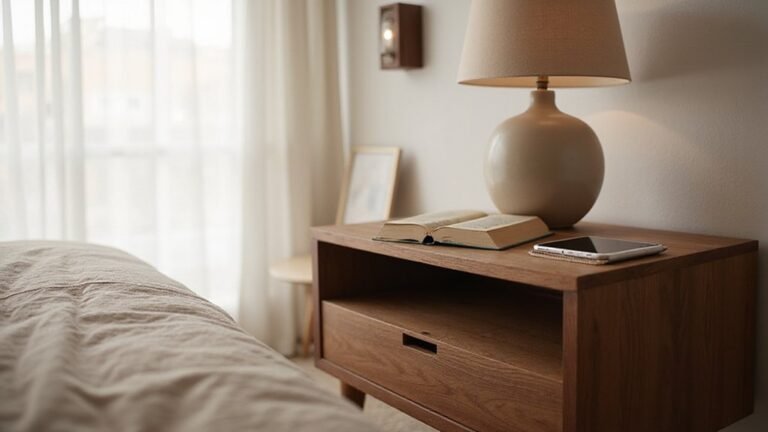
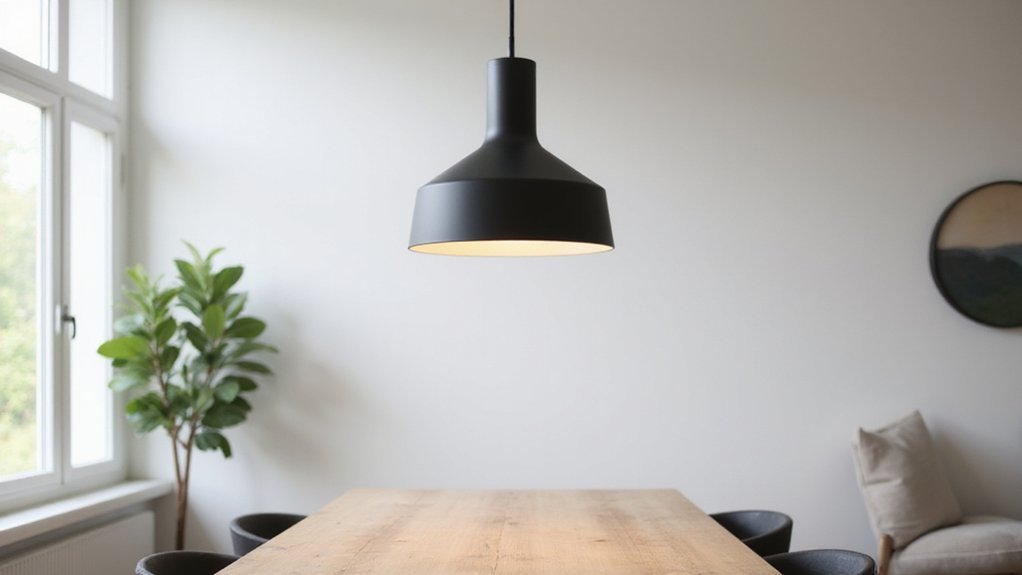
Are you confused about which ceiling light to choose for your space? The right fixture depends on factors like ceiling height, room function, and style.
For example, low ceilings require flush or recessed lights, while taller ceilings can handle chandeliers or pendants hung at the right height.
Keep reading to learn how to select the perfect ceiling light for any room.
Don’t Buy Until You Check Your Ceiling Height
To ensure your ceiling light fits well and is functional, measure your ceiling height first. This measurement determines which fixtures will actually work in your space. For ceilings that are 7 to 8 feet high, opt for flush or recessed lights to maintain a minimum 7-foot walkway clearance and avoid bumps on the head. Long chain fixtures are not suitable here. Proper clearance is essential, similar to how you must measure a window frame to ensure an air conditioner fits without blocking airflow or creating instability. When working with low ceilings, consider building a compact bedside table to maximize floor space without cluttering the room.
If your ceiling is 11 to 12 feet high, chandeliers should be hung about 7.5 to 8 feet above the floor for comfortable clearance. For ceilings taller than 13 feet, statement pieces with at least 8 feet of clearance are recommended. Follow these fixture hanging guidelines precisely: for 8-foot ceilings, hang pendants 32 to 36 inches above a table; for 9-foot ceilings, that increases to 36 to 40 inches.
Add 3 to 6 inches of chain for every extra foot beyond 8 feet. The height of your fixture should be calculated by multiplying your ceiling height in feet by 2.5 or 3 inches. Ignoring these measurements can cause head bumps or an unbalanced room appearance, making your space uncomfortable and less appealing. Just as a properly fitted comforter balances warmth and fit for a cozy bedroom, correct ceiling light height prevents awkwardness and ensures comfort.
Match Ceiling Light Function to Every Room
Match your ceiling light’s function to each room’s purpose to ensure proper illumination and style. In living rooms, opt for fixtures like semi-flush mounts or chandeliers that provide broad, ambient light suitable for social gatherings. Hallways and bathrooms benefit from compact flush mounts, which save headroom and keep the space bright without overwhelming the area. Kitchens require layered lighting: recessed lights for even, general illumination and pendant fixtures over islands or work zones for targeted task lighting. Dining rooms often feature chandeliers as focal points, creating visual interest while offering soft ambient light. Entryways with higher ceilings can accommodate hanging lanterns or large chandeliers that set a welcoming tone. For areas with specific activities, like kitchen sinks or desks, install pendant lights or adjustable task lighting directly overhead. Home offices and workspaces benefit from adjustable track lighting to focus light where needed. Matching the fixture type and style to each room’s activity ensures both utility and visual appeal. Incorporating key considerations from humidifier usage helps maintain ceiling light performance in humidified spaces. Additionally, ensure at least 8 ft clearance from the floor before fixtures begin to maintain safe headroom and proper proportion. For humidified rooms with ceiling lights, regular cleaning of mineral deposits prevents stubborn buildup that can obstruct both light and airflow. A queen-size mattress measures 60 inches wide by 80 inches long, a standard queen dimension that influences how bedside lighting should be positioned for balanced coverage.
Best Lights for Low vs. High Ceilings
For ceilings below 2.4 meters, opt for flush mounts or recessed canless lighting. These fixtures provide even light diffusion without protruding into the room, helping to maximize headroom. Keep fixture depth under 10 to 15 centimeters to prevent head-bumping. Semi-flush pendants are suitable if the drop remains under 15 centimeters, but prioritize fixtures with minimal hanging length. Upward-facing components reflect light off the ceiling, which helps lift the room’s atmosphere and creates a sense of more space. For those seeking a similar reflective quality in detailed tasks, a vanity with lit mirror offers focused illumination ideal for beauty rituals. To maintain optimal air quality, consider a Vicks Dehumidifier to reduce humidity that can cause ceiling stains and fixture damage. Regularly cleaning your ceiling fixtures with a soft brush attachment helps prevent dust buildup, which is a simple maintenance step that mirrors the care needed for fabric surfaces.
Where to Place Ceiling Lights in Every Room
Place ceiling lights strategically based on each room’s function and furniture layout. In kitchens, install can lights about 36 inches from the back wall and 24 inches in front of cabinets to evenly distribute light and avoid shadows on countertops. For bedrooms, space the fixtures 24 inches from the walls and 3 to 5 feet apart to ensure comfortable illumination. Use dimmers in bedrooms to adjust brightness for a cozy atmosphere. In living rooms, position a single decorative fixture centered over the seating area or dining table. Avoid glare by keeping exposed bulbs out of your seated line of sight. Always select a color temperature suited to the room’s purpose—warm tones for relaxation, cool tones for tasks. Planning your furniture layout before installing lights helps achieve the best placement and overall lighting effect. In kitchens, using LED wafer lights offers a thin, modern alternative to traditional recessed cans. For those debating mattress firmness, hybrid mattress models often balance support and pressure relief better than pure foam. Similarly, when choosing bedding, microfiber sheets provide a budget-friendly and wrinkle-resistant option compared to cotton. To ensure a polished look, carefully measure and space the hardware evenly as described for hanging pinch pleat curtains.
Modern LED Ceiling Lights: Panels, Strips, and Cove Options
Modern LED ceiling lights, including panels, strips, and cove options, provide versatile lighting solutions for various room styles and purposes. You can easily adjust LED color temperatures from warm 2700K for a cozy atmosphere to bright 6500K for task-oriented tasks. Tunable LED strips make these transitions simple and seamless.
Cove lighting creates that floating, perimeter glow that visually enlarges a room. Strips used for Cove lighting are usually between 8 and 12 millimeters wide, with a color rendering index (CRI) above 90, ensuring accurate color reproduction. Deeper drama can be achieved with multi-level cove designs often incorporating tray ceilings, which add dimensionality and visual interest. Installation is simplified with renter-friendly designs that use adhesive or screw-based brackets, allowing tracks to snap on without complex tools.
LED ceiling lights are highly energy-efficient, consuming about 75 to 85 percent less power than traditional incandescent lights. Their long lifespan—up to 50,000 hours—makes them cost-effective over time. To ensure optimal performance, guarantee that your cove depth is between 150 and 250 millimeters, and use aluminum profiles for effective heat dissipation.
Ceiling Light Rules for Room Size and Placement
To determine the correct ceiling light size for your room, add the length and width in feet to get the fixture’s diameter in inches. For example, a 24-by-14-foot room totals 38 inches, then divide by two to find a 19-inch diameter fixture. This method ensures balanced proportions that match your space. When hanging fixtures, maintain at least seven feet of clearance from the floor to prevent head bumps. Over dining tables, hang pendants 28 to 36 inches above the tabletop and make sure the fixture is at least a foot shorter than the table’s length for visual harmony. For rooms with ceilings taller than nine feet, add three inches of fixture width for each foot of additional height to keep the scale appropriate. Selecting fixtures that align with these size guidelines creates a cohesive and comfortable lighting environment. Using energy-efficient LED bulbs is recommended—they offer longer lifespan and lower power consumption, especially in dimmable models. Place wall sconces at 60 to 70 inches from the floor to provide effective and aesthetically pleasing wall lighting. Additionally, dimmers on all lights allow for flexible intensity and mood adjustments to adapt to changing natural light conditions. For additional illumination, a top floor lamp can complement ceiling fixtures by providing task or accent lighting in seating areas. Just as choosing the right bedding materials like percale or sateen depends on your comfort preferences for breathability or softness, selecting the correct light fixture type and placement is essential for optimal room functionality. For those seeking a sturdy base that complements a lighting update, a metal bed frame offers durability and modern style for the bedroom.