If you’ve ever wondered how to get the perfect scent from your reed diffuser, you’re not alone.
The right setup and routine can make all the difference in filling your space with fragrance.
By the end of this, you’ll know how to easily achieve a balanced and long-lasting aroma from your diffuser.
Keep reading for the full step-by-step guide.
How to Set Up a Reed Diffuser in 5 Simple Steps
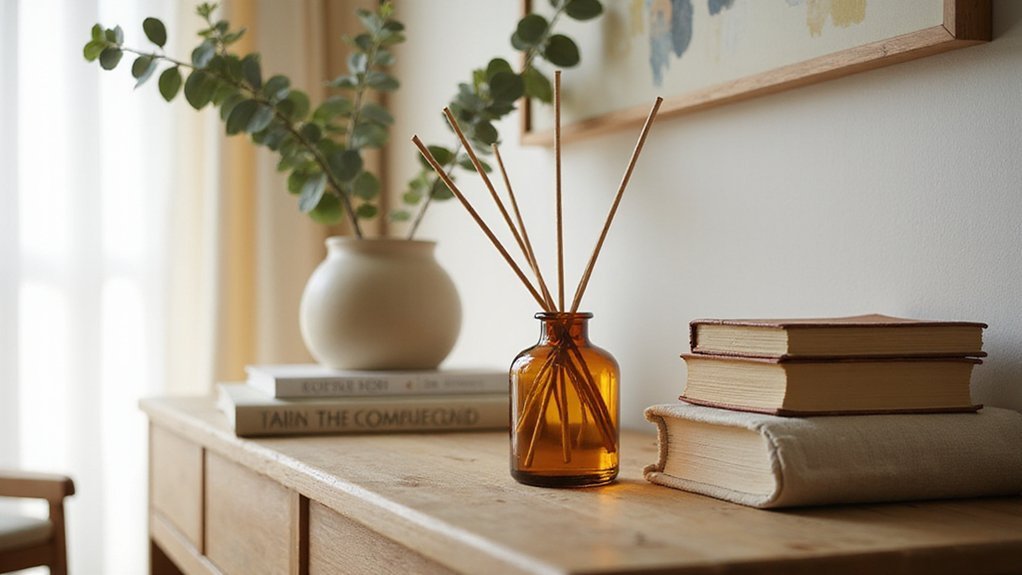
To set up a reed diffuser in five simple steps, start by preparing your workspace with paper towels to protect surfaces from oil spills. Pour the diffuser oil into your vessel, filling it halfway to three-quarters full; this amount allows for steady scent diffusion without risking overflow. Consider your room decor by matching the color of the vessel with your space to enhance aesthetic appeal. When inserting the reeds, do so slowly to avoid splashing, and cluster them for a modern look or fan them out for wider coverage. Unlike a comforter that is a single piece requiring frequent washing, a reed diffuser uses replaceable reeds and oil for continuous scent release without needing to replace the entire setup. Immediately flip the reeds after insertion to jumpstart diffusion and quickly enjoy the layered scent notes. The diffuser base and fragrance oil are mixed at an 80% to 20% ratio to ensure optimal performance. Wait a few minutes for the reeds to absorb the oil fully. Finally, place your diffuser in a high-traffic area away from direct sunlight, flipping the reeds every few days to maintain and refresh the scent intensity. For a larger room, consider that a diffuser with more reeds can better cover an area comparable to a queen mattress size for even fragrance distribution. Avoid placing the diffuser near drafts or vents, as this is a common mistake that can disrupt the scent throw.
How Many Reed Diffuser Sticks to Use for Stronger Scent
To achieve a stronger scent from your reed diffuser, you should start with 6 to 8 sticks and gradually add one stick every 24 hours until you reach your preferred intensity. Using more reeds increases the fragrance’s strength but also speeds up oil evaporation, meaning you’ll need to replace the oil more frequently. For smaller spaces like a bathroom, 4 to 6 sticks are usually enough, while medium-sized rooms like bedrooms benefit from 7 to 10 sticks. Large living areas may require 10 to 12 sticks for a more noticeable scent throw. Experimenting with the number of sticks allows you to customize the aroma without overwhelming the space. Remember to consider room size and personal scent preference when adjusting the number of reeds. You can also apply budget-friendly tips from a bedding folding guide to manage reed diffuser oil costs. To complement your diffuser, a bright workspace benefits from proper lighting, such as that provided by a top-rated desk lamp.
When and How to Flip Reeds for a Stronger Scent?
Flipping reeds every 7 to 14 days is recommended for maintaining a strong fragrance. Doing it weekly can boost scent intensity, especially in less humid environments. If the air is very humid, extend the interval to about 10 days. To flip, grip the reeds near the top gently, lift them over a sink, and rotate 180 degrees so the soaked ends face upward. This action reactivates the fragrance and helps circulate it into the air, which is essential for effective diffuser maintenance. Avoid aggressive flipping to prevent splattering or damage to the reeds. You should flip the reeds when you notice the scent weakening, a process known as fragrance layering. If you see signs of oil overload—such as a thick film or a stronger-than-desired scent—pause for about two weeks before flipping again. Reeds can be replaced every 4 to 6 months if they become clogged with dust or oil buildup, ensuring optimal performance. For a custom holder, consider applying budget-friendly DIY tips from a garment rack guide to safely store your reeds in an upright position.
Where to Place (and Where Not to Place) Your Reed Diffuser
Choose a stable surface at nose level, such as a side table, console, or shelf, for your reed diffuser. Place it in an open area with gentle airflow to help distribute the scent without overpowering. Avoid direct sunlight, heating vents, and windows that could cause rapid evaporation of the fragrance. Keep it away from high-traffic zones where children, pets, or passing people might accidentally knock it over. Position it closer to the room’s center rather than in drafty corners to maximize dispersal. Suitable locations include entryways, kitchens, and bathrooms, but avoid placing it on a jostled coffee table or toilet tank. After initial placement, allow the reeds to sit for 24 hours for proper oil absorption before evaluating the scent strength. For a personalized touch, select diffuser vessels that match your decor or experiment with color combinations. To create a cohesive atmosphere, consider placing complementary scents in different rooms, enhancing the overall fragrance experience. For a budget-friendly and simple DIY upholstered headboard project, you can also repurpose a reed diffuser vessel as a decorative accent on a nearby shelf. Additionally, if you are already browsing latex mattress reviews, a sturdy bedside table is ideal for preventing accidental spills. Like a down comforter, a reed diffuser should be kept away from direct heat sources to preserve its quality and longevity.
How Often to Flip Reed Diffuser Sticks for Best Results
Flipping your reed diffuser sticks about once a week is ideal for maintaining a consistent fragrance. Gently rotate each reed 180 degrees so the dry end absorbs more oil. This weekly action helps prevent the scent from fading quickly due to evaporation and keeps the fragrance noticeable. In more humid environments like bathrooms, flipping every four weeks is sufficient, while in cooler bedrooms, up to eight weeks between flips can work well. Flipping more often than every two days accelerates oil loss, so avoid overdoing it. For aesthetic purposes, you can reuse your diffuser vessel with different oils for color changes, but never switch out reeds when changing scents to prevent mixing fragrances. For a natural look, choose rattan reeds over synthetic ones. When flipping sticks, do so carefully to avoid drips, and adjust the timing based on your room’s airflow and humidity levels for the best results.
How to Restore Fading Scent Without Buying a New Refill
Flipping the reed sticks is the easiest way to restore a fading scent. Turn the saturated ends upward so they face the air, which reactivates scent diffusion instantly. Do this every few days with half the sticks for a steady, ongoing release, or invert all the reeds every 3 to 5 days if you want a stronger aroma. If flipping alone doesn’t boost the scent, replace clogged reeds every 6 to 8 weeks to maintain performance. For those who prioritize a polished setup, choosing a diffuser with a design as refined as a top vanity mirror with lights can enhance the aesthetic of your space. The visibility of your diffuser’s light source can be affected by Can Your Ceiling Light factors like room height and fixture placement. Considering the cost differences between bed frames and platforms can help you make a budget-conscious choice for your home setup.
Cleaning the bottle neck with warm, soapy water can unblock airflow and improve scent dispersion. Also, consider adjusting the diffuser’s placement: position it in a spot with gentle airflow and away from direct heat sources. In smaller, less ventilated rooms, the scent tends to be more concentrated, providing better aromatherapy benefits. To further prevent scent fade, ensure reeds are fully submerged in oil to maintain consistent capillary absorption. These simple steps help refresh your diffuser’s scent without needing to buy a new refill.
How Long a Reed Diffuser Typically Lasts (and What Affects It)
A reed diffuser typically lasts between three to six months with proper care. The duration depends on the size of the bottle, the number of reeds used, and the conditions of its placement. Smaller bottles, like a 30ml size with two to three reeds, may scent a space for only a few weeks before needing a refill, while larger bottles such as 500ml ones can continue to emit fragrance for over half a year.
Environmental factors significantly influence how long the scent lasts. Warmer temperatures, direct sunlight, and drafts cause faster evaporation, shortening the lifespan of the fragrance. High humidity can also accelerate the drying process, decreasing how long the diffuser remains effective. To maximize longevity, place your diffuser in a cool, shaded spot with moderate airflow. Proper positioning prevents it from drying out too quickly, ensuring you get the most use out of your fragrance. The color of the reeds does not affect how long the diffuser lasts, but the type of scent and layering techniques can impact the intensity and duration of the fragrance over time. For a similar approach to maximizing use, understanding proper quilting techniques for beginners can help extend the life of your craft projects. Just as mounting brackets correctly ensures a stable and long-lasting curtain installation, proper placement of your diffuser prevents it from tipping or spilling. Choosing a diffuser size that fits your space is like choosing between armoire and wardrobe to best meet your storage needs.
How to Make Your Reed Diffuser Last Longer (Pro Tips)
To make your reed diffuser last longer, start by placing it in a cool, shaded spot away from direct sunlight and heat sources. Keep it away from radiators and vents to slow down evaporation. Using only 5 to 8 reeds initially helps control how quickly the liquid is used, since fewer reeds reduce the rate of fragrance dispersal. Flip the reeds weekly to refresh the scent, but avoid flipping more often, as this wastes oil. For optimal performance, set the fragrance load at 15% when mixing your refill.
For better fragrance layering, incorporate essential oil blends in your refills. When the bottle is about an inch from empty, top it up instead of letting it dry out completely. Always replace the reeds with new ones each time you refill to ensure optimal wicking. When you’re not using the diffuser, store it with the stopper on in a stable, central location with moderate airflow. If the scent becomes too strong, remove some reeds to control the intensity. This strategy helps you get the most out of every drop of oil.
Common Mistakes That Ruin a Reed Diffuser (and How to Fix Them)
To ensure your reed diffuser performs well and lasts longer, avoid common mistakes that can ruin its effectiveness. Placing your diffuser near heat sources or sunlight speeds up evaporation, reducing scent longevity. Keep it at room temperature and away from vents or drafts to preserve the fragrance. Regularly flip the reeds weekly to prevent dust buildup and maintain even diffusion. Use the recommended number of reeds, typically 4 to 5, to control the rate at which your oil depletes; using too many can cause the oil to run out quickly. Avoid reusing old reeds, as they become clogged over time and lose their ability to diffuse scent properly. Choose a narrow-neck container and a proper base liquid—thick oils or water without preservatives can cause clogs. Never mix different oils because it can disrupt the diffuser’s chemistry and scent balance. Perfumer alcohol acts as a natural preservative, preventing microbial growth that mold can cause in water-based formulas. For a cozy bedroom setup, ensure the diffuser is placed on a stable surface similar to how a twin mattress provides a consistent foundation for rest. For larger rooms, treat scent coverage like laundry logistics by ensuring your diffuser capacity matches the space, just as you would check what size washing machine king comforter requires. Finally, always use a tray or coaster underneath the diffuser to protect surfaces and keep it stable. Selecting a lamp or table for your diffuser’s placement can significantly affect its stability and scent distribution in the room.
When to Replace Reed Diffuser Sticks (Signs of Clogging)
Clogged reed diffuser sticks should be replaced every one to two months to maintain optimal fragrance dispersal. Over time, dust, skin oils, and residue can clog the fibers, reducing their ability to wick oil effectively. You can tell it’s time for new sticks if you notice a persistent drop in scent intensity even after flipping them. When the oil level stops decreasing, it indicates that the reeds are saturated and can no longer absorb or release fragrance properly. Physical signs include discolored, warped, or rough sticks, especially with blocked tips. In bathrooms, replace sticks approximately every four weeks; in cooler rooms, you may extend that to about eight weeks. Waiting too long results in inefficient use of oil and a scentless space. Similarly, air purification systems rely on proper airflow through clean filters to effectively remove particles from the air. Unfortunately, once reeds are fully clogged, no amount of washing can restore them, making replacement the only viable solution. Choosing between full and queen mattress sizes involves a similar trade-off in space and comfort.