If staying cool at night feels like a challenge, the right bed sheets can make a big difference. Some fabrics and weaves are specifically designed to pull heat away from your body, helping you sleep more comfortably.
In this guide, you’ll learn which materials and features really work for cooling sleepwear, so you can find sheets that keep surface temps 2–4°C cooler and improve your nightly rest.
What Makes a Bed Sheet Cool? Qmax, Pore Size, and Moisture-Wicking Explained
A bed sheet feels cool primarily because of its ability to transfer heat and manage moisture. The key factor is Qmax, which measures thermal conductivity—how quickly heat moves from your skin into the fabric. Sheets with a Qmax above 0.40 deliver better cooling, with top options like Evercool® reaching 0.46. Microscopic pores and channels in the fabric pull moisture away from your skin through capillary action, spreading sweat for rapid evaporation. Additionally, the weave structure creates air channels that allow hot, humid air to escape and cooler air to enter, enhancing overall cooling. High-density weaves increase contact area, boosting heat transfer. For example, during hot weather a window air conditioner can help lower room temperature, but the sheet’s ability to wick moisture and conduct heat remains essential for comfort. Instead of focusing solely on thread count, consider these mechanics to find sheets that truly feel cool and comfortable. For example, Saatva’s organic satine set uses a smooth satin weave that enhances breathability without trapping heat. When selecting cooling sheets for a queen mattress, the fit must account for the precise dimensions of 60 inches wide by 80 inches long to ensure proper tension and airflow across the surface. A comforter with similar breathable construction can further improve overall sleep comfort by allowing heat to escape rather than trapping it against the body.
Cooling Fabrics Compared: Qmax Values, Fibers, and What to Look For
Qmax values determine how effective a cooling fabric is at heat transfer. A Qmax above 0.4 W/cm² provides a noticeable chill, while below 0.3 W/cm², the cooling sensation is minimal or absent. Expect the initial cool feeling to fade within 15 to 30 minutes as contact cooling diminishes. For those choosing between mattress sizes, a full mattress offers less surface area than a queen, which can affect how quickly body heat builds up and how much cooling fabric is needed. For a twin bed, consider top twin bed frames that support proper airflow beneath the mattress. To keep your bedding fresh, always follow safe washing methods for weighted blankets to avoid damaging the fill or fabric.
Look for mineral-infused fibers such as jade, mica, or hexagonal boron nitride. These enhance thermal conductivity, helping pull heat away from your body faster than standard synthetic fibers. A fabric with a Qmax of 0.36 can even improve sleep quality for hot sleepers.
For durability, choose blends that include nylon or high-conductivity fillers. These fabrics tend to maintain their cooling properties for 2 to 3 years and can keep your surface temperature 2 to 4 degrees Celsius below your body temperature. Always check the Qmax value and fiber composition before purchasing—don’t rely solely on marketing claims.
Best Sheet Materials for Hot Sleepers: Cotton, Linen, and Lyocell
Cotton, linen, and lyocell are among the best sheet materials for hot sleepers because they promote breathability and wick moisture effectively. Cotton percale, with its one-over-one weave, allows constant airflow, helping to keep you cool throughout the night. A thread count between 200 and 400 enhances moisture-wicking without trapping heat. Linen, known for its open weave, surpasses other fabrics in extreme heat conditions; it allows air to circulate freely, keeping your skin cool even in very hot environments. While initially rough, linen softens with each wash, improving comfort over time. For a care tip, remember that just as sweaters need proper hangers to avoid stretching, your sheets benefit from proper storage to maintain their cooling structure.
Lyocell, made from eucalyptus or bamboo pulp, excels in moisture management. Its fibers draw sweat away from your skin, providing a silky, cooling sensation. All three materials come with a range of colors, and their natural, hypoallergenic qualities make them perfect for sensitive skin. Linen and cotton naturally resist allergens, while lyocell’s smooth fibers help reduce dust mites. To maximize cooling, choose 100% natural fiber sheets and steer clear of high thread counts over 600, which can trap heat and diminish breathability.
Expert-Recommended Cooling Sheets: Top Brands and Test Results
Several expert-recommended brands have demonstrated strong cooling performance through thorough testing. Good Housekeeping evaluated 393 sheet sets and recognized top performers. The Slumber Cloud Performance Sheet Set earned a GH Bedding Award, highlighting its effectiveness. Saatva’s Organic Sateen set received a perfect 5 out of 5 cooling score, signaling excellent breathability and temperature regulation. Silk & Snow’s percale sheets scored 4.5 or higher across all categories, making them a dependable choice for hot sleepers. For those interested in a weekend project, a DIY hat rack can be a fun and practical addition to your entryway. To ensure your sheets fit properly on a larger bed, refer to a king size quilt dimensions guide for correct sizing. For a complete beauty setup, consider pairing your cooling sheets with a vanity mirror with lights for an organized morning routine.
To maintain their cooling properties, wash these sheets in cold water and avoid fabric softeners. This helps preserve their breathability and moisture-wicking abilities. Pairing your sheets with a cooler sleep environment, such as lowering your bedroom temperature, will enhance their cooling effects. Brands like Cozy Earth, which offers bamboo sheets, and Luxome, known for soft bamboo fabrics, also deliver high-performance results, giving you a variety of expert-backed options to stay cool through the night.
How to Choose Cooling Sheets: Thread Count, Pore Size, and Fit
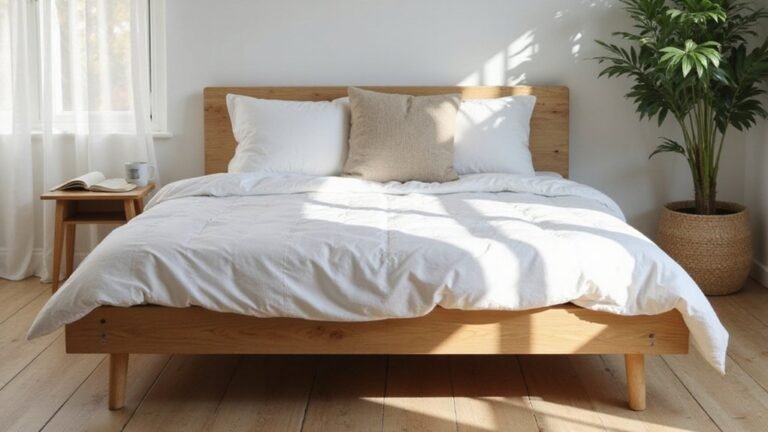
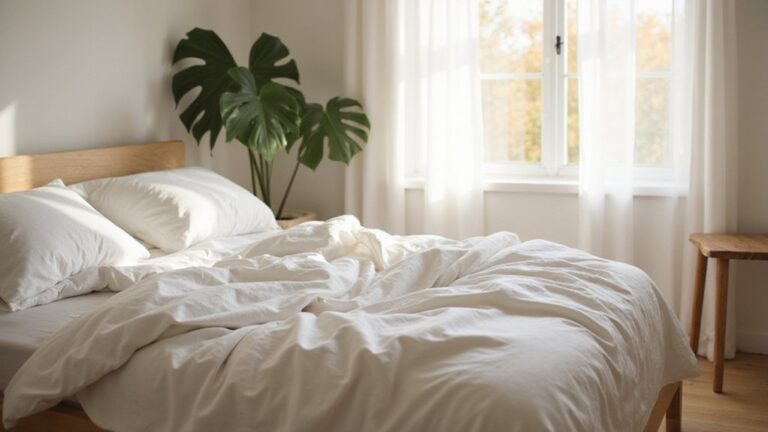
To ensure a good fit, choose sheets that stay snug on your mattress without bunching. Bunching traps heat and blocks air circulation between your skin and the fabric, reducing the cooling effect. Look for sheets with a deep enough pocket or elastic edges that hold securely. Light-colored sheets reflect heat better, helping to keep you cooler throughout the night. Change your sheets every one to two weeks to prevent moisture buildup and maintain freshness. Opt for moderate thread counts between 200 and 400 since higher counts like 1000+ don’t necessarily mean cooler sheets. Instead, prioritize quality fibers and a well-balanced weave to maximize heat relief and comfort.