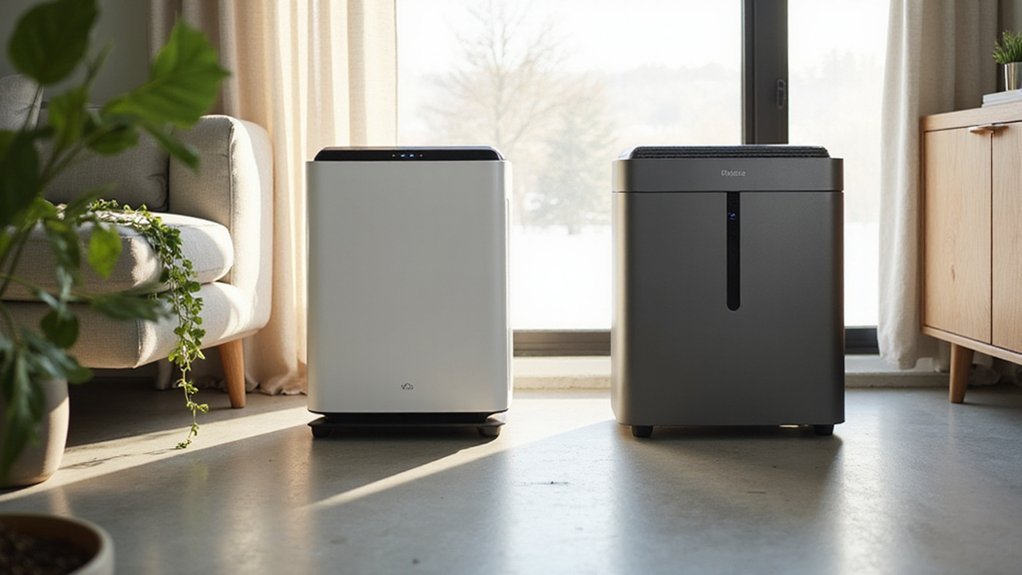
Thinking about improving your home’s air quality? You might wonder whether you need a device that cleans the air from dust and pollen or one that controls humidity to prevent mold and mites.
The key difference is that purifiers focus on removing airborne particles, while dehumidifiers reduce moisture levels.
Keep reading to find out which one fits your needs best.
Air Purifier vs Dehumidifier: What Each Device Actually Does
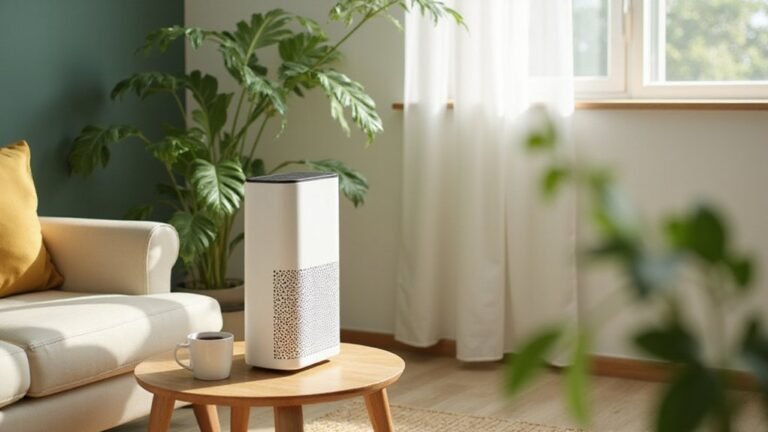
Air purifiers and dehumidifiers serve different purposes and are not interchangeable. An air purifier filters airborne particles such as dust, pollen, and smoke. It draws in room air through filters, trapping contaminants to improve air quality. High-end units utilize ionization to boost their ability to capture microscopic pollutants, but they require regular filter maintenance to maintain efficiency. For example, HEPA filters are designed to trap 99.97% of particles as small as 0.3 microns. While a purifier works on the air itself, a dehumidifier operates on a different set of dimensions related to moisture control. In fact, the effectiveness of an air purifier largely depends on factors like filter quality and room size.
A dehumidifier, by contrast, reduces humidity levels. It pulls in moist air, cools it on coils so water condenses out, and releases dry air back into the room. Its main job is to prevent excess moisture, which helps stop mold growth and reduces dust mites. However, it does not filter or remove airborne particles.
You need both devices if your goal is comprehensive air quality management. The purifier focuses on cleaning the air itself, while the dehumidifier manages moisture levels. Each plays a distinct role, and it’s important not to rely on one to do the job of the other.
Should You Buy an Air Purifier for Allergies and Dust?
An air purifier with a True HEPA filter is effective at reducing airborne allergens and dust. It captures 99.97% of particles like pollen and pet dander, which can help decrease sneezing and congestion. Using it regularly can even lead to fewer allergy medications after about six weeks. However, it’s important to pair the purifier with regular HEPA vacuuming because settled dust on furniture and surfaces remains in place.
Keep energy costs in mind; running the purifier continuously can increase your electricity bills. Also, note that it does not address outdoor pollution that enters your home. To be effective, choose a device with a Clean Air Delivery Rate (CADR) suitable for your room size. If the CADR is too low, the purifier won’t clean the air efficiently. Remember, an air purifier removes airborne allergens but does not control humidity levels, so it won’t prevent mold growth or fix dampness issues. It offers relief but is not a complete solution.
When Does a Dehumidifier Win for Mold and Dampness?
A dehumidifier wins for mold and dampness primarily by preventing mold growth, not by killing existing colonies. Its strength lies in controlling moisture levels by pulling water from the air, making environments less hospitable for mold. Keeping humidity below 50 percent is key because mold cannot thrive at lower humidity levels. This makes a dehumidifier effective in areas where high humidity is the main issue, such as basements, bathrooms, or spaces with sticky air. For example, running a dehumidifier for several days can drop interior humidity to about 35%, helping to dry out wall cavities and building materials. Proper installation of the dehumidifier near an open window can help vent warm air outside, improving overall efficiency. Choosing a cool memory foam mattress topper can also help regulate temperature in humid bedrooms. Matching the dehumidifier’s capacity to your room’s ceiling fan size ensures consistent air circulation for moisture control.
After a water leak or flood, using a dehumidifier quickly helps dry damp surfaces and prevents new mold from forming. It’s essential to combine this with good ventilation and drainage improvements since a dehumidifier alone won’t fix poor drainage or leaks that constantly bring in moisture. For existing mold colonies, professional remediation remains necessary. Overall, a dehumidifier offers a proactive approach by starving mold of the moisture it needs to develop.
Air Purifier vs Dehumidifier: Which One Your Home Needs
If you want to improve your indoor air quality by removing airborne irritants like dust, pollen, pet dander, or smoke, an air purifier is the best choice. It works by continuously filtering the air through HEPA or activated carbon filters, capturing particles and chemicals that trigger allergies or asthma. For homes where these pollutants are your main concern, running an air purifier constantly can make a noticeable difference in breathing comfort.
On the other hand, if dampness, musty smells, or mold growth are your primary issues, a dehumidifier is the right solution. It extracts excess moisture from the air, typically reducing humidity levels to between 30 and 50 percent. This prevents dust mites and mold spores from thriving. Dehumidifiers cycle on and off depending on humidity levels, so they only run when needed, making them energy-efficient. Choose a dehumidifier if moisture or mold is causing problems in your home environment.
Can You Run Both an Air Purifier and Dehumidifier Together?
Yes, you can run both an air purifier and a dehumidifier together. This combination effectively reduces airborne particles and controls excess moisture, which can significantly enhance your indoor air quality—especially if you have allergies or asthma. To maximize efficiency, place the units a few feet apart to ensure proper airflow and prevent moisture from damaging your purifier’s filters.
For safety, connect the dehumidifier directly to a wall socket on its own circuit since it consumes high power. Make sure your circuit can handle the combined load of both devices. When operating both at the same time, set your air purifier to a manual low fan speed to prevent its sensors from falsely reacting to humidity levels. This setup can be more energy-efficient than running each device separately, but keep in mind that noise levels may increase. Regular maintenance of both units is essential to keep them functioning effectively.