Wondering if you need a box spring for your mattress? The answer hinges on your mattress type—innerspring mattresses usually need one for support, while foam and latex models do not.
Using the wrong base can damage your mattress and void warranties. Keep reading to find out what foundation works best for your bed.
Do You Actually Need a Box Spring? (Yes, for Some Mattresses)
While innerspring mattresses—especially older or traditional models—often require a box spring for proper shock absorption and to prevent sagging, foam and latex mattresses do not. You’ll need a box spring for those traditional innersprings because they work together to deliver ideal comfort and a solid, flat surface. Modern foam options provide advanced support properties that eliminate the need for a box spring altogether. Additionally, box springs are typically used to increase bed height and make getting in and out easier, which can benefit taller individuals or those with mobility challenges. For reference, a queen mattress size measures 60 inches wide by 80 inches long, ensuring your box spring matches those exact dimensions for a proper fit.
Your choice of bed frame influences whether a box spring is necessary. Collapsible metal frames or frames with wide slats generally require a box spring for added support. On the other hand, platform beds or adjustable frames usually do not, allowing you to prioritize style without the need for an extra base. Similarly, selecting a high-quality lit vanity mirror can enhance your daily grooming routine, underscoring how the right tools improve overall comfort and convenience.
Consider the material of your bed frame, such as metal or wood, as some designs specifically demand a box spring to function properly. Always check your mattress warranty, as using the wrong base or skipping a required box spring can void it. To keep your down comforter fresh while using a foundationless bed, machine washing on gentle helps preserve its loft and longevity.
What Happens if You Use a Box Spring With the Wrong Mattress Type?
Using a box spring with the wrong mattress type can cause significant damage and void your warranty. All-foam mattresses, for example, rely on a supportive, flat surface. If placed on a box spring designed for innerspring beds, the flexible grid can puncture or deform the foam layers, leading to premature sagging and reducing the mattress’s lifespan. This is similar to how a duvet requires a proper cover to protect its fill and maintain a comfortable sleep environment, whereas a duvet cover itself serves a protective and hygienic role. Thicker hybrid mattresses also suffer when paired with the wrong foundation. An uneven or too-soft box spring accelerates dips and wears out the mattress faster. Over time, uneven support creates soft spots in older box springs, compressing the core and causing warping or sagging, which harms comfort and durability.
Many manufacturers, such as Tempur-Pedic, explicitly void warranties if foam beds are placed on box springs, emphasizing that incompatible foundations can compromise the mattress’s integrity. Even bed-in-a-box models with built-in support layers lose effectiveness when placed on a box spring, as the foundation adds unnecessary height without support benefits.
Incompatibility affects spinal alignment, leading to back pain or discomfort, and also impairs airflow beneath the mattress. Poor ventilation traps heat, making your sleep environment less comfortable. Overall, mismatched foundation and mattress types shorten the lifespan of both components and guarantee disappointment over time.
Will Using the Wrong Base Void Your Mattress Warranty?
Using the wrong bed base can void your mattress warranty. Manufacturers often list incompatible bases as the main reason for denying coverage. For example, slats spaced more than three inches apart, a broken box spring, or a foundation not rated for your mattress’s weight can all be considered violations. Placing your mattress directly on the floor without a proper support system is another common mistake. Even using a vintage mattress on a sleeper sofa can void the warranty if it doesn’t meet the manufacturer’s guidelines.
To stay covered, you need to provide even, continuous support across the entire surface of the base. Keep documentation of your bed frame or foundation in case you need to verify it later. Remember that physical damage, stains, or failing to rotate or maintain the mattress as instructed can also void your warranty. Always check the manufacturer’s fine print to confirm whether your base is acceptable. It’s better to be cautious than to lose your warranty coverage unexpectedly.
The Right Base for Each Mattress Type: Innerspring, Foam, and Hybrid
For innerspring mattresses, a box spring remains a compatible foundation, but you can also use a platform or slatted base. Ensure the slats are no more than 3 inches apart to provide proper support and airflow. Foam mattresses require a completely solid, flat surface—avoid box springs altogether because they promote sagging. Instead, a platform bed or slatted base with gaps under 3 inches offers a stable foundation that enhances airflow and supports foam’s weight distribution. Similarly, choosing the correct ceiling fan size for your bedroom can significantly improve air circulation and comfort. For hybrid models, stability is crucial because they tend to be heavier. Use a platform bed or adjustable base rather than a box spring to avoid shifting and uneven support. Always consult the mattress manufacturer’s guidelines to ensure you’re providing the best fit for your specific mattress type. A firm, consistent base helps protect your mattress and prolong its lifespan. For a budget-friendly alternative, you can even fold your bedding at home to refresh your setup without extra cost. If you have a king comforter, ensure your washing machine has a drum capacity over 5.0 cubic feet to properly clean it without bunching.
Platform Beds and Slatted Frames: Better Alternatives to Box Springs
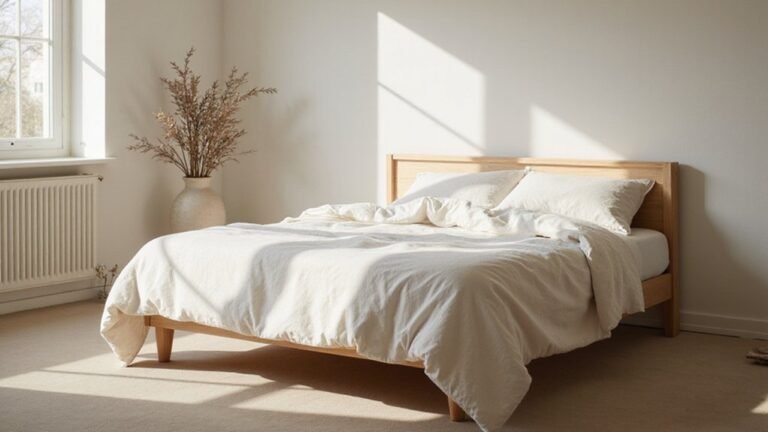
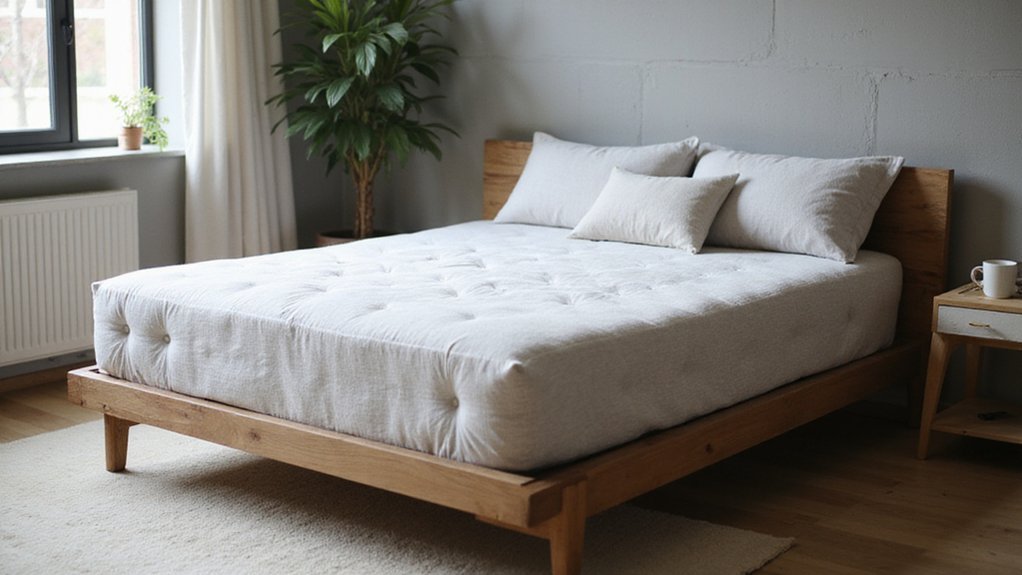
Platform beds with slatted frames are a superior long-term choice compared to box springs. They combine the bed frame and mattress support into one integrated unit, often featuring wooden or metal slats that provide a sturdy base for memory foam, latex, and hybrid mattresses. Since these mattresses do not require a traditional box spring, your sleeping surface is firmer and has a sleek, low profile. Unlike box springs that typically wear out every 5 to 10 years, a durable platform bed frame can last for decades, making it a cost-effective investment. For those seeking space-saving options, consider exploring top loft bed picks for versatile room layouts. Additionally, you’ll avoid the squeaks, noise, and sagging often caused by broken box spring coils. When comparing your options, note that platform beds often cost less over time than a separate frame and box spring combination. Always ensure that slats are closely spaced if you’re heavier or using a particularly heavy mattress to maintain proper support and prevent sagging. If you enjoy a weekend project, you can also build your own slatted base using easy DIY tips for a customized and budget-friendly support system. Overall, this design offers a modern, low-maintenance, and long-lasting alternative to traditional box springs.
Does Skipping a Box Spring Shorten Your Mattress’s Life?
Skipping a box spring can indeed shorten your mattress’s lifespan. Without proper support, your mattress is more prone to sagging and indentations, which can develop faster. Foam and hybrid mattresses rely on a rigid foundation; placing them directly on the floor or an unsuitable surface causes excess bounce and uneven wear. Innerspring mattresses depend on a box spring to absorb shock, so skipping it puts extra strain on the coils and accelerates deterioration. Just as space heaters require a stable surface to prevent tipping and fires, mattresses need a solid foundation to avoid sagging. Additionally, improper support can create pressure points and uneven weight distribution, leading to premature damage. You also lose vital airflow when placing a mattress directly on the floor, trapping heat and moisture that can degrade materials over time. Poor airflow and moisture buildup similarly affect the filtration efficiency and lifespan of air purifiers, as noted in general appliance maintenance guidelines. For a similar reason, choosing battery-operated string lights for outdoor use avoids the risk of moisture accumulating near electrical cords, as highlighted in lighting maintenance tips. Overall, using a proper foundation is essential to maintain your mattress’s comfort and durability.
Does Bed Height Affect Your Support System Choice?
Your bed height significantly impacts which support system you should choose. Ideally, your seat height should be aligned with your knees and hips, creating a natural sitting position that minimizes strain. When selecting a support system, consider your height, age, and mobility, as these factors determine the optimal height for comfort and safety. For instance, a standard bed frame may be too high or too low, affecting how easily you can get in and out. When installing a support system, you should also ensure the window air conditioner does not interfere with the bed’s placement or height adjustments.
If you are over 65, lowering the bed reduces fall risk and makes it easier to sit down and stand up. However, lowering the bed often requires a thinner mattress or a lower-profile foundation to maintain the right height. On the other hand, higher beds improve ease of access for caregivers but may need sturdier or bulkier support systems to ensure stability. Also, align the support system with your environment—consider room size and your partner’s needs to create a practical setup. Matching your support system’s height to your body’s mechanics ensures safe, effortless access to your bed. Opting for a bedding coverlet can further enhance comfort and aesthetic appeal in the bedroom.
Can You Use a Metal Bed Frame Without a Box Spring?
Yes, you can use a metal bed frame without a box spring. Many modern metal platform frames, such as the NKZ Queen Bed Frame, are designed specifically for this purpose. These frames feature reinforced slat support systems with gaps no wider than 2–3 inches, providing solid, even support for foam and latex mattresses. This support method ensures stability with steel slat supports and mattress slide stoppers, so your mattress stays secure. The included anti-slippery material on the bottom also helps protect your floors from scratches and scuffs during use. When setting up your bed, you might also consider how a duvet cover can enhance the overall comfort and style of your sleep space.
Opting to skip the box spring also simplifies pairing your bed with decorative headboards and bedding accessories, creating a cleaner look. Additionally, most mattress manufacturers accept direct placement on slatted frames, keeping your warranty valid. For families with young children, a similar focus on safe, sturdy surfaces is key when choosing a changing table for infants to ensure stability during use. Unless you have a traditional rail frame or uneven floors, excluding the box spring can give you a sleek, minimalist sleep foundation.
Why Your New Mattress Probably Doesn’t Need a Box Spring
Most modern mattresses are designed with built-in support layers, so you usually don’t need a box spring. All-foam and hybrid mattresses have support structures that absorb shock and evenly distribute your weight. Placing these on a box spring can actually damage the materials, especially memory foam, leading to faster wear and tear. Instead, opt for a platform bed, adjustable base, or a slatted foundation with slats no more than 3-4 inches apart. This provides sufficient support while maintaining the health of your mattress. If you are experiencing neck pain, investing in a memory foam pillow designed for proper alignment can further enhance your sleep quality. Some modern adjustable bases even offer integrated dimming capabilities that allow you to customize the brightness of your bedside lighting. If you prefer a traditional look with fabric draping to the floor, choosing a bed skirt can add style without compromising support.
Without a bulky box spring, your bed maintains a lower, cleaner profile that highlights your bedding. This open design also gives you more flexibility with color coordination and accessories. Plus, most warranty policies now specify a rigid support surface, making a box spring unnecessary. Always check your mattress type and frame before buying a box spring; chances are, you’ll find it’s an outdated accessory that you don’t need.
The Verdict: Should You Buy a Box Spring or Skip It?
Your decision to buy a box spring depends on your mattress type and bed frame, specifically whether your support base meets the manufacturer’s warranty requirements. If you own an innerspring mattress and a traditional metal frame, a box spring is typically necessary to provide proper support and extend the mattress’s lifespan.
For all-foam, latex, or hybrid mattresses, especially when using platform beds or adjustable bases, skipping the box spring is usually fine. Modern alternatives like bunkie boards or solid slatted foundations offer reliable support without the extra height and bulk of a traditional box spring. Keep an eye out for signs of aging such as sagging or creaking, which indicate it might be time for a replacement. Using an organic mattress foundation with an adjustable base can also promote a healthier sleep environment. Always verify your mattress warranty to ensure the support base meets the manufacturer’s specifications before making a decision.